

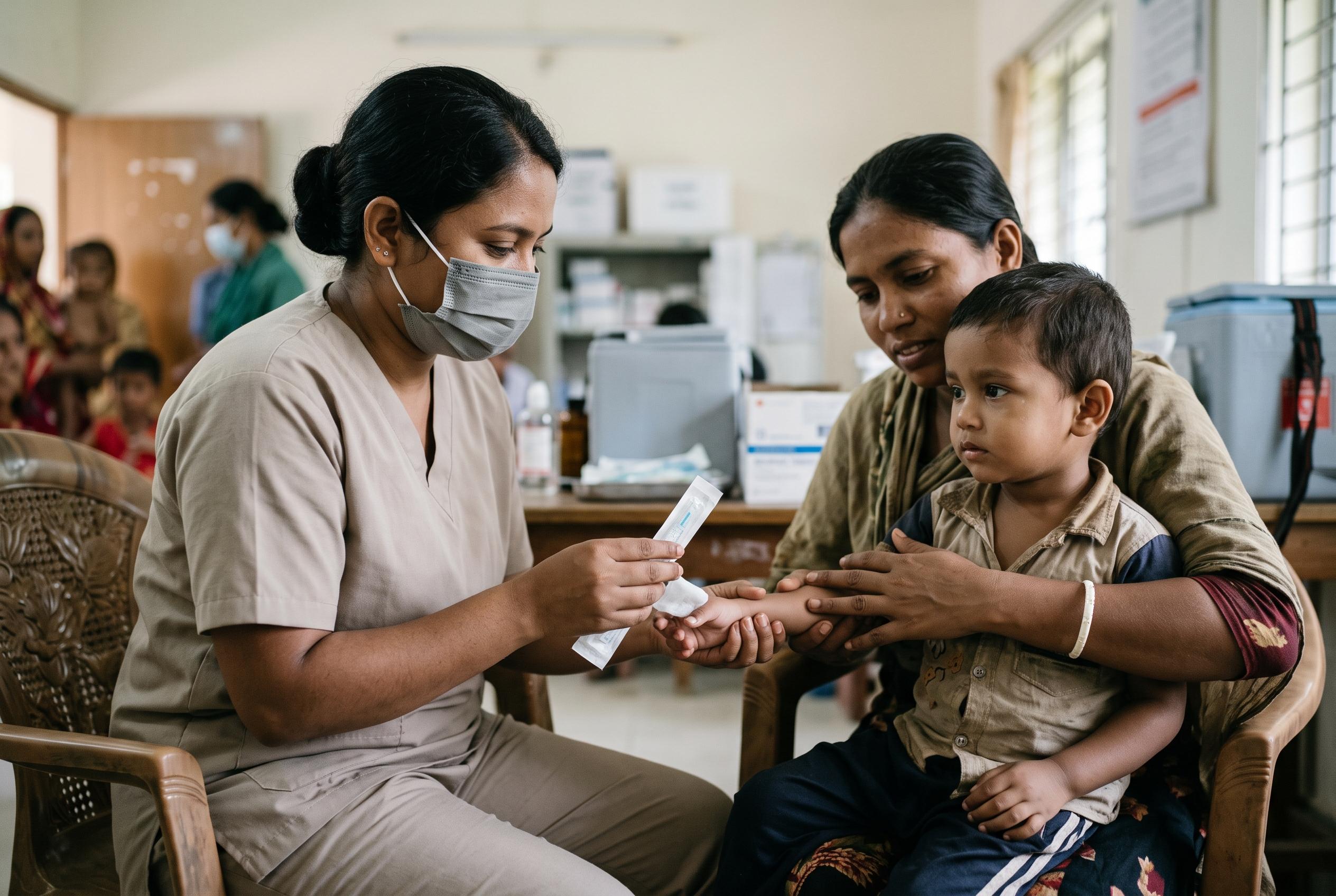

A severe measles outbreak in Bangladesh has infected over 186,000 children, with health experts warning of lasting neurological and developmental consequences beyond immediate illness, amidst ongoing vaccination efforts.
Bangladesh’s measles outbreak is now threatening more than immediate illness, with doctors warning that thousands of infected children could face lasting neurological and developmental harm long after the rash and fever have faded.
Health officials have recorded more than 186,000 suspected cases and over 1,000 deaths since the outbreak was declared on March 15, according to the World Health Organization. The agency says transmission has remained active, with most infections occurring in children under two, and has judged the national risk to be high because of large immunity gaps and many children still vulnerable to infection.
Paediatric specialists in Dhaka say the scale of the outbreak is especially alarming because measles can leave children with long-term complications that are easy to miss at first. One of the most serious is subacute sclerosing panencephalitis, or SSPE, a progressive brain disorder caused by a persistent measles infection. It can appear years after the original illness and is marked by seizures, involuntary jerking movements and a gradual loss of cognitive function. Medical references from the National Library of Medicine describe the condition as rare but usually fatal once it develops.
Doctors also warn that measles can weaken the immune system for an extended period, making children more vulnerable to later infections. That so-called immune amnesia can increase the risk of illnesses such as childhood tuberculosis and other respiratory or ear infections for years after recovery. In Bangladesh, where the outbreak has already forced a nationwide emergency vaccination effort and a second immunisation drive for millions of children, specialists say the longer-term toll may be difficult to measure for some time.
Disclaimer: This content is for informational purposes only and is not intended to be a substitute for professional medical judgment, advice, diagnosis, or treatment.



