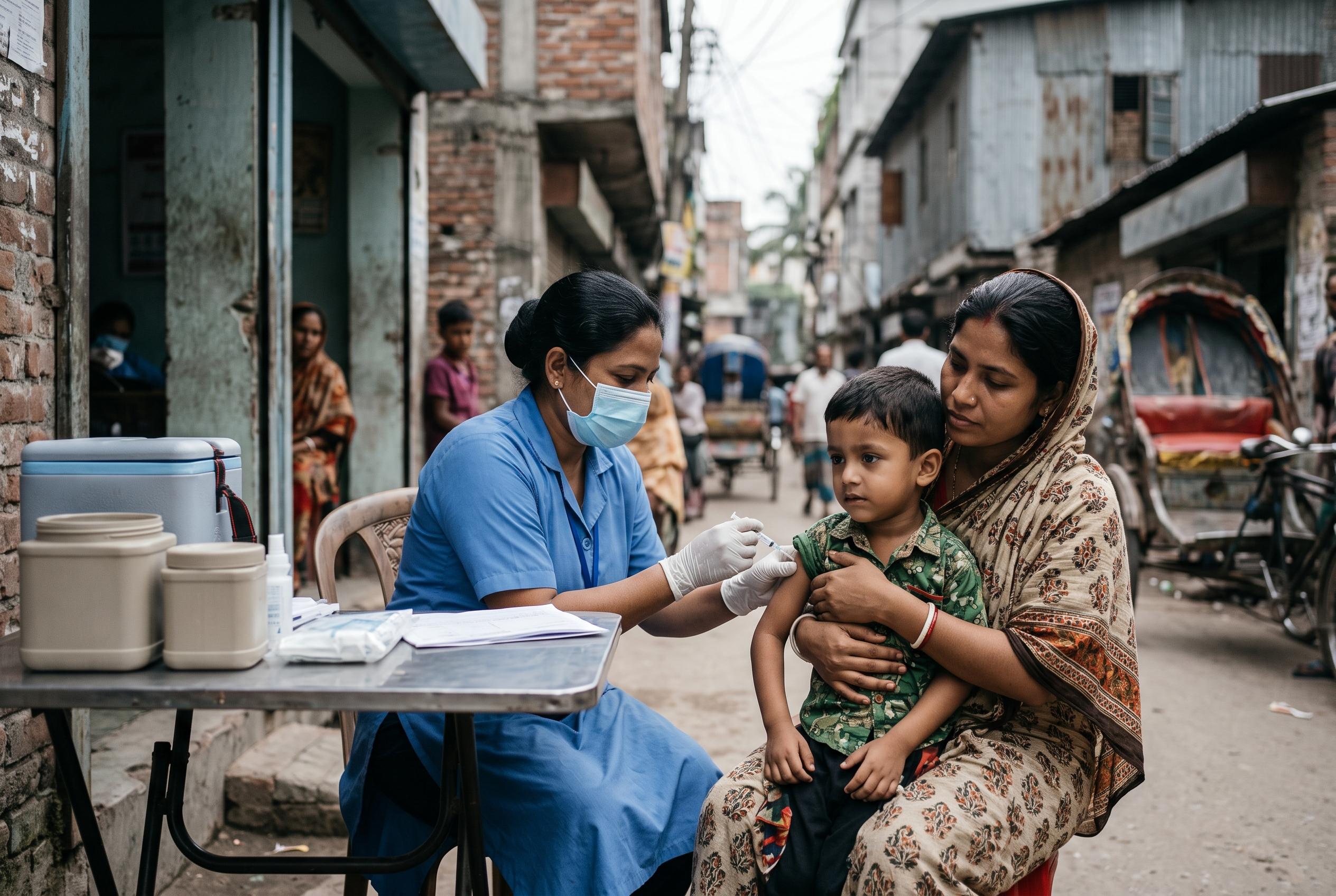

A severe measles epidemic in Bangladesh highlights the challenges of achieving herd immunity amid waning routine immunisation, political disruptions, and immunity gaps among the youngest children despite a large-scale vaccination drive.
Bangladesh’s battle against measles has exposed how quickly a disease can outrun a public health system when protection is uneven and immunity gaps are missed. One-year-old Saif Hasan died minutes after reaching intensive care at Dhaka’s Infectious Diseases Hospital on 27 August, after developing fever and a rash days after his first measles-rubella dose. Doctors there said the child, who already had a respiratory illness, was likely infected before the vaccine had time to work. His case has become one of the clearest reminders that a large vaccination drive can still leave the youngest children exposed when outbreaks are already widespread.
The scale of the crisis is stark. By 9 September, Bangladesh’s health authorities had recorded 1,009 deaths, including 100 laboratory-confirmed measles deaths and 909 suspected ones, since the outbreak began in mid-March. That is a dramatic reversal for a country that reported just 132 measles cases and no deaths in all of 2025. The outbreak has unfolded despite an emergency campaign that has delivered almost 19.75 million vaccine doses since April, well above the original target of 18 million children.
Public health experts say the headline vaccination figure obscures the real problem. According to the World Health Organisation and UNICEF, Bangladesh launched the first phase of its emergency response in early April, initially targeting more than 1.2 million children in 30 high-risk upazilas across 18 districts before expanding nationwide on 20 April. By mid-April, the outbreak had already reached 58 of the country’s 64 districts, and WHO said children under five accounted for most reported cases. Yet officials and epidemiologists argue that the target was too low because population estimates underestimated how many children were actually eligible for vaccination.
That miscalculation matters because measles is so infectious that even small pockets of unprotected children can sustain transmission. Bangladesh’s routine immunisation system had already been weakening. Coverage fell between 2019 and 2023, according to the country’s own survey, while the COVID-19 pandemic disrupted services and UNICEF has pointed to misinformation and hesitancy as additional obstacles. The problem widened after the political upheaval that followed the July 2024 uprising, when vaccine procurement and supply chains were disrupted, leading to shortages in 2024 and 2025, health experts said. WHO later reported that a nationwide measles-rubella response was needed because the virus had spread across the country faster than routine systems could contain it.
Hospital data from Dhaka’s Infectious Diseases Hospital shows who is bearing the brunt. As of 23 August, the hospital had documented 3,167 suspected cases, 537 confirmed cases and 57 confirmed or suspected deaths. Most of those who died were very young: 49 were under 15 months old, and 31 were younger than nine months, before the age when children in Bangladesh normally receive their first measles-rubella dose. Forty-seven of the 57 deaths involved children who had not been vaccinated, and pneumonia was the most common complication. The hospital’s figures are not nationally representative, but they underline the danger once measles begins circulating widely among infants too young for routine protection.
Authorities are now preparing another vaccination round, expected within weeks, while experts say success will depend on targeting local immunity gaps rather than celebrating national averages. WHO also said in May that more than 166,000 children in Rohingya refugee camps in Cox’s Bazar were vaccinated in a separate campaign that reached 93.7% of its target, showing that intensive local mobilisation can work when coverage is pushed high enough. Even so, for families who missed the earlier campaigns, the toll has already been severe. Among them was Mostakim, a nine-month-old boy from Kishoreganj district who had not been vaccinated and died at the Dhaka hospital on 30 August.
Disclaimer: This content is for informational purposes only and is not intended to be a substitute for professional medical judgment, advice, diagnosis, or treatment.