

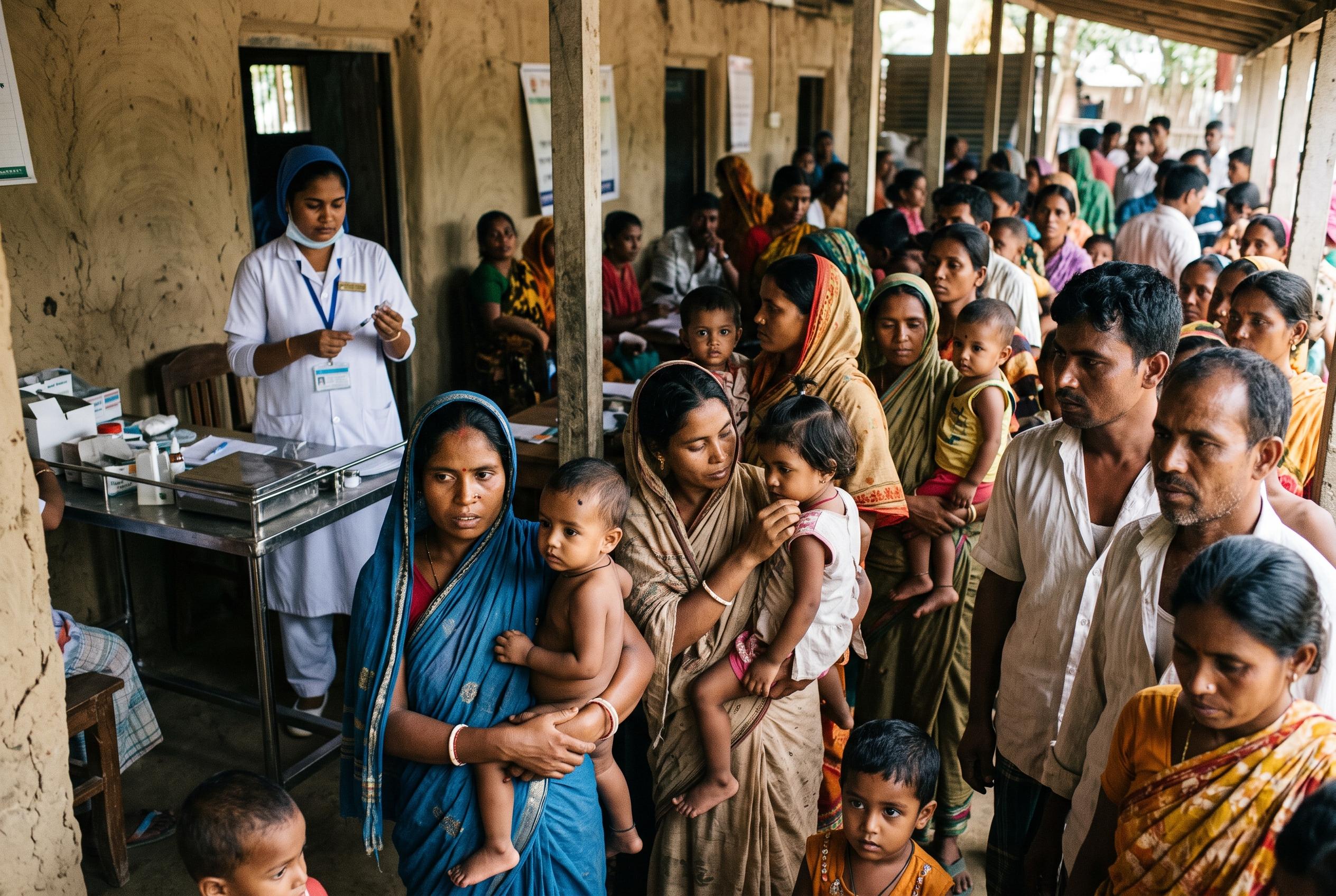

More than 1,100 people have died in Bangladesh’s measles outbreak, with children under five accounting for most fatalities, prompting warnings that other countries could face similar crises as immunisation coverage slips.
Bangladesh is battling what the World Health Organisation has described as a major measles outbreak, and the scale of the crisis is now being read by public health experts as a warning for other countries where vaccination rates are slipping. According to Reuters, the outbreak has exposed how quickly a preventable disease can surge when routine immunisation falters, surveillance is weak and families in remote areas are missed by outreach teams.
The WHO says Bangladesh had reported 202,000 suspected measles cases and 22,000 laboratory-confirmed infections by 9 October, with 1,147 deaths recorded since the outbreak began in mid-March. Children under the age of five accounted for 94% of the fatalities. The agency has stressed that a measles vaccine coverage rate of at least 95% is needed to stop outbreaks, yet the country’s recent decline in immunisation left it vulnerable to a disease that spreads with unusual speed.
Reuters’ review of WHO material and interviews with health workers, officials and scientists found that the response was slowed by gaps in data, limited preparedness and incomplete contact with parents. Mark Jit, a vaccine adviser to WHO and a professor at New York University’s School of Global Public Health, told Reuters that the situation was “a real warning for every country”, adding that preventing outbreaks through vaccination is cheaper, safer and easier than responding after the virus has already spread.
The human toll has been especially severe in Sylhet, one of the worst-hit regions. In one case described by Reuters, two-year-old Arman Hussein died in July without ever receiving a measles shot, after his family sold a three-wheeled rickshaw to pay for hospital treatment. His father, Amin Mia, said no health worker had reached their remote village in time, telling Reuters: “They only came after I buried my son.” In another family, a nine-month-old girl died in June before receiving a dose that had become available after an emergency campaign lowered the eligible age from nine months to six months.
Bangladesh had previously been viewed as a public health success story, with the first dose of measles vaccine estimated by WHO and UNICEF at 96% in 2024 and the second dose at 93%. But the political upheaval that followed the fall of Sheikh Hasina’s government last year disrupted the health system, Reuters reported. Health workers went on strike, vaccine orders were delayed and follow-up doses were interrupted. WHO and UNICEF later estimated that first-dose coverage fell to 90% in 2025 and second-dose coverage to 86%, below the level needed for herd immunity.
The emergency response began quickly, and the government said it initially believed it was close to bringing the outbreak under control after vaccinating nearly 20 million children in April and May. But Reuters reported that internal documents and meeting notes showed the campaign was launched with only one readiness check, rather than the usual four, because of time pressure. By August, health officials were still identifying major execution problems, including persistent gaps in coverage among children who had already contracted measles. UNICEF later said Bangladesh launched an emergency measles-rubella campaign with WHO and Gavi to protect more than 1.2 million children in high-risk districts, while the government opened a new push in late September aimed at 3.4 million children who had been missed earlier. Officials say the wider challenge remains reaching children in a country where UNICEF and Bangladesh’s statistics office say up to 40% are not registered, and where government data suggest about a third of health-worker posts are vacant.
Disclaimer: This content is for informational purposes only and is not intended to be a substitute for professional medical judgment, advice, diagnosis, or treatment.



