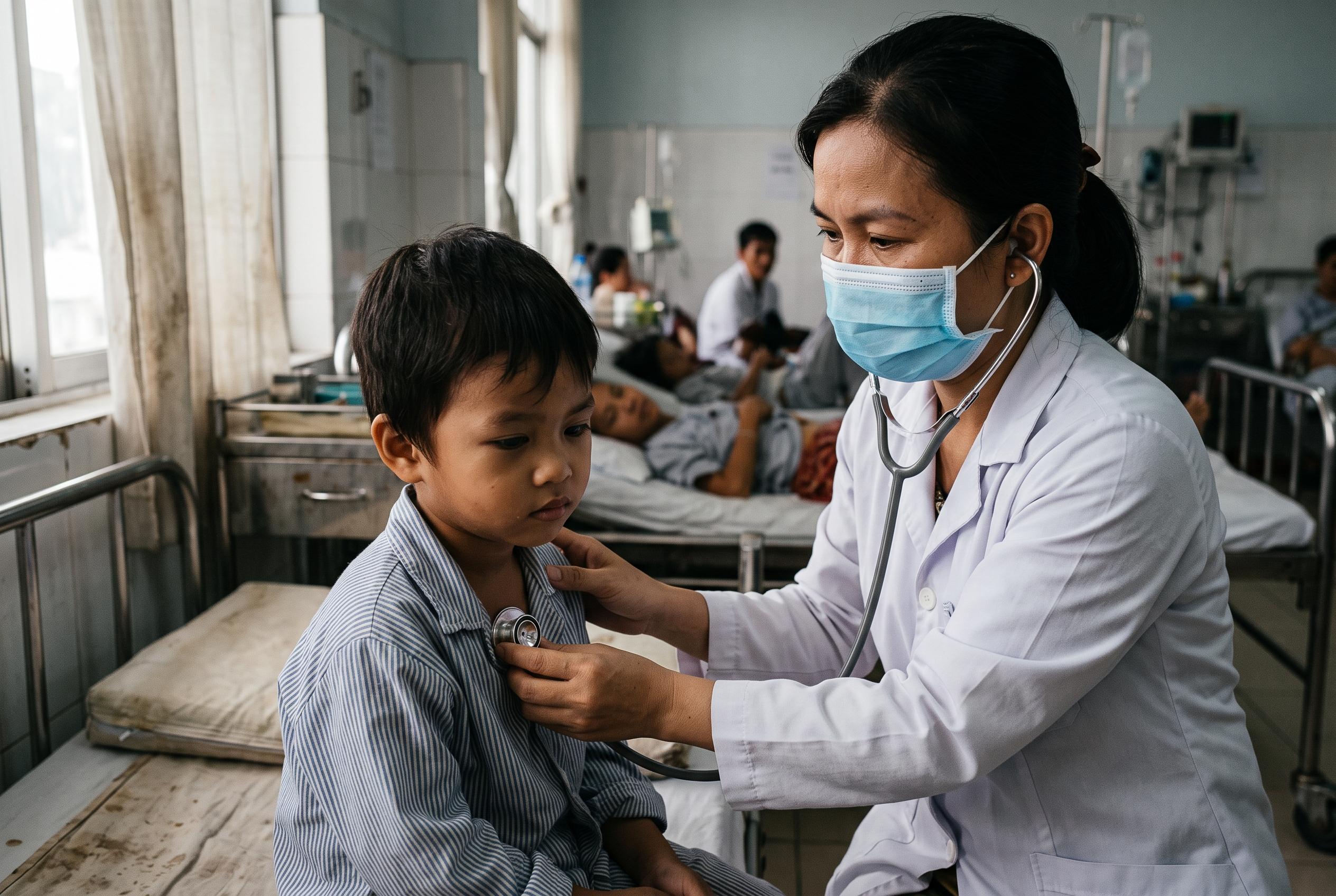

Despite a swift immunisation response, Bangladesh faces escalating measles infections and deaths, highlighting vaccine procurement failures and regional health threats amidst overwhelmed hospitals and persistent immunity gaps.
Bangladesh’s measles epidemic has continued to gather force months after an emergency vaccination drive was launched, with the latest health ministry figures putting child deaths just short of 1,000 and infections above 180,000. The scale of the toll marks a grim escalation from 23 May, when officials were reporting 512 deaths and saying the full effect of mass immunisation would take time to show.
The warning signs were visible far earlier. In its outbreak notice on 23 April, the World Health Organization said Bangladesh had notified it on 4 April of a nationwide surge affecting 58 of 64 districts, with 19,161 suspected cases, 2,973 laboratory-confirmed infections and 166 suspected measles-related deaths recorded between 15 March and 14 April. Dhaka alone had logged 8,263 suspected cases, many clustered in dense settlements such as Demra, Jatrabari, Kamrangirchar, Korail, Mirpur and Tejgaon, while nearly four in five cases were in children under five. WHO said the incidence was highest in Barisal Division, followed by Dhaka, Mymensingh and Rajshahi.
UNICEF’s first humanitarian report showed how quickly hospitals were being overwhelmed. By 7 April, it said, Bangladesh had reported 9,883 suspected cases and 1,398 confirmed ones, with at least 128 suspected deaths and 21 laboratory-confirmed fatalities. Children under five made up 81 per cent of cases, including infants under nine months who were too young for routine immunisation, and UNICEF said 72 per cent of patients had received no measles vaccine at all while a further 16 per cent were only partially vaccinated. Its field teams found national measles-rubella stocks depleted, more than 90 admissions in a single day at Dhaka’s Infectious Diseases Hospital, and 84 paediatric admissions in Kushtia despite a capacity of 57 beds.
Other hospitals were under similar strain. bdnews24 reported in early April that Rajshahi Medical College Hospital had taken in 340 children with measles symptoms since the start of March, and the head of its paediatrics department said 29 patients had died there during that month. In Dhaka, the Mohakhali infectious diseases hospital said 84 patients were already being treated for measles or related symptoms, even though only 11 beds were earmarked for that unit inside a 100-bed facility that also handled HIV and rabies cases. The same report described 206 symptomatic patients in Chattogram since 29 March, 172 admissions in Mymensingh since 17 March, and a nationwide response hampered by shortages of neonatal intensive care beds and by conflicting data from different arms of the health system.
The government did move quickly once the outbreak was recognised nationally. WHO said Bangladesh’s immunisation advisory group approved a measles-rubella campaign on 30 March for children aged six to 59 months, with the age threshold widened to include babies aged six to eight months because so many infections were appearing before the routine first dose. The first phase began on 5 April in 30 upazilas across 18 priority districts, and a nationwide campaign followed on 20 April. According to WHO’s South-East Asia office, the initial operation aimed to reach 1.2 million children under five in the worst-hit districts and to finish nationwide by 21 May, alongside expanded surveillance, laboratory support, hospital preparedness, infection-control measures and faster vaccine procurement. Before the wider rollout, Health Minister Sardar Md Sakhawat Husain said 9 million doses had been collected for dispatch and cancelled leave for field-level health workers.
But the response has been shadowed by sharp questions over how Bangladesh arrived at this point. Speaking to The Daily Star in May, UNICEF’s Bangladesh representative Rana Flowers said the agency had warned the interim authorities repeatedly from 2024 onwards that shortages could trigger exactly this kind of crisis. She said UNICEF had sent five or six letters between 2024 and February 2026 and raised the issue in 10 meetings, while deputy executive director Ted Chaiban had taken the matter to the foreign affairs ministry in August 2024. Flowers said “the shortage of vaccines could lead to an outbreak” and argued that “the decision around how to procure” had caused the delay, not an absence of money. The paper also reported that Bangladesh spends about US$70 million a year on nine routine vaccines, that it had not paid UNICEF the previous year, and that UNICEF had extended US$17.8 million in credit to keep supplies moving.
WHO has also warned that the outbreak matters beyond Bangladesh’s borders. Its regional office said the mix of immunity gaps, declining routine immunisation, population movement during the festive season and vaccine supply constraints could prolong transmission and raise the risk of spread across South-East Asia. Even in early April, UNICEF had counted eight laboratory-confirmed cases in Rohingya camps, seven in Cox’s Bazar and one in Bhasan Char, alongside 76 suspected camp cases. The warning from WHO suggested the outbreak was not simply a domestic failure of coverage, but a regional health risk if missed children, weak surveillance and overstretched hospitals were left unaddressed.
The gap between official optimism and conditions on the wards has been a recurring theme. By 23 May, the death toll had already passed 500, even after a campaign that UNICEF said had reached 18 million children, and the health department’s update came only after the government said the outbreak was contained in some hard-hit areas. Doctors were less sanguine. “Here, most children came to the hospital with respiratory distress and infections in the eyes, throat and lungs,” paediatrician Ainul Islam Khan told AFP in Dhaka. The latest toll suggests the spring vaccination drive did not cut admissions or fatalities quickly enough, leaving Bangladesh to reckon with an outbreak that aid agencies and health experts say was worsened by missed vaccinations, malnutrition and delayed procurement.
Disclaimer: This content is for informational purposes only and is not intended to be a substitute for professional medical judgment, advice, diagnosis, or treatment.