

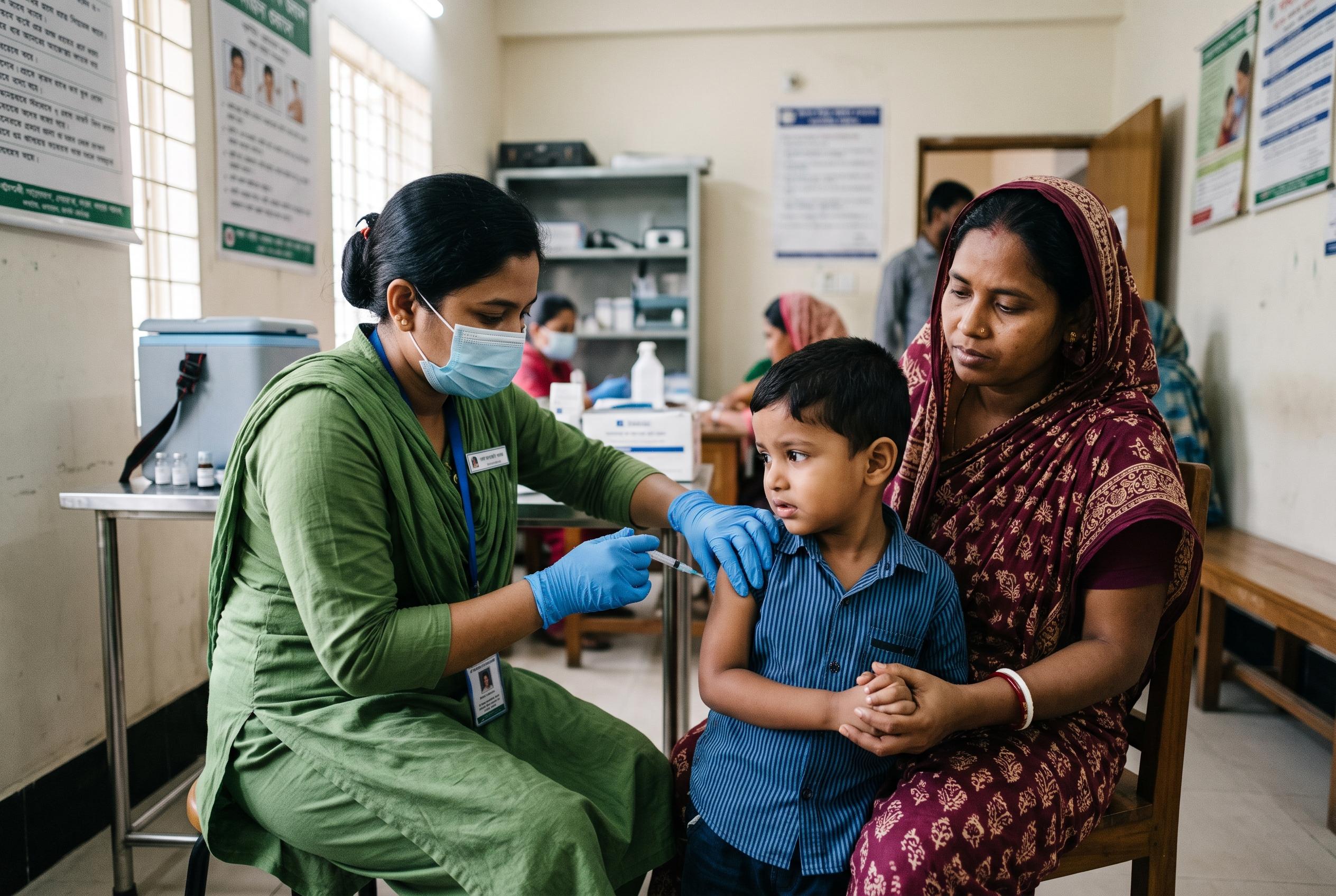

More than 1,000 people have died as weak routine immunisation, poor data and gaps in outreach fuel a measles crisis across Bangladesh.
Bangladesh is struggling to bring a devastating measles outbreak under control, and public health experts say the crisis is a stark reminder of how quickly vaccine gaps can turn into a national emergency. The World Health Organisation said the country has reported more suspected measles cases this year than any other, while recent immunisation failures, patchy outreach and weak data have made the response harder. WHO has also warned that outbreaks become far more likely when routine coverage slips below 95%, the threshold needed to keep measles from spreading widely.
The scale of the outbreak has been severe. WHO said Bangladesh had recorded about 202,000 suspected cases and 22,000 laboratory-confirmed infections since the outbreak began in March, with 1,147 deaths reported by early October. Most of those who died were children under five. WHO and UNICEF had estimated that Bangladesh’s first-dose measles coverage fell to 90% in 2025, down from 96% the previous year, with second-dose coverage slipping to 86%, leaving the country well short of the level needed for herd immunity.
Officials responded with an emergency vaccination drive in April, supported by WHO, UNICEF and Gavi, the Vaccine Alliance. According to WHO, that campaign reached more than 1.2 million children across high-risk districts, while a separate drive in Rohingya refugee camps in Cox’s Bazar vaccinated more than 166,000 children and reported a 93.7% coverage rate among the target group. Even so, the outbreak continued to spread across all 64 districts, and WHO said transmission remained high as of mid-April, with thousands of suspected cases already identified.
Reuters reported that the emergency response was hampered by poor preparation and unreliable population data, including target lists that did not account for millions of children. Minutes from government, WHO and partner meetings reviewed by Reuters showed that officials relied on a single readiness check before the April campaign, rather than the usual four rounds, because of time pressure. Later reviews suggested that the number of children reached in the emergency campaign was lower than the government claimed, with one June health intervention listing about four million more children in the same age group.
The human toll has been especially visible in Sylhet, one of the worst-affected regions. Reuters spoke to families who said health workers did not reach remote villages before children became ill. One father said, “They came only after I buried my son.” Another said his daughter could have been protected by an earlier shot, but no one had told the family. Health experts told Reuters that these failures tend to hit the poorest and hardest-to-reach families first, especially where malnutrition and limited access to care make measles more dangerous.
The latest WHO data suggests Bangladesh still faces a difficult road ahead. The agency has said the country’s routine immunisation system needs to become more reliable and resilient, while experts are pressing authorities to expand vaccination beyond the under-fives, since older children are also accounting for a sizeable share of cases. For now, the outbreak stands as both a domestic health crisis and a warning to other countries: when routine childhood vaccination weakens, measles can return quickly, spread fast and kill young children who should have been protected.
Disclaimer: This content is for informational purposes only and is not intended to be a substitute for professional medical judgment, advice, diagnosis, or treatment.



