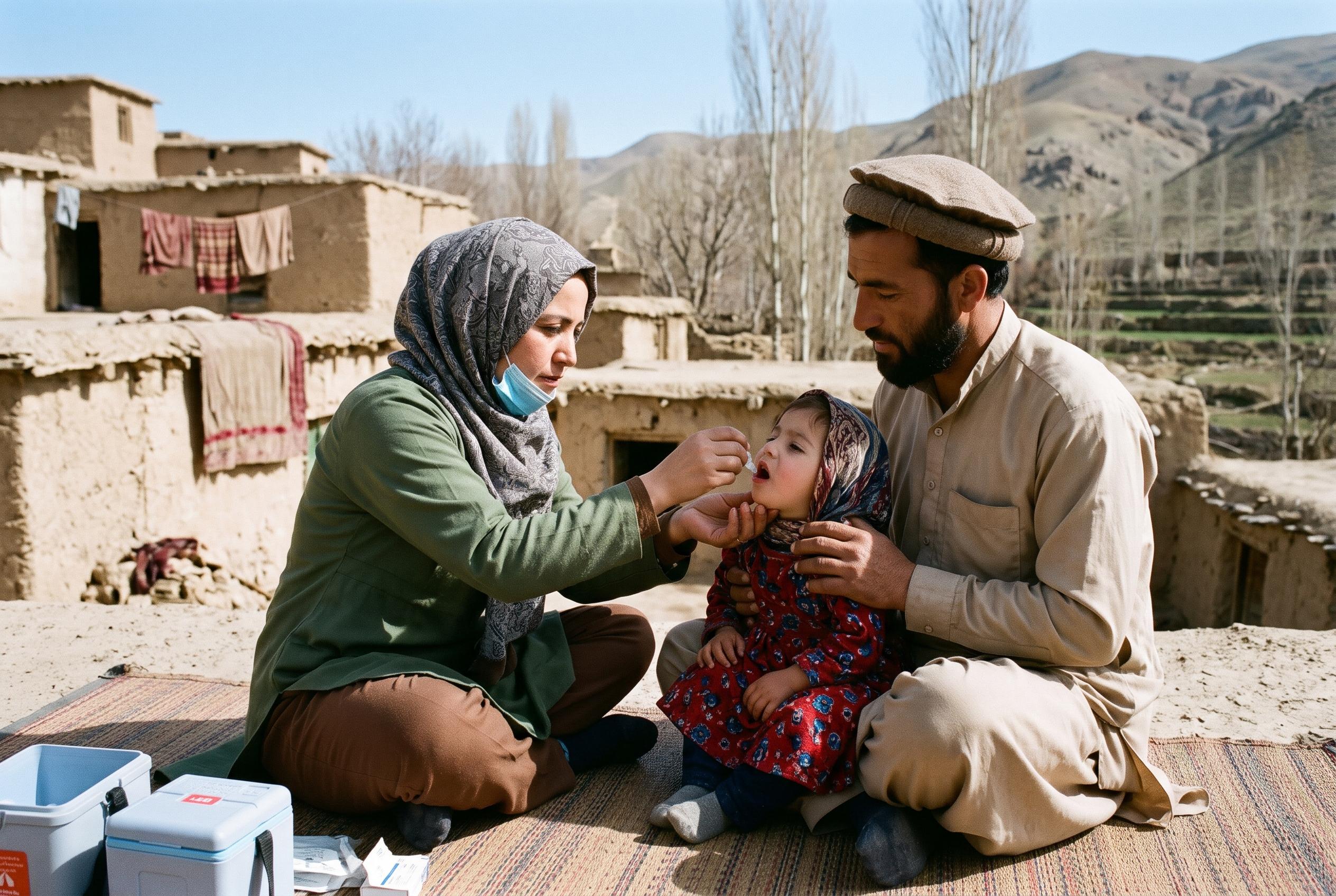

Health advocates are urging families to vaccinate children as Afghanistan records 42 polio cases and remains one of only two countries where the virus is endemic.
On World Polio Day, the Afghanistan Free of Polio organisation renewed its appeal for families to keep vaccinating their children, saying the campaign remains essential to protecting young people from a disease that can be permanently disabling or fatal. The group said every child deserves to grow up without the threat of polio and argued that sustained immunisation is central to any chance of eliminating the virus from the country.
The appeal comes as Afghanistan and Pakistan remain the only two countries where polio has not been eradicated. According to the World Health Organization, Afghanistan has recorded 42 cases so far this year, including six newly confirmed infections. The cases have been reported in several provinces, including Kandahar, Nangarhar and Kabul, underscoring how far the virus still reaches despite repeated vaccination drives.
Public-health specialists say the persistence of polio reflects long-standing obstacles to eradication, including weak health services, poor awareness, low literacy, dense populations and limited vaccine coverage. The Polio Free Afghanistan website says these factors have helped the virus continue to spread, even though oral polio vaccine use began decades ago and helped drive global case numbers sharply lower after the launch of the Global Polio Eradication Initiative in 1988.
The Taliban administration has faced criticism for not doing enough to confront the outbreak, although it has also organised vaccination campaigns in recent months. The Polio Free Afghanistan site says a first national campaign began on April 13, 2026, followed by further rounds on May 18 and June 23, while additional campaigns were later carried out in eastern Afghanistan. Health advocates say such efforts need to continue, and expand, if children are to be protected from a virus that still poses a serious risk across the country.
Disclaimer: This content is for informational purposes only and is not intended to be a substitute for professional medical judgment, advice, diagnosis, or treatment.