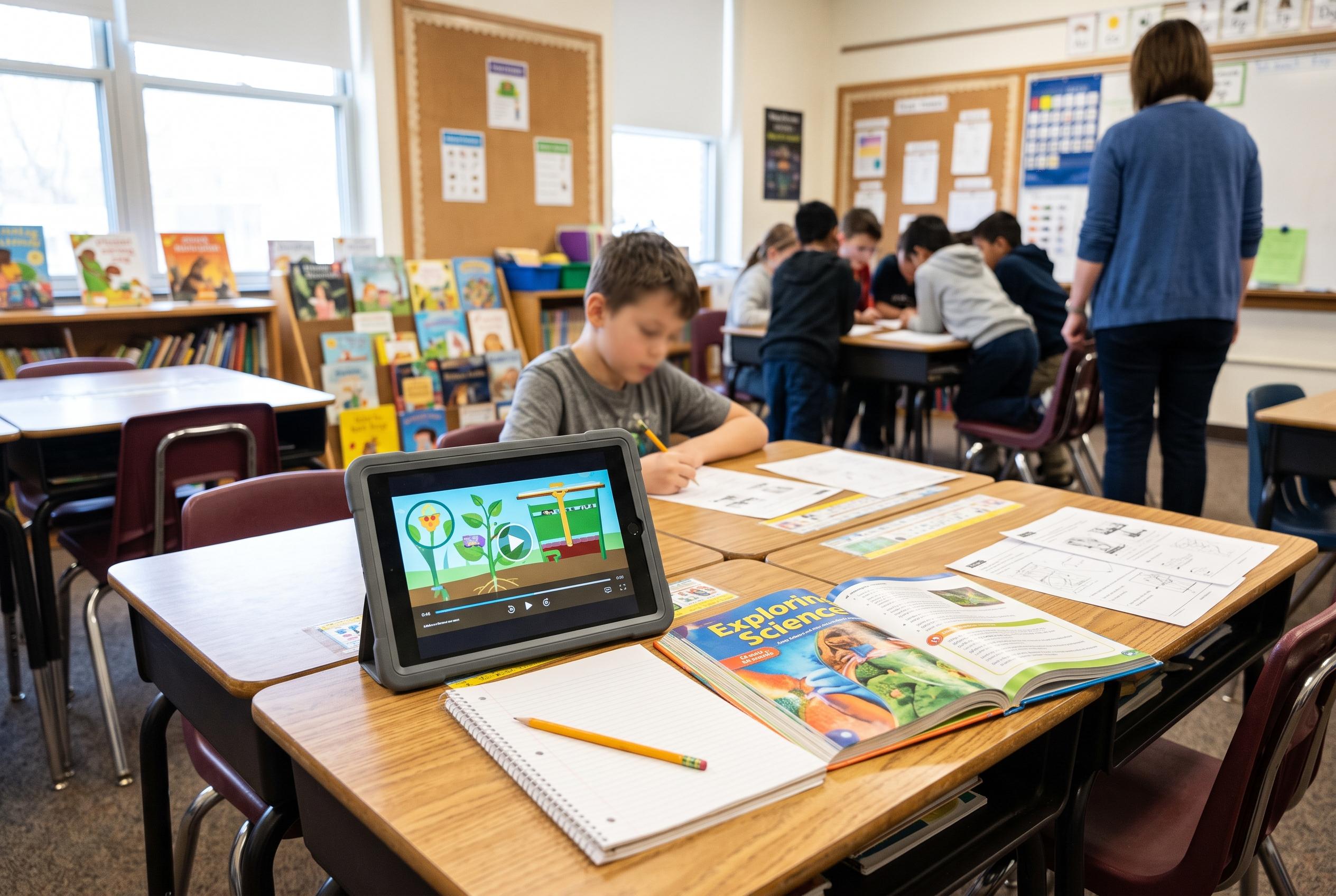

A new survey reveals YouTube is now a routine teaching aid across US pre-K to 12 classrooms, prompting questions about content vetting and actual learning impact.
A national survey suggests YouTube has become a routine teaching aid in US classrooms, with about three-quarters of 393 pre-K to 12 teachers saying they use it for instruction and almost half doing so weekly or daily. The research, published in June in Educational Researcher, indicates that video is no longer an occasional add-on but part of the ordinary rhythm of lessons, from early years through high school.
According to the study, teachers who used the platform devoted an average of 17.9% of their yearly instructional time to showing videos, usually to the whole class on a shared screen rather than on individual devices. The researchers said the material was used alongside lectures, group work and independent practice, suggesting that teachers are folding online video into established classroom methods rather than replacing them. Elon University said Jeffrey Carpenter co-authored the paper, which examined how teachers use YouTube across public, charter and private schools.
The findings add to a wider debate over how much screen time belongs in education and what kind of content children are seeing at school. Some districts have restricted YouTube on student devices because of concerns about distraction and the platform’s design, which is built to maximise watch time. At the same time, teachers continue to rely on trusted channels such as Khan Academy and Crash Course, alongside older classroom staples such as Bill Nye the Science Guy and more politically oriented clips, including PragerU Kids. A separate study cited by the researchers found small differences by grade level, with pre-K teachers slightly less likely to use instructional videos, but not enough to show a meaningful divide across school years.
What remains unclear is which videos teachers are choosing most often and how carefully they are vetting them. Research from Spain and Australia has raised questions about screening practices, while other studies have shown that instructional videos are used to explain abstract concepts, replace direct instruction and provide accessible content across subjects. The researchers say that with YouTube now embedded so deeply in teaching, the next question is less whether teachers use it than whether it actually improves learning.
Disclaimer: This content is for informational purposes only and is not intended to be a substitute for professional medical judgment, advice, diagnosis, or treatment.