

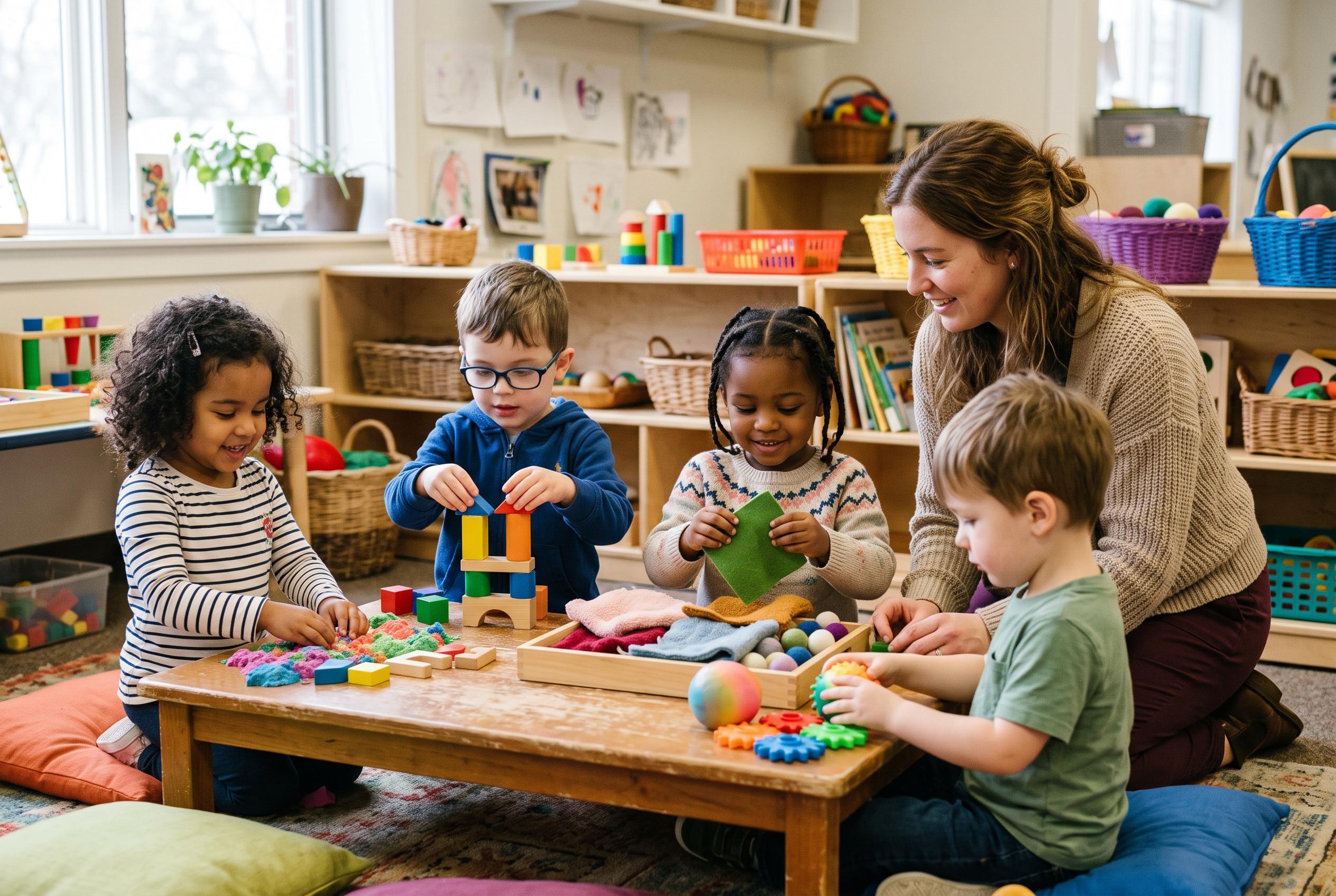

For children with sensory, communication or developmental needs, flexible enrichment that follows their interests may matter more than a perfectly structured class.
Parents of preschoolers often approach enrichment like a search for the ideal formula: the right class, the right teacher, the right activity and the right moment. But for many families, especially those raising children with sensory, communication or developmental needs, the best option is rarely the most polished one on paper. More often, it is the one that feels welcoming, flexible and willing to meet a child where they are.
That begins with the child, not the programme. Instead of asking what a preschooler is supposed to do, families can start by thinking about what their child already enjoys. Water, music, animals, movement, books and messy art can all offer useful starting points. Cleveland Clinic says sensory play can support language development, motor skills, cognitive growth and social interaction, while also encouraging curiosity and experimentation. In other words, enrichment does not have to be formal to be worthwhile.
Just as important is recognising that participation does not have to look traditional. A child may need time to warm up, may prefer to watch before joining in, or may take part for only part of a session. They may need movement while listening, a quiet corner, a caregiver nearby or a different way to communicate, including AAC, short for augmentative and alternative communication. Experts in early years support say flexibility matters because children develop at different paces and do not all adapt to change in the same way. A child who struggles with routine shifts is not failing; they may simply need more support with transitions and predictability.
That is why a quick conversation with the provider can be so valuable. Families can ask whether caregivers may stay, whether children can step out for a break, whether sensory tools are welcome and whether a child can participate without speaking or following every direction. It is also reasonable to ask about quieter spaces or a trial session. Programmes that understand flexibility often create room for children to enter in their own way, rather than demanding a single model of participation.
The broader developmental value of this approach is not just about comfort. Resources from child development specialists note that flexibility helps children shift between activities, cope with change and build confidence when situations feel unfamiliar. Therapeutic preschool programmes often use structured support to help children practise these skills in safe, manageable ways. Even so, the goal for families outside a specialist setting is not to force a child into a perfect fit. It is to find an environment where curiosity can grow, even if the path looks different from what was originally imagined.
Sometimes that will be a structured class. Sometimes it will be open play, a library story time, a trip to a nature centre or an afternoon of art at the kitchen table. The point is not to prove that a child can do everything exactly as expected. It is to give them a chance to enjoy, explore and connect in a way that works for them. For parents, that may be the hardest lesson of all: the right choice is not always the most impressive one. Sometimes it is simply the one that helps a child take part today.
Disclaimer: This content is for informational purposes only and is not intended to be a substitute for professional medical judgment, advice, diagnosis, or treatment.



