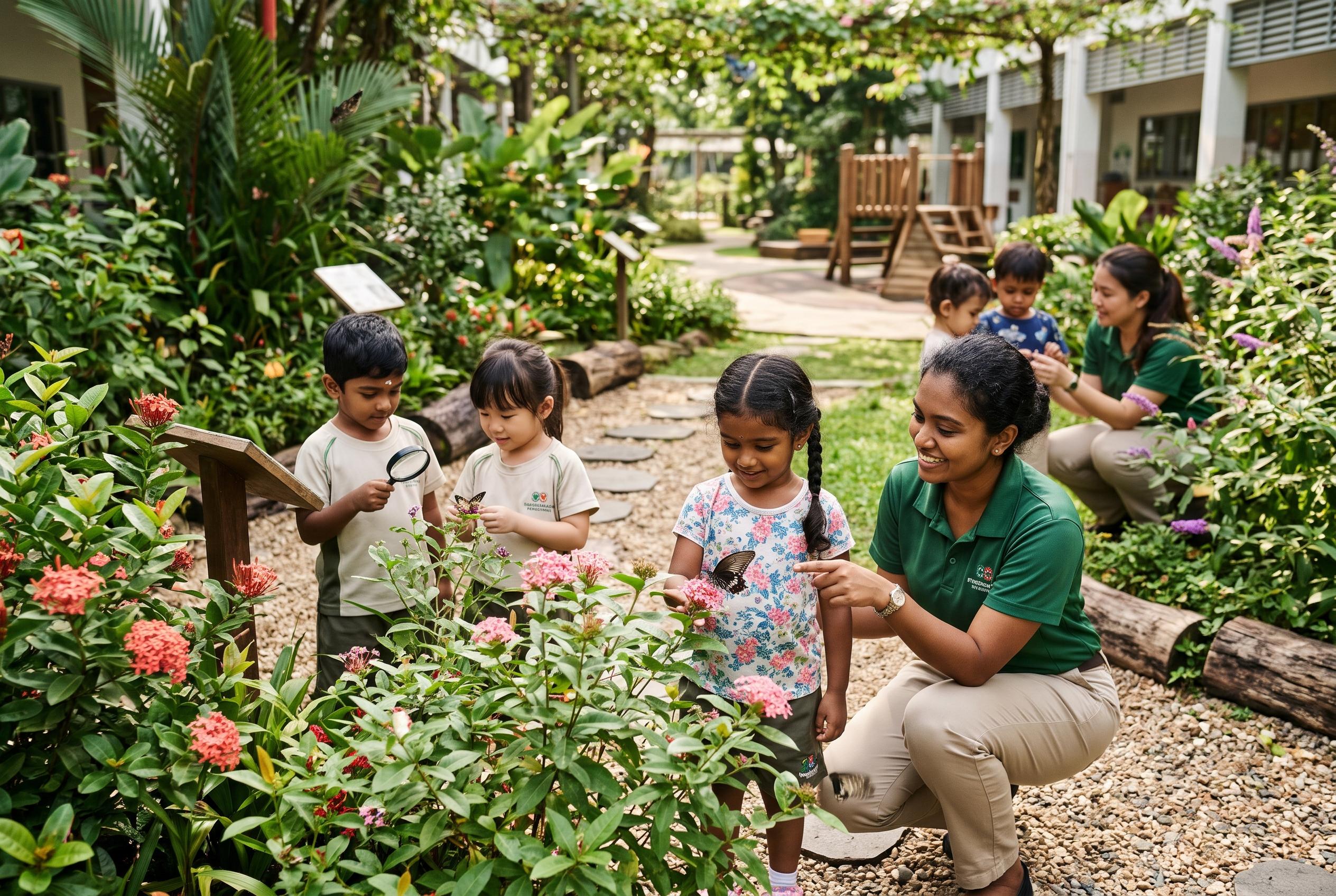

From butterfly gardens and water play to park visits and nature-led lessons, Singapore preschools are making outdoor exploration a daily part of early education.
Outdoor play has become a defining feature of several Singapore preschools, as educators increasingly treat time outside as part of learning rather than a pause from it. Across the schools highlighted here, the emphasis is on movement, curiosity and hands-on discovery, with children encouraged to build coordination, confidence and social skills through activities in gardens, playgrounds and nearby green spaces. Parents quoted by Expat Living also point to the appeal of fresh air, textures and open-ended exploration as part of their children’s daily routine.
At Kinderland Academy & Preschools, outdoor learning is woven into the wider approach to early education. The school says children regularly take part in guided sessions outdoors, including visits to parks and community spaces, while selected campuses offer more extensive facilities such as cycling tracks, sand and water play, gardens and animal areas. Kinderland’s Yio Chu Kang campus, for example, includes a butterfly garden, children’s garden, chickens, turtles and a football pitch, while its broader network spans locations across Singapore and beyond. The preschool’s wider curriculum also combines music, literacy and science-based learning, but the outdoor component remains central to its pitch.
Adventure Tree Preschool places even greater emphasis on nature as the foundation of its programme. According to the school, outdoor learning is not an extra but the core of its curriculum, with children spending substantial time outside each day when weather permits. Its four campuses in Holland, Braddell, Bukit Timah and Katong are all set in low-rise residential settings with generous outdoor space, and each includes play areas, water play, sensory features and gardens. The Bukit Timah site is described by the school as a renovated bungalow surrounded by two gardens, while the Katong and Holland campuses also highlight access to greenery and nearby community spaces.
Shaws Preschool takes a similar view, treating outdoor time as part of children’s daily development rather than simple recreation. The school says pupils spend time outside in the morning and, for full-day children, again later in the day, with activities designed to encourage independence, resilience and a sense of wonder. Its campuses include playgrounds, sandpits, gardens and butterfly spaces, and the school also introduces age-appropriate sport through its Little League programme. Teachers use outdoor settings for everything from quiet reading to shadow studies and butterfly life-cycle lessons, depending on the weather and children’s interests.
Mosaic Preschool also gives daily outdoor play a prominent place in its routine, with children spending at least an hour outside each day. The school says the aim is to support physical development, emotional wellbeing and creative exploration through a mix of structured and free play. Outdoor features include playground equipment, water play, sand areas, gardens and games that encourage teamwork and motor skills. Parents quoted by the school say the variety of activities keeps children engaged, with different experiences offered across the week.
Disclaimer: This content is for informational purposes only and is not intended to be a substitute for professional medical judgment, advice, diagnosis, or treatment.