

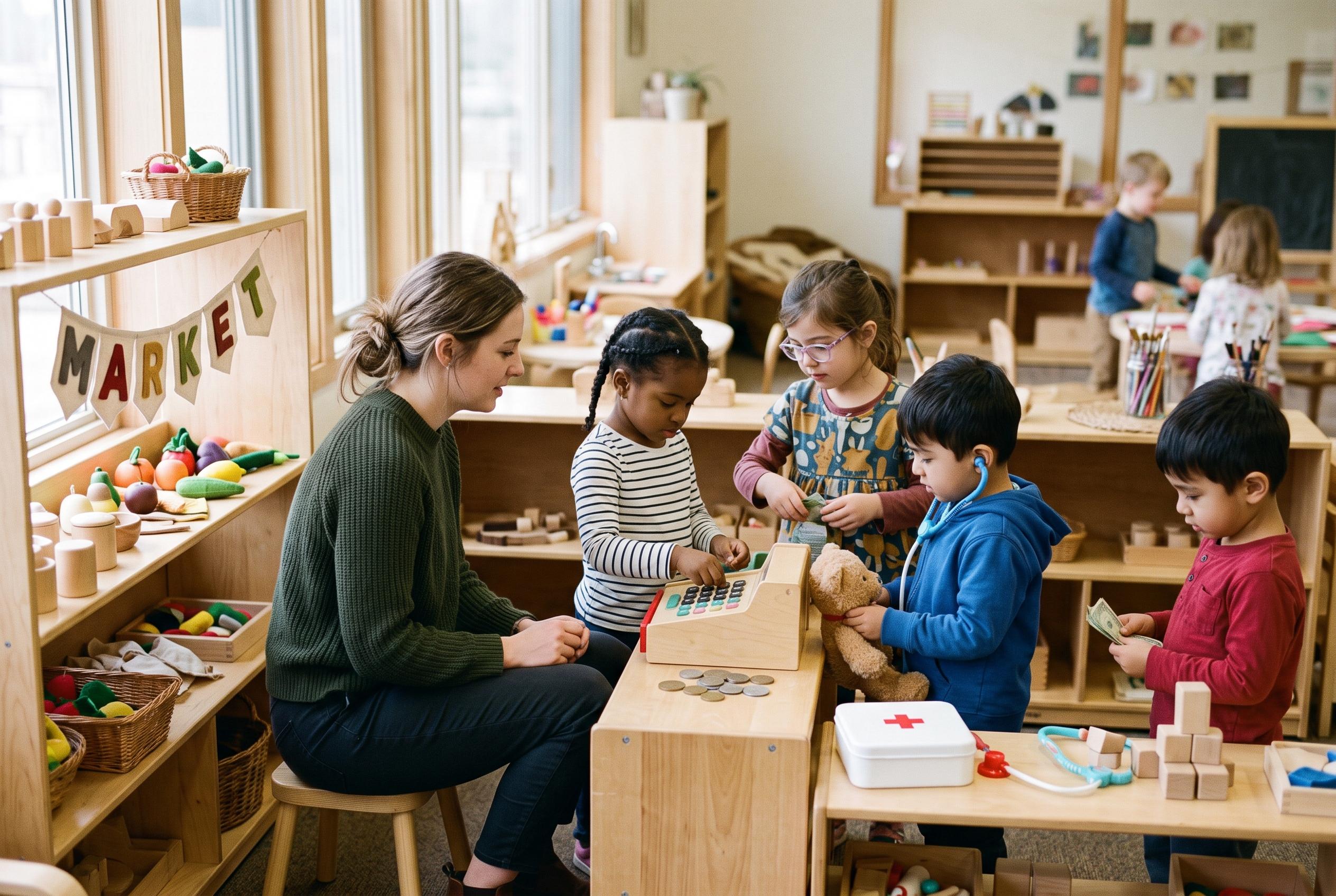

A theoretical study argues that shared, guided role-play helps preschool children develop imagination, self-regulation and social skills that underpin later learning.
Preschool play is doing far more than passing time, according to a theoretical study in Frontiers in Psychology that argues theme-based role-play is a central driver of early development. Drawing on Vygotsky’s cultural-historical approach, the article says mature pretend play helps children build imagination, symbolic thinking, self-regulation and the social awareness they will need for formal schooling.
The authors argue that not all play is equally valuable. What matters most is thematic social role-play: shared make-believe built around a recognisable situation such as a shop, a clinic or a restaurant. In that setting, children take on roles, follow rules and negotiate meaning with others. The article says this kind of play is most effective when adults help shape it without taking it over, offering clear goals, emotionally engaged guidance and feedback that keeps the game alive rather than turning it into a lesson.
A central claim is that play at this stage should be seen as a developmental necessity, not an optional extra. The article says guided role-play supports the emergence of creative imagination and symbolic thought, which it describes as key “neoformations” in preschool development. It links those abilities to later school readiness, arguing that children who can sustain collaborative, imaginative and rule-governed play are better prepared for reading, writing, problem-solving and classroom routines.
The study also emphasises the social nature of the process. Children learn to cooperate, wait their turn, resolve disagreements and take another person’s perspective by acting out social situations together. According to the authors, these experiences help children internalise rules and build empathy, while the repeated use of gestures, language and substitute objects gradually shifts thinking from concrete action to more abstract mental representation.
Adult guidance is presented as essential but should be supportive rather than controlling. The article says teachers and parents can extend play by asking open-ended questions, introducing new narrative turns and helping children reflect on what happened afterwards. It also warns against using pretend play as a disguised academic exercise, saying the point is not to drill facts but to deepen the child’s imaginative and social engagement.
The article concludes that early-years education should give structured role-play a much larger place in daily practice. It says schools and families should treat it as a core part of development, not a marginal activity. The broader message is that when children are given time, space and emotionally responsive support to build shared imaginary worlds, they are also building the psychological foundations for later learning and social life.
Disclaimer: This content is for informational purposes only and is not intended to be a substitute for professional medical judgment, advice, diagnosis, or treatment.



