

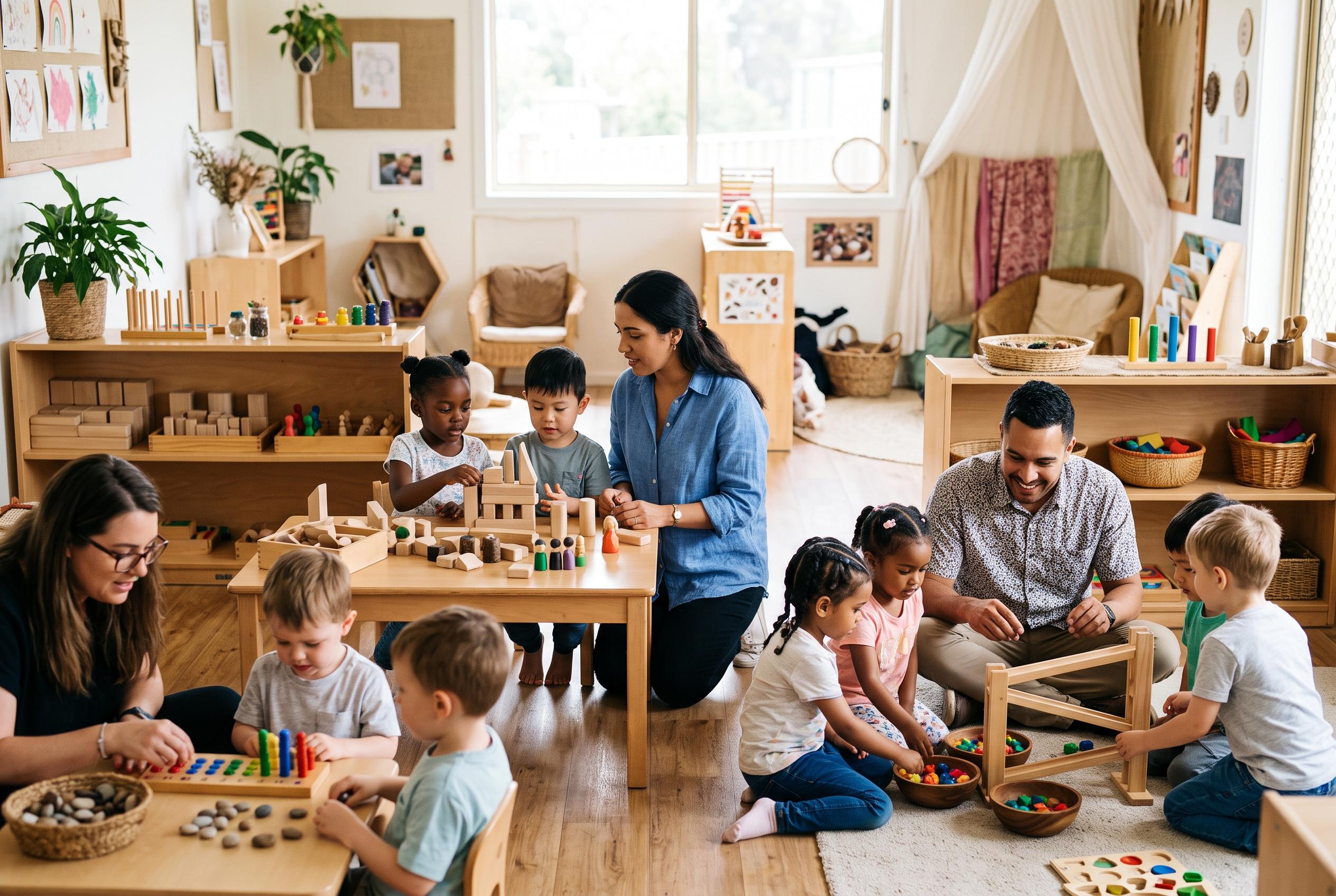

Early years settings are being urged to build responsive curricula around their children, families and communities, while embedding maths and STEM in everyday play and reviewing provision as needs change.
Early years providers are being urged to shape their own EYFS curriculum around the children and families they serve, rather than lifting a model from elsewhere. Parenta argues that the strongest approach begins with a setting’s ethos, local community and day-to-day reality, not with a ready-made template. That view aligns with the Department for Education’s EYFS framework, which applies to all Ofsted-registered early years providers in England and sets out the standards for care and learning from birth to five.
The practical message is that a nursery or reception class should first ask what its children need, what their families expect and what its community looks like. Parenta says a setting with many children who speak English as an additional language, for example, may place communication at the heart of its curriculum. The EYFS framework supports that kind of tailoring while still requiring providers to cover the seven areas of learning and development, which are split into prime and specific areas.
There is also no single approved formula for EYFS planning. Instead, many settings draw from a blend of approaches and adapt them to fit their own cohort and staff. Parenta points to Montessori, Reggio Emilia, Steiner-Waldorf, Forest School and HighScope as influential models, each with a distinct emphasis, from child-led exploration to outdoor learning and structured reflection. The EYFS Profile Handbook underlines why that flexibility matters: it links everyday provision to the Early Learning Goals children are expected to work towards by the end of reception.
Parenta also argues that maths and STEM should not be left as occasional extras. The better approach, it says, is to build number, pattern and problem-solving into play and routine activity throughout the day. That fits with the EYFS framework, which includes specific expectations around mathematics, as well as broader learning in communication, physical development and understanding the world.
Another central point is that curriculum design should remain live, not static. Parenta says settings should revisit their plans when their intake changes, when new needs emerge or when wider circumstances shift, such as after the Covid period. The Department for Education’s guidance and the EYFS Profile both reinforce the idea that provision should be responsive to children’s current development, rather than fixed to a document written once and filed away.
For leaders preparing for Ofsted, the article’s wider lesson is that a well-judged curriculum gives staff a clear story to tell about intent, implementation and impact. A setting that can explain why it teaches what it teaches, and how those choices reflect its children, is likely to present a stronger case for the quality of its provision. Parenta suggests starting with a review of the community, checking coverage across the seven areas, selecting a manageable number of pedagogical influences and setting regular review points so the curriculum keeps pace with the children actually in the room.
Disclaimer: This content is for informational purposes only and is not intended to be a substitute for professional medical judgment, advice, diagnosis, or treatment.



