

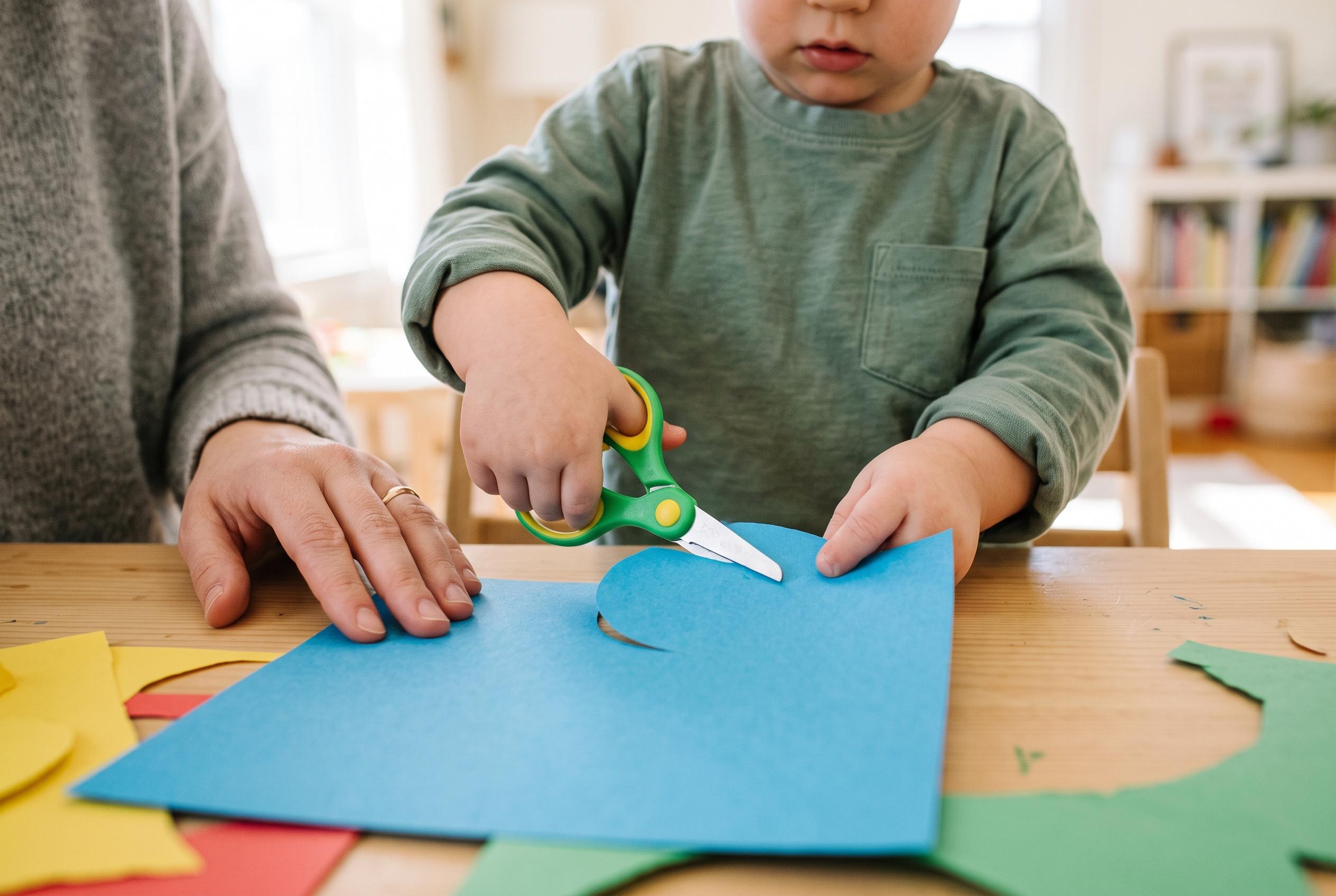

From first snips to cutting shapes, scissor practice builds strength, coordination and confidence , but the right tools, progression and supervision matter.
Scissor use is one of the quieter milestones in early childhood, but it matters more than many caregivers realise. According to Occupational Therapy OT, cutting helps build hand strength, finger isolation, coordination between both hands and the visual tracking children need for later classroom tasks. It also gives preschoolers a sense of mastery: once a child can manage scissors, they are not just making a craft, but learning control, patience and confidence.
The progression is usually gradual. Occupational Therapy OT says many children first show interest in scissors at around age two, then begin snipping paper or card at about two and a half to three. By three to four, they may be able to cut a strip of paper in two and follow a thick straight line. Between four and five, curved lines and circles become more realistic goals, while five- to six-year-olds may be ready for squares, triangles and simpler picture cut-outs. NHS guidance from Gateshead Health broadly matches that sequence, while stressing that sitting balance, wrist strength and bilateral coordination all play a part in successful cutting.
Teaching the skill well can make the difference between a child who persists and one who gives up. Occupational Therapy OT recommends starting with the right scissors: small, blunt-tipped tools that fit the child’s hand, with true left-handed scissors for left-handed children. The basic grip is easy to remember. Thumb goes on top, fingers go in the larger hole, and the helper hand holds and turns the paper. The article suggests using a simple “open, shut” rhythm and keeping the cutting elbow close to the body. A sticker on the thumbnail can help children remember to keep their thumb facing up.
Practice also works best when it begins with materials that are easier to cut than paper. Occupational Therapy OT suggests playdough, drinking straws, card strips, pipe cleaners, cooked spaghetti and old cards before moving on to regular paper. The idea is to let children succeed with short, satisfying snips before expecting them to manage long lines or corners. Other guidance, including advice from The Asian Parent and Crayon Snap, follows the same approach: begin simply, keep sessions short and build gradually so the task stays playful rather than frustrating.
That gradual approach is reflected in a long list of activity ideas. Early practice might involve giving a paper monster a haircut, cutting playdough snakes, snipping straw beads or trimming paper-plate edges into a sun. Later exercises can include cutting roads for toy cars, making paper chains, following highlighted lines in magazines or cutting along zigzags to create shark teeth or crowns. Once children are ready for curves and shapes, they can try waves, spirals, circles, squares, triangles and cut-out pictures. Occupational Therapy OT says the best activities combine cutting with a clear result, such as a craft, puppet or pretend-play game, because the reward helps keep children engaged.
Safety remains essential throughout. Children should always be supervised, use child-safe scissors and learn to keep scissors on the table when they are not in use. They should also be taught to walk with scissors closed and pointing down. If cutting remains unusually hard, especially if a child cannot open and close scissors by about age four, cannot cut a straight line by around age five, or becomes very upset by the task, Occupational Therapy OT advises speaking to an occupational therapist. An OT can look at hand strength, visual-motor skills and coordination, then suggest the right scissors and the right level of practice.
Disclaimer: This content is for informational purposes only and is not intended to be a substitute for professional medical judgment, advice, diagnosis, or treatment.



