

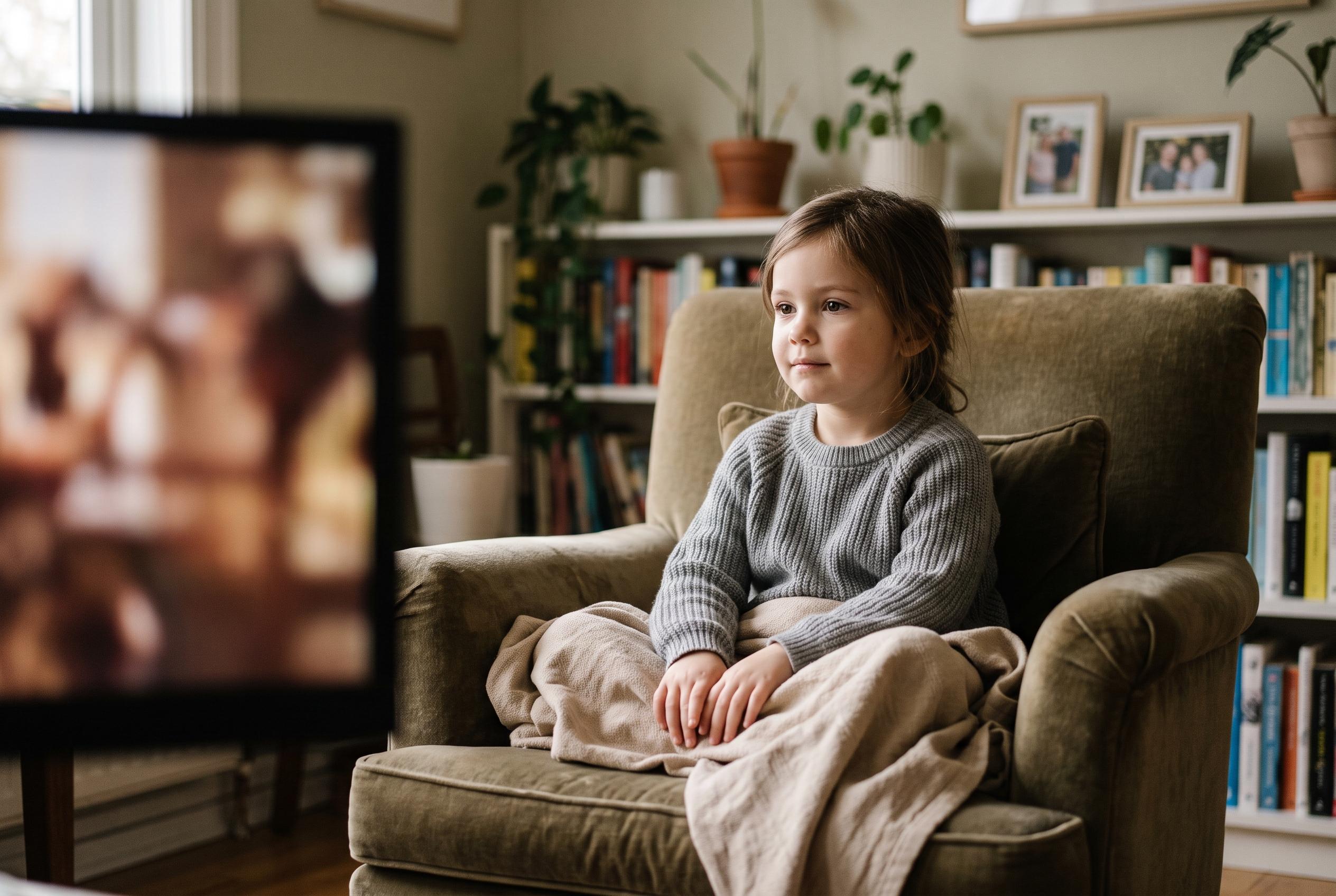

Research does not show that fast-paced programmes consistently harm attention, but experts argue that slower rhythms, repetition and silence can give children more time to understand and reflect.
At an airport gate, a child glued to a tablet can seem like an ordinary scene of modern travel. Yet, for Natalia Kucirkova, it also captures a bigger problem in children’s media: not just what children watch, but how quickly it moves. She argues that fast-changing images, abrupt rewards and constant stimulation can leave little room for young viewers to pause, make sense of what they have seen or connect one moment to the next. That concern has gained traction in discussions about attention, learning and emotional development, even as the research picture remains more complicated than campaigners sometimes suggest. According to a recent meta-analytic review, the short-term effects of media pace on attention and executive function are not consistent across studies, though fantastical content may affect performance immediately after viewing.
Kucirkova, a professor of early childhood education and development at the University of Stavanger and a professor of reading and child development at the Open University, says children’s media is usually judged on familiar criteria: whether it is educational, age-appropriate, inclusive, safe and free from excessive commercial pressure. But she argues that a crucial question is often missed: whether a programme gives a child enough time to absorb what is happening. That view echoes a growing strand of commentary around “slow” children’s television, including the Australian Broadcasting Corporation’s coverage of low-stimulation programmes that rely on gentler pacing, quieter soundtracks and clearer visual focus. Sites such as SlowScreen make a similar case, saying that calmer shows give children more room to hear words properly and follow actions step by step.
The distinction matters because media pace shapes comprehension, not simply entertainment. A child can laugh at a pratfall or follow a brief act of kindness, but if the moment is immediately replaced by a new joke, song or flashing image, there may be too little time to understand why it was funny or emotionally meaningful. The meta-analytic review found no clear overall pattern for pace alone, which suggests that speed is only part of the equation; content type, context and how material is presented also matter. Even so, Kucirkova’s broader point is that fast-paced material can train children to expect a constant stream of novelty, potentially making slower, more demanding activities harder to tolerate.
That is why some of the best-regarded children’s programmes use repetition, familiar routines and predictable structures. ABC’s low-stimulation recommendations highlight shows that unfold in real-world settings, with room for curiosity, self-regulation and creativity rather than relentless sensory overload. SlowScreen makes a similar argument, praising programmes that use clear voices, pauses and simple instructions that children can watch being carried out. In practice, that means a child is not merely bombarded with information, but is invited to follow, anticipate and participate.
Examples often cited in this debate include Bluey, which begins with ordinary family life before turning into imaginative play, and The Adventures of Paddington, where small mishaps are resolved through curiosity, politeness and reconciliation. Kucirkova also points to Daniel Tiger’s Neighbourhood, where fear is acknowledged rather than rushed past, and to the educational app Elmo Loves ABCs, which introduces letters through repetition, touch and sound. By contrast, she argues, media that pile on images, music and rewards without pause may keep children occupied without really helping them think. The recent review of the evidence supports a cautious reading of such claims: it found that pace by itself does not consistently predict cognitive outcomes, but it also suggested that the way content is built and the kind of material children see can matter greatly.
Kucirkova’s underlying argument is not that children should be kept away from screens, or that all fast-moving entertainment is harmful. It is that media makers and parents should value space as much as stimulus. A well-made programme can leave room for silence, repetition and reflection, allowing children to process what they have seen and to bring their own feelings and ideas to it. In an age shaped by the attention economy, that slower rhythm may be less fashionable than constant novelty, but it is likely to serve children better in the long run.
Disclaimer: This content is for informational purposes only and is not intended to be a substitute for professional medical judgment, advice, diagnosis, or treatment.



