


A nursery teacher says creativity grows through child-led play, messy exploration and a few minutes of undivided parental attention, not a packed timetable.
The question many parents wrestle with is not whether children need activities, but how many are enough. In a recent episode of the podcast “Irema rotao: mom edition”, hosted by Anthi Voulgari, nursery teacher Ioanna Kormpaki argued that creativity is not a narrow artistic talent and that children also need time to drift, explore and play without adults constantly steering them. She said even short bursts of focused attention from parents can matter more than a packed schedule.
Kormpaki, who has 13 years of experience in early-years education, said creativity should not be reduced to drawing or other obvious arts. In her view, it also shows up in the way children solve problems, build things, tear them down and try again. That broader definition matches guidance from the US Centers for Disease Control and Prevention, which says child-led play helps children build independence, confidence and stronger parent-child bonds.
The nursery teacher urged parents not to decide too early what a child “is” or “is not” good at. Interests, she suggested, emerge gradually through exposure and experience. The PBS KIDS for Parents site makes a similar point, describing creativity as the use of imagination to solve problems and stressing that children often show it most clearly during free play and open-ended exploration.
Much of the conversation focused on the cost of over-scheduling. Kormpaki said many children are now left with too little unstructured time, even though that is when they can express themselves, release energy and create on their own terms. Children’s Health has also noted that unstructured play supports cognitive, social, physical and emotional development, while helping children grow more resilient and confident.
She was equally firm that adults often interfere too much with the creative process. A child may choose a blue roof or a particular arrangement of blocks, yet parents sometimes step in with corrections or suggestions that reflect their own preferences rather than the child’s ideas. The point, she said, is to let children complete what they have imagined and to accept the result, even when it is not what an adult would have chosen.
That message extends to praise. Kormpaki said encouragement matters most when a child has achieved something meaningful in their own eyes, even if the result seems simple to an adult. Building a tower with ten blocks, for example, may be a small moment to a parent but a major triumph for a child. Nationwide Children’s Hospital has similarly advised parents to support effort, offer praise and let children develop at their own pace.
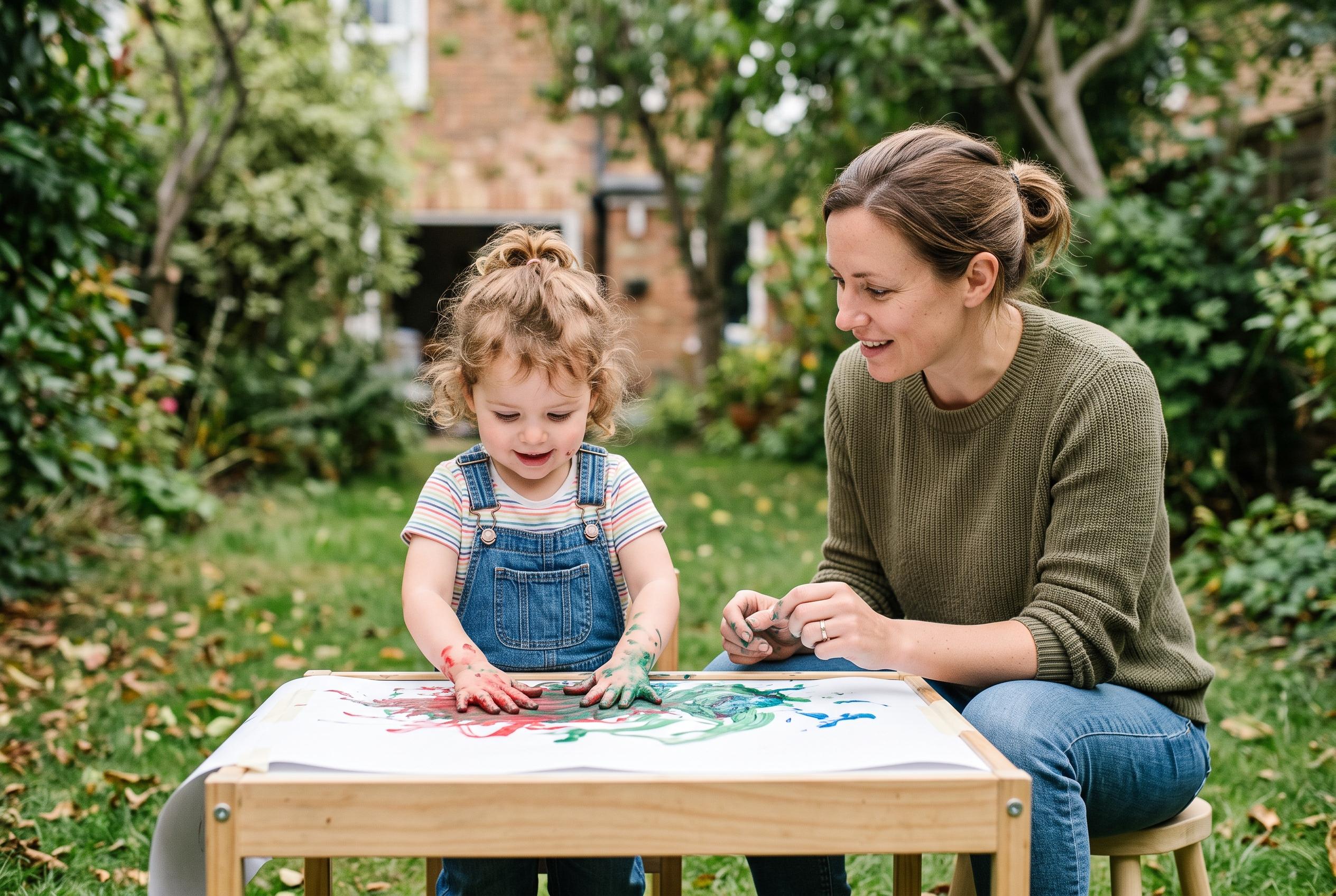
Another part of the discussion centred on sensory play, often known as messy play. Kormpaki described it as a wider educational approach rather than just a tray of rice or a box of materials. The idea, she said, is to create small worlds where even very young children can explore textures, move objects, fill and empty containers and develop fine motor skills. Pine Rest notes that free play of this kind is child-initiated, spontaneous and valuable for physical, social, cognitive and creative growth.
The episode also touched on nursery attendance and the choice between a childminder or staying at home. Kormpaki said the right answer depends on each family’s circumstances. Children who remain at home, she argued, still need chances to socialise and take part in group activities so they can ease into school life, practise cooperation and handle separation more smoothly later on.
Music, baby theatre and swimming for very young children were also presented as worthwhile options, not because every child must do them, but because they offer new stimulation and shared moments. Kormpaki said music is especially useful because it combines sound, movement and rhythm, while also helping parents and children connect. Free-play advocates at Scholastic likewise argue that open-ended materials and a safe space to explore can support imagination and problem-solving without turning every activity into a lesson.
The final theme was boundaries. Kormpaki said children do need limits, but they need them with consistency and care. Parents should not solve every problem for them, she said, because learning to work through difficulty helps children become more capable later on. Yet the most reassuring message of the conversation may have been her view that children do not need endless hours of parental attention. A few fully present minutes, she said, can be enough to make a child feel seen, secure and loved.
Disclaimer: This content is for informational purposes only and is not intended to be a substitute for professional medical judgment, advice, diagnosis, or treatment.



