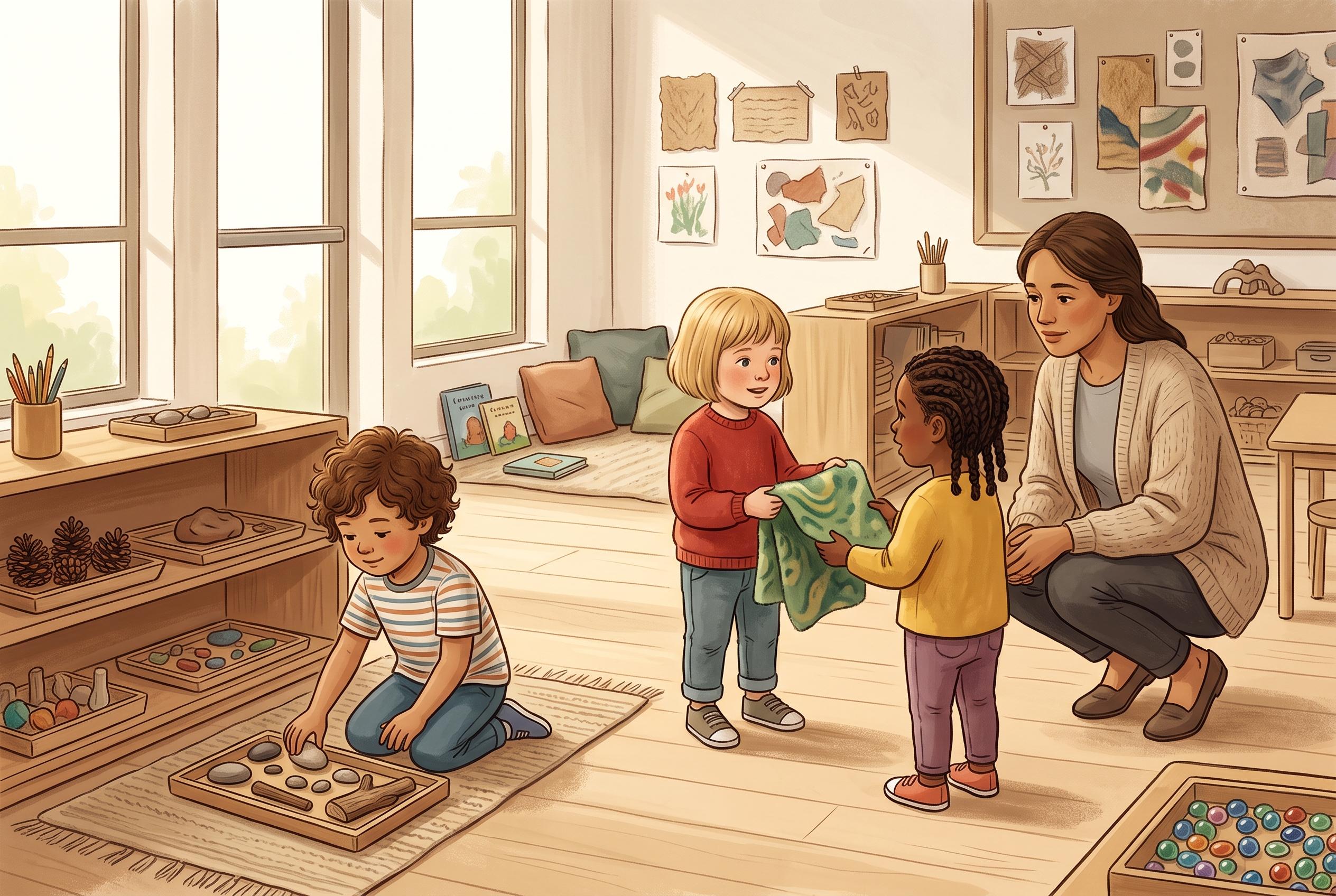

Research highlights the importance of play, social skills, and educational environments like Reggio Emilia preschools in shaping children’s confidence, independence, and emotional well-being during the formative years of four and five.
Children aged four and five can seem astonishingly grown-up. They have firm opinions, favourite colours and elaborate friendships, yet much of what matters most is still taking shape beneath the surface. Johns Hopkins Medicine notes that these years bring major gains in language, movement and thinking, making preschoolers an important stage of development rather than a warm-up for later learning.
That growth is not driven only by formal teaching. Research on early childhood development suggests that play is one of the most effective ways to strengthen executive function, the mental skills that help children hold information in mind, control impulses and adapt to changing situations. Studies cited in early education research have found that role play and games with rules can produce lasting improvements in these abilities, particularly when children are given time, space and guidance rather than constant instruction.
That helps explain why kindergarten teachers often care less about whether a child can recite facts than whether they can listen, wait, take turns, follow several steps in order and recover when something feels difficult. Those habits are built in everyday interactions: through conversation, play, problem-solving and relationships that encourage curiosity instead of shutting it down. At this age, social and emotional development can matter as much as early academic skills.
The Reggio Emilia approach, which treats children as capable learners and places strong emphasis on environment, relationships and exploration, has drawn attention from educators for decades. Research published by the National Bureau of Economic Research found that children who attended Reggio Emilia-inspired preschools later showed stronger employment and social-emotional outcomes than comparable peers who did not. The official Reggio Children organisation describes the philosophy as one centred on competence, collaboration and learning through experience, while other education reviews note that the setting itself is considered part of the curriculum.
For parents, the message is straightforward: the preschool years are not simply preparation for “real” school. They are a critical period in their own right, when a child’s confidence, independence and way of approaching the world are being formed. For families weighing childcare options, that makes quality, responsiveness and room for active discovery especially important.
Disclaimer: This content is for informational purposes only and is not intended to be a substitute for professional medical judgment, advice, diagnosis, or treatment.