

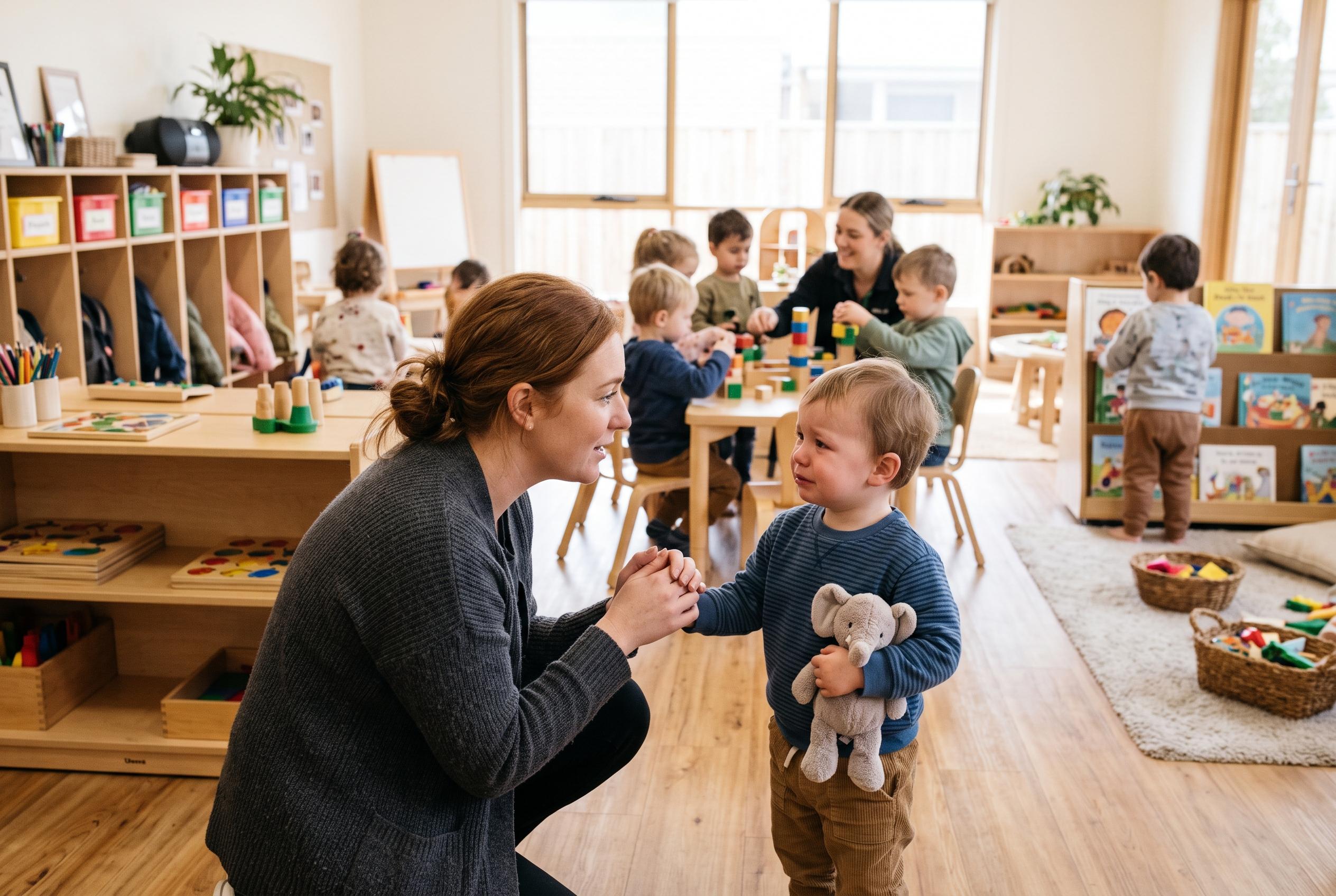

Consistent routines, brief goodbyes and trusting relationships can help young children adjust to nursery at their own pace, educators say.
The start of a new school year can feel like a fresh beginning for families, but for young children it often brings a cluster of changes at once: a new room, new adults, different routines and the daily goodbye at the door. Maha Eid, education, quality and compliance director at Blossom Nursery, said the transition is rarely measured best by how quickly a child stops crying. What matters more is whether the child begins to feel safe enough to explore, connect and take part at their own pace.
That point is echoed by guidance from preschool and early years providers, which emphasise that there is no single timetable for settling in. A child’s age, temperament, home life and past experiences all shape how they respond. Some children need time to adjust before they can separate calmly; others appear comfortable at first and then show their anxiety later in the day. The key, educators say, is not to compare children against one another, but to notice individual patterns and respond with consistency.
Predictable routines can ease much of that strain. Child development resources from schools and early education groups stress that children cope better when they know what happens next, whether that means a familiar breakfast pattern, a regular leaving ritual or a clear sequence to the morning. In the classroom, consistent daily rhythms and simple warnings before changes help children move from one activity to another with less stress. At home, keeping mornings steady can make the return to nursery feel more manageable.
The goodbye itself matters too. Family guidance from Child Mind and school transition resources both recommend warm, brief and reliable farewells, rather than drawn-out departures or slipping away unnoticed. That consistency helps children understand that separation is temporary and that the parent will return. It also gives educators a cleaner handover, allowing them to step in with reassurance, attention and a calm presence. As Blossom Nursery notes, a child who cries at drop-off may still go on to have a settled and productive day.
Relationships are central to that process. Young children often draw confidence from a familiar educator who responds steadily and without fuss, while play gives them a natural route back into their surroundings. Open-ended activities, outdoor exploration and opportunities to follow their curiosity can all help them re-engage without pressure. Families can support that effort by sharing information about sleep, health, home routines or comfort items, and by staying in touch with staff about how the day has gone. If distress remains intense or continues well beyond the settling-in period, educators and families should agree on an individual plan of support so the child’s needs are addressed early and consistently.
Disclaimer: This content is for informational purposes only and is not intended to be a substitute for professional medical judgment, advice, diagnosis, or treatment.



