

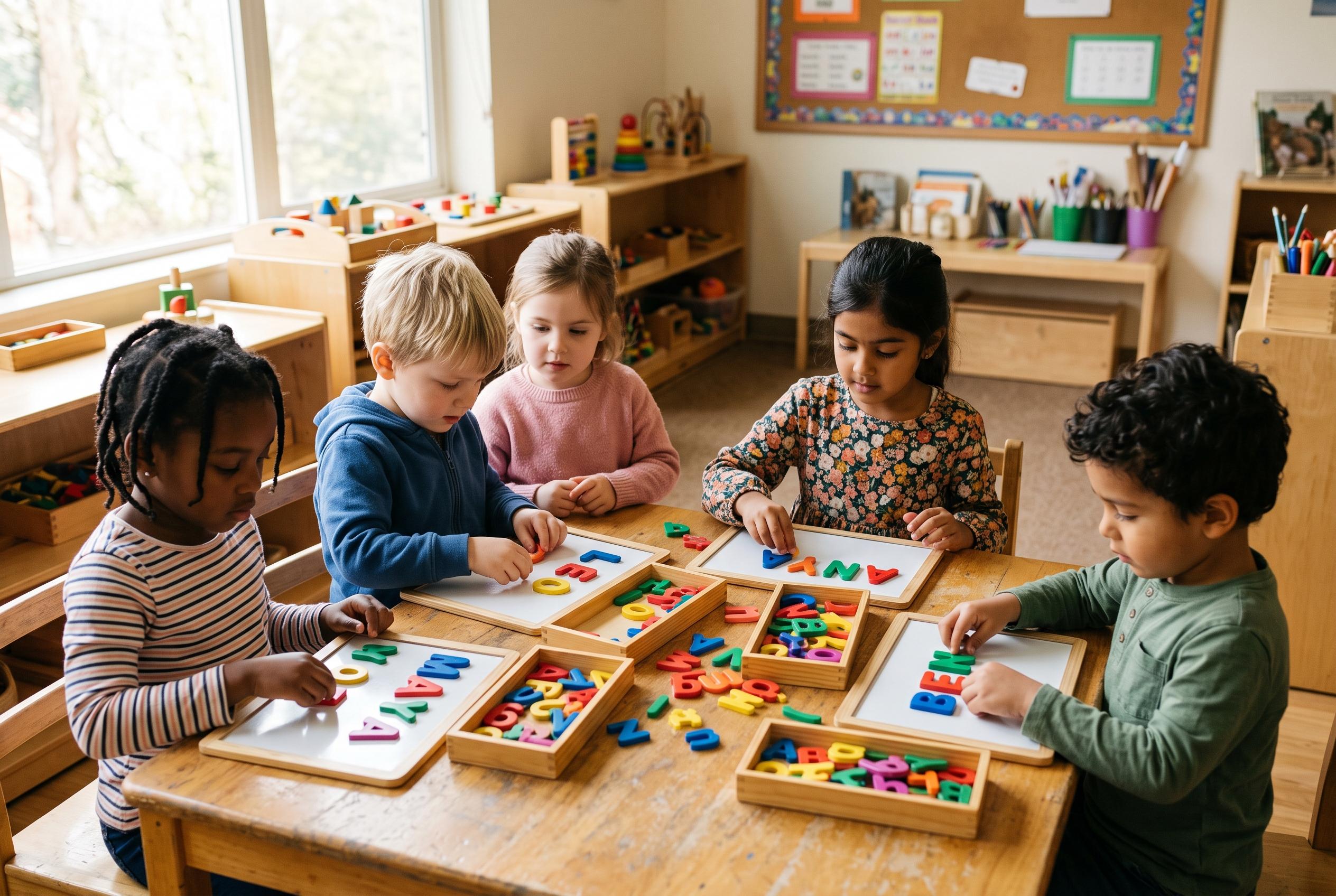

From magnetic letters to daily sign-in cards, short, playful name activities can help preschoolers recognise print and build early writing confidence.
Helping children notice and recognise their own names is often one of the easiest ways to open the door to early literacy. A name is personal, familiar and immediately meaningful, which makes it an ideal starting point for learning about letters, print and the idea that written words carry meaning. For many preschoolers, name work becomes more engaging when it is playful, brief and rooted in everyday routines rather than treated as a worksheet exercise.
That approach is supported by early learning guidance. The Head Start Early Learning Outcomes Framework notes that recognising letters from a child’s own name is one way preschoolers begin to show awareness of alphabet letters. Child development specialists also point out that name recognition and name writing are not the same skill: children can learn to spot, match and arrange the letters in their names long before they have the fine motor control needed to write them independently.
Simple name cards are the backbone of many useful activities. A clear first name, printed with an initial capital letter followed by lower-case letters, gives children a consistent model to study. For beginners, a small photo beside the name can make the task easier, especially when several cards are out at once. Once a child gains confidence, the photo can be removed so the focus stays on the printed word itself.
From there, the options are varied and easy to adapt. Children can build their names with magnetic letters, first by matching letters to a model and later by constructing the name from memory. They can search for hidden letters in a sensory bin filled with rice, shredded paper or pom-poms, or cover the letters in their names with dot stickers to strengthen hand control. Clothespins can be used to clip letters into the correct order, adding a fine motor challenge at the same time.
Routine is just as useful as novelty. A daily sign-in station gives children repeated contact with their names as they arrive, and it can be adjusted for different stages of development. Some children may simply move a name card to a “here today” board, while others attempt to sign themselves in with scribbles, initial letters or early letter forms. Educators and parents are generally advised to celebrate those early attempts, since they are part of the writing process rather than mistakes to be corrected too quickly.
Hands-on materials can deepen the learning. Children can shape playdough over the lines of a printed name, trace outlined letters with a dot marker, or rebuild a name puzzle cut from sturdy paper. A room-wide name hunt, in which several copies of a child’s card are hidden at eye level, encourages children to pay attention to clues such as the first letter, the length of the word or other familiar letters. These activities also pair naturally with broader letter-recognition games, including those that use rocks, sticks, household packaging or other everyday items.
The strongest activities are often the simplest to adjust. For children who are just beginning, a teacher or parent might start with one letter at a time, offer only a couple of name cards, or place a photograph beside the printed name. For children who are ready for more challenge, the letters can be mixed with extras, uppercase and lower-case versions can be matched, and names can be sorted by first letter or by length. Built Brains, which focuses on early letter recognition, recommends short daily practice sessions of five to 10 minutes and suggests starting with the letters in a child’s own name.
Just as important as the activity itself is the way adults present it. Keeping a child’s name in the same clear format across cubbies, artwork, attendance charts and learning materials helps children build familiarity. Names should always be spelled and pronounced as the family prefers, since a child’s name is also part of their identity. The overall aim is not speed or perfection, but repeated, positive exposure that helps children feel successful as they begin to recognise print, notice patterns and take their first steps towards reading and writing.
Disclaimer: This content is for informational purposes only and is not intended to be a substitute for professional medical judgment, advice, diagnosis, or treatment.



