

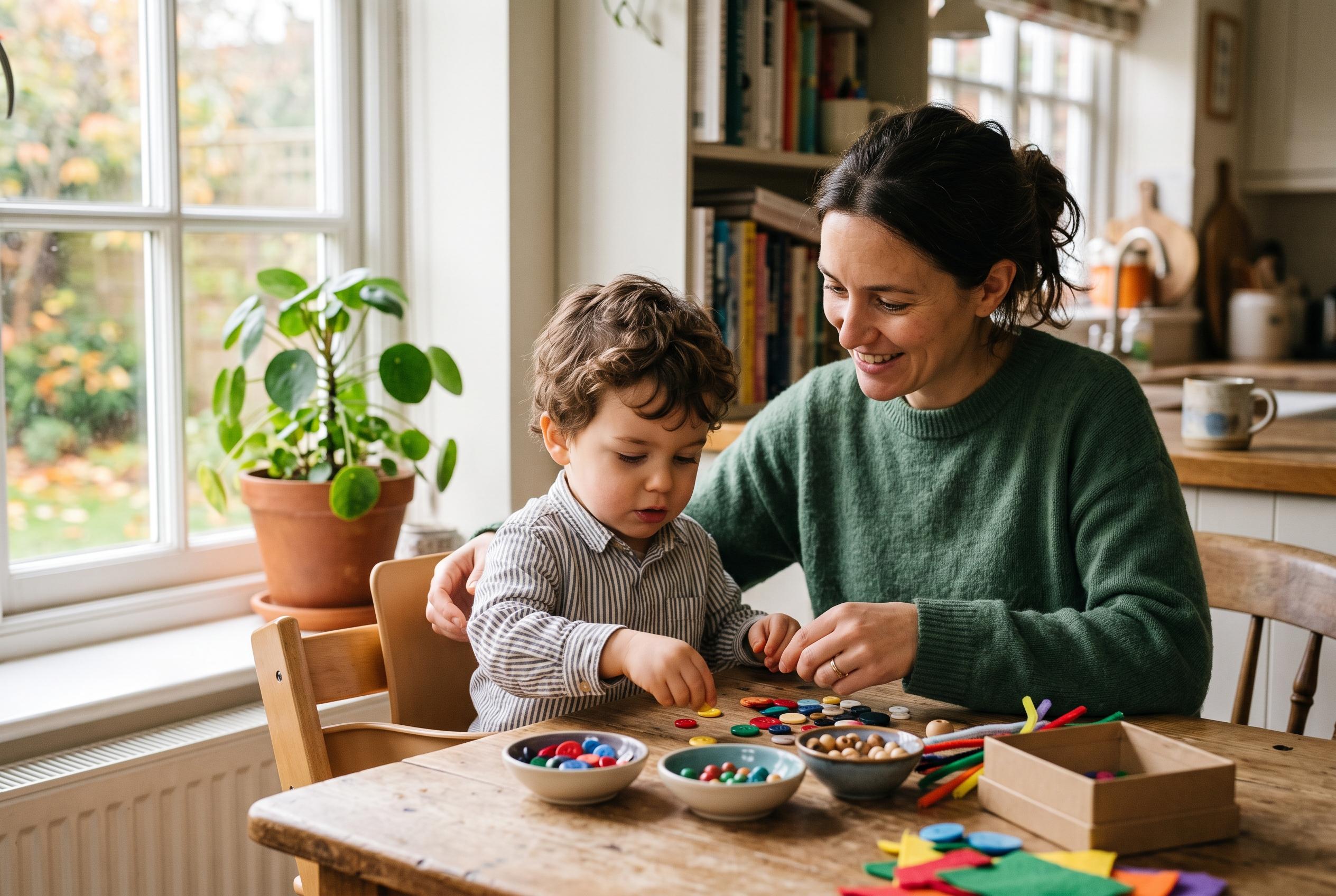

Simple crafts, sorting games and nature play can help three-year-olds develop fine motor control, language and concentration while creating relaxed time with parents.
Keeping a three-year-old occupied can feel like a full-time job. At this age, children are lively, curious and quick to move on, so activities need to be simple, engaging and short enough to suit a limited attention span. Hand-on creative play offers a useful answer: it gives children something to do away from screens while helping them build skills they will use later in drawing, writing and everyday tasks. Dynseo argues that these small workshops also create valuable shared moments between parent and child.
The strongest benefit of craft-style play is that it quietly develops fine motor control. Cutting, sticking, rolling, tearing and drawing all help strengthen the small muscles in the hands and fingers, which later support pencil grip and other practical skills. Related guidance from Printkoala and Smarter Sprouts points to the same idea: simple activities such as tearing paper, using playdough, peeling stickers, threading beads and playing with pegs or tweezers all help children practise precision, coordination and hand strength in ways that feel like play rather than work.
These activities also support language and early learning. As children mix colours, describe textures or name shapes, they practise everyday vocabulary without pressure. Smarter Sprouts notes that puzzles, pre-writing exercises and simple tasks around the home can all build focus as well as control, while Kidoc and The Kiddle highlight the value of low-preparation games that use ordinary household materials. Even sorting objects by colour or moving items between bowls can encourage concentration, patience and basic problem-solving.
Outdoor and nature-based play can add another layer. Learning Corner recommends activities such as nature walks, leaf and rock sorting, shadow play and planting seeds, which give young children a chance to explore the world around them through touch and observation. Dynseo makes a similar case for seasonal themes, suggesting that flowers, leaves, snowflakes and shells can keep activities fresh while helping children notice changes in nature and time. These small variations can prevent boredom without adding complexity.
The key is to keep the set-up calm and manageable. Parents are advised to prepare materials in advance, protect the table and clothing, and offer only a small choice of options at once. Short sessions, often no more than 10 to 20 minutes, are usually enough. If interest fades, it is better to stop and try again later than to push on. A relaxed attitude matters, too: for a three-year-old, the point is the process, not the finished result.
Safety also matters at this age, especially because young children often explore with their mouths as well as their hands. Dynseo recommends close supervision, age-appropriate materials, non-toxic products and a quick check for small parts before starting. Water-based paint, large beads, rounded scissors and playdough made at home can make activities easier to manage. Regular routines can help as well: a set creative time after a nap or on a particular morning each week gives children something to look forward to and makes the activity feel familiar.
There is also value in saving the results. Hanging pictures on a wall or keeping them in a box lets a child see progress over time, which can be motivating. Dating the work and inviting the child to describe what they made can build confidence and reinforce language. Dynseo also suggests involving children in tidying up, from putting away crayons to wiping the table, because these small jobs help them feel included and capable.
For families who want to add variety, the wider screen-free landscape is full of options. Some resources point to simple transfer games, colour sorting, cardboard stamping and collage work, while others favour outdoor observation, counting games and movement activities. The common thread is that young children learn best when the task is concrete, playful and close to everyday life. At three years old, that is usually more than enough.
Disclaimer: This content is for informational purposes only and is not intended to be a substitute for professional medical judgment, advice, diagnosis, or treatment.



