

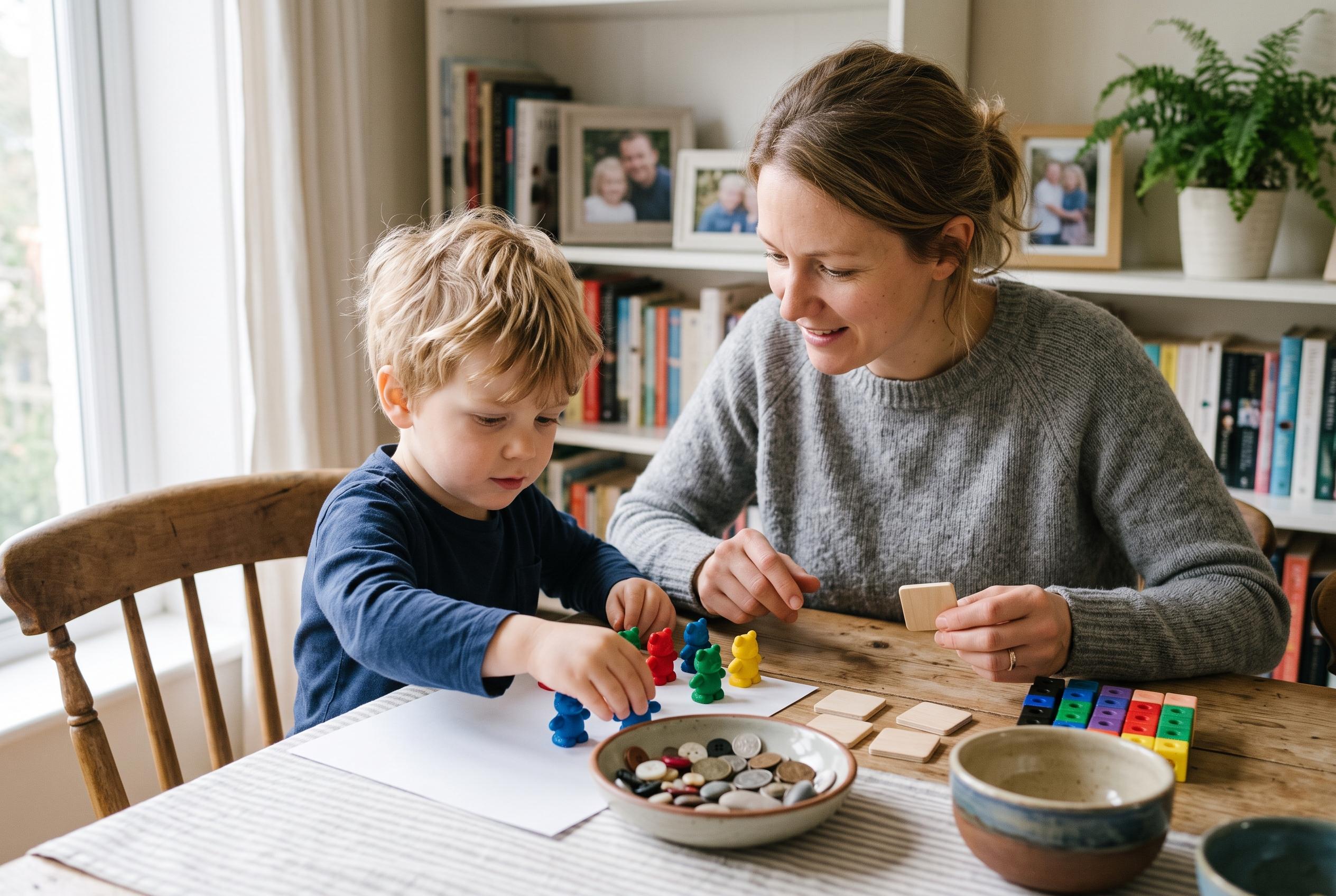

Utah launches a practical, game-based initiative to help parents support young children’s numeracy skills at home, aiming to improve future achievement and strengthen family bonds.
Utah is trying a hands-on answer to a familiar problem: many parents want to help their young children with maths but do not feel confident enough to start. At Plymouth Elementary School in Taylorsville, just outside Salt Lake City, Clarence Ames of the Utah STEM Action Centre led a small group of parents through an exercise designed to show that early numeracy can begin long before children reach primary school.
Ames, who oversees research and implementation at the state agency, said many adults tell him they are “not a maths person” and assume schools should handle the subject later. He argues the opposite. Early number work, he told parents, matters because children learn best when adults build simple counting, sorting and comparing habits into everyday life. That message sits at the heart of MILO & Friends, a state-backed effort launched in 2022 to give families practical ways to talk about maths at home.
The project reflects a growing body of research suggesting that early numeracy is as important as early reading in predicting later achievement. National data released by the board that oversees the National Assessment of Educational Progress last year showed that average maths scores in fourth, eighth and 12th grade had fallen below 2019 levels, while the gap between the highest- and lowest-performing 12th graders reached its widest point in nearly two decades. Just 33% of 12th graders were deemed ready for entry-level college maths in 2024, down from 37% in 2019. Stanford professor emerita Deborah Stipek has argued that if schools are serious about narrowing achievement gaps, the work has to begin before children enter school, when differences in maths skills are already visible among Black, Hispanic and low-income children.
Utah’s approach is deliberately low-tech. Rather than rely on a broad publicity campaign, Ames and his partners worked with the Utah Education Policy Centre at the University of Utah and looked for a game that parents could use easily at home. They settled on Happy Bunny, a board game built around colour matching, counting, sequencing and sorting. As families played, children moved a bunny along a path, harvested carrots and separated them into piles, all while practising skills researchers associate with early maths development. The centre says the game is meant to feel approachable, not intimidating, so parents who worry about their own abilities can still take part.
The appeal of that model is reflected in similar efforts elsewhere. PBS SoCal’s Family Math programme in California offers workshops, activity books and free digital tools for parents of children aged two to five, and the station says the initiative has been adapted in a dozen states. TERC, a non-profit educational research organisation, has also developed family-focused programmes such as Viviendo Matemáticas and Make Connections, both aimed at helping caregivers engage young children in maths through conversation and play. These efforts share a common goal: to replace anxiety with confidence and make maths part of ordinary family life.
Utah officials say the state’s own programme is beginning to do that. A study by the Utah Education Policy Centre last year found that parents who attended MILO & Friends events reported greater confidence in helping young children with maths, with the strongest gains among Spanish-speaking families and those with less education. The programme’s backers now plan to track kindergarten entry scores for children who receive its materials through a partnership with paediatricians. For Madeleine Clark, who coordinates services for the family engagement programme, the benefits extend beyond test results. She says the sessions also strengthen the parent-child bond, giving families a shared activity that can reduce frustration and build connection. Ames has a larger ambition still: he believes early maths supports reasoning skills that matter not only in school, but in civic life as well.
Disclaimer: This content is for informational purposes only and is not intended to be a substitute for professional medical judgment, advice, diagnosis, or treatment.



