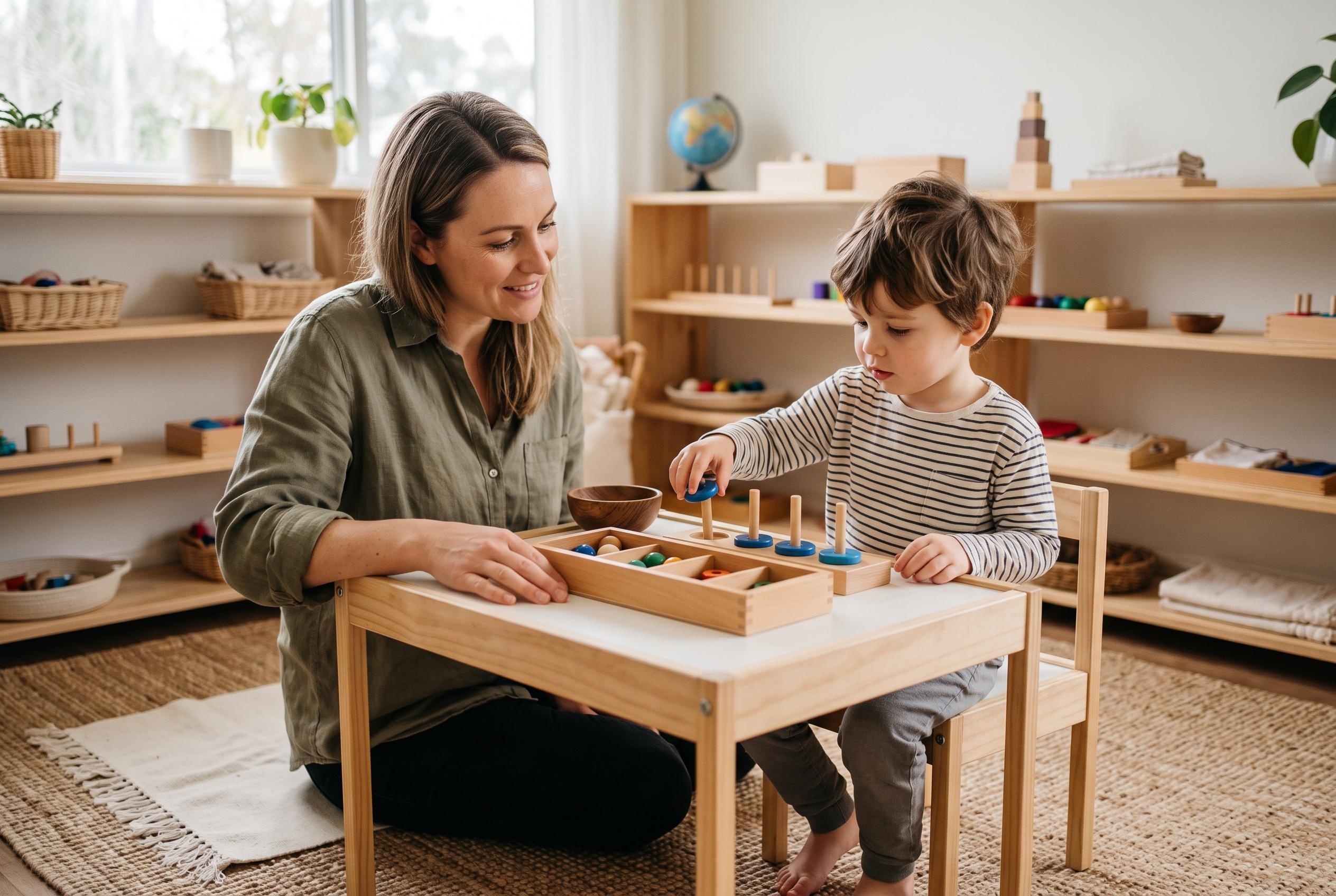

Children’s silence about their Montessori days often reflects the classroom’s rich, diverse activities and developmental factors, encouraging parents to foster natural conversations over time.
Children who come home from a Montessori classroom and say they did “nothing” are usually telling parents less about the day than about the limits of the question. In a setting built around concentration, independence and movement between activities, a child may have spent hours working with materials, helping a classmate, listening to a lesson or simply observing, yet still struggle to turn that experience into an immediate after-school account. Montessori schools describe classrooms where children move between individual work, peer collaboration and one-to-one teaching, rather than sitting through a single teacher-led lesson. That makes for a rich day,but not always an easily narrated one.
Part of the reason is developmental. Young children do not always remember events in the same sequence adults do, and they may not have the language to sort a whole school day into a tidy story on demand. Memory researchers and preschool educators alike note that a quick pickup question can feel more like an interview than an invitation, especially when the child is still shifting out of the school environment. By the time families reconnect, the child may be tired, hungry or simply not ready to recount hours of activity in one go.
Montessori practice also helps explain the silence. Teachers are trained to watch carefully, step back when possible and let children work through tasks at their own pace. That observation-based approach is meant to support self-regulation and independence, not to produce a constant stream of adult commentary. A child deeply absorbed in a task may not be encoding the moment as a story to retell later. The experience matters even if it is never summarised over the car seat.
For parents, the better response is usually gentler and more specific. Instead of asking for a full report, it can help to ask what made the child laugh, who sat nearby at lunch, whether anything felt tricky or what seemed most interesting. Sometimes a simple observation works better than a question: “You look tired; it must have been a busy morning.” Montessori advocates of following the child say that this kind of patient attention respects the child’s pace and makes space for conversation to emerge naturally rather than under pressure.
Often, the details arrive later, when the day has loosened its grip. A child may mention a caterpillar at bedtime, a classmate’s help during cleanup or a lesson that finally made sense after weeks of practice. That quieter version of the day can be just as meaningful as a polished report. The point, Montessori parents are reminded, is not to extract every story at pickup but to trust that important learning is still happening, even when it does not come home all at once.
Disclaimer: This content is for informational purposes only and is not intended to be a substitute for professional medical judgment, advice, diagnosis, or treatment.