

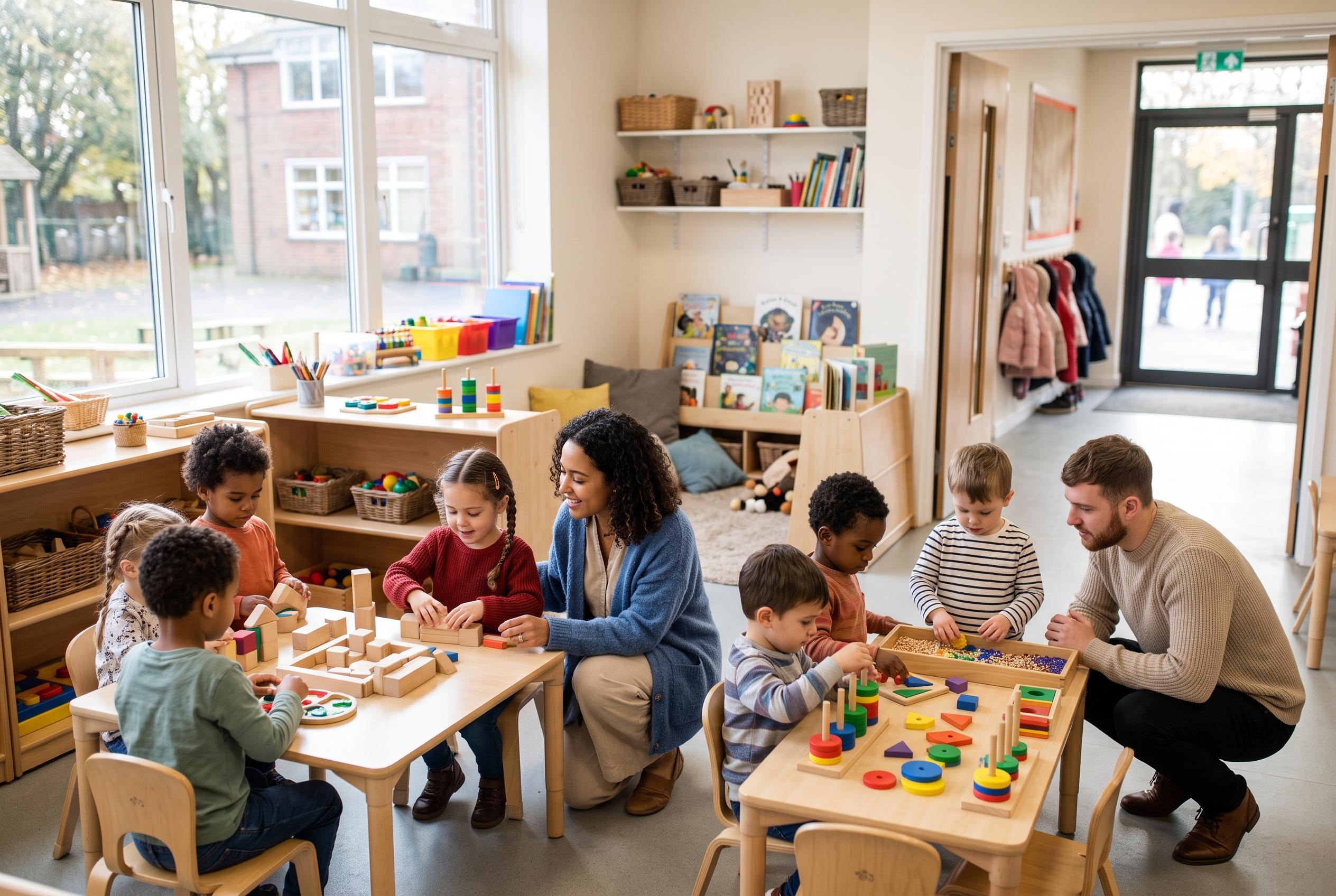

As the UK advances policies that treat early years as integral to education, experts and Nordic models highlight the importance of quality, rights-based approaches to narrow developmental gaps and foster lifelong learning.
The case for treating early years as part of universal education is gaining strength as ministers in England push to narrow gaps in children’s development before they reach primary school. A recent LabourList essay argued that nursery education should be free and framed the question bluntly: if education is a public good, why should it effectively begin only at school age? The argument is reinforced by UNICEF, which says the foundations for learning are largely laid in the first years of life, and by UNESCO, which describes the period from birth to eight as a critical window for brain development and lifelong progress.
That debate matters because children do not arrive at reception with the same starting point. Differences in speech, language, early cognitive skills and social development can quickly become entrenched, making life harder for schools trying to close those gaps later. UNICEF says children who fall behind early often struggle to catch up, while UNESCO argues that quality early childhood care and education supports not only academic success but also health, wellbeing, social development and economic participation later in life.
The UK government has already moved in this direction. According to the LabourList article, the Early Years Pupil Premium was increased by more than 45% in 2025 to a maximum of £570 per eligible child, while Best Start Family Hubs are being expanded across every local authority with more than £500 million of support. The same piece says funded childcare has been extended to 30 hours for eligible working families from nine months old, and that hundreds of new school-based nurseries are being created. Taken together, those measures suggest a shift away from seeing early years solely as childcare and towards treating it as part of the education system.
The Nordic countries are being held up as a model for what that could look like in practice. The Nordic Council of Ministers says early childhood education and care there is built around a holistic, rights-based approach grounded in democratic values, with local and municipal contexts playing a central role. Its research and related publications describe a tradition in which play, care and learning are closely connected rather than treated as separate aims. That is the broader lesson for Labour: expanding access is only part of the task. If early years policy is to narrow inequality, it must also support skilled staff, purposeful play and a clear educational framework from the start.
Disclaimer: This content is for informational purposes only and is not intended to be a substitute for professional medical judgment, advice, diagnosis, or treatment.



