

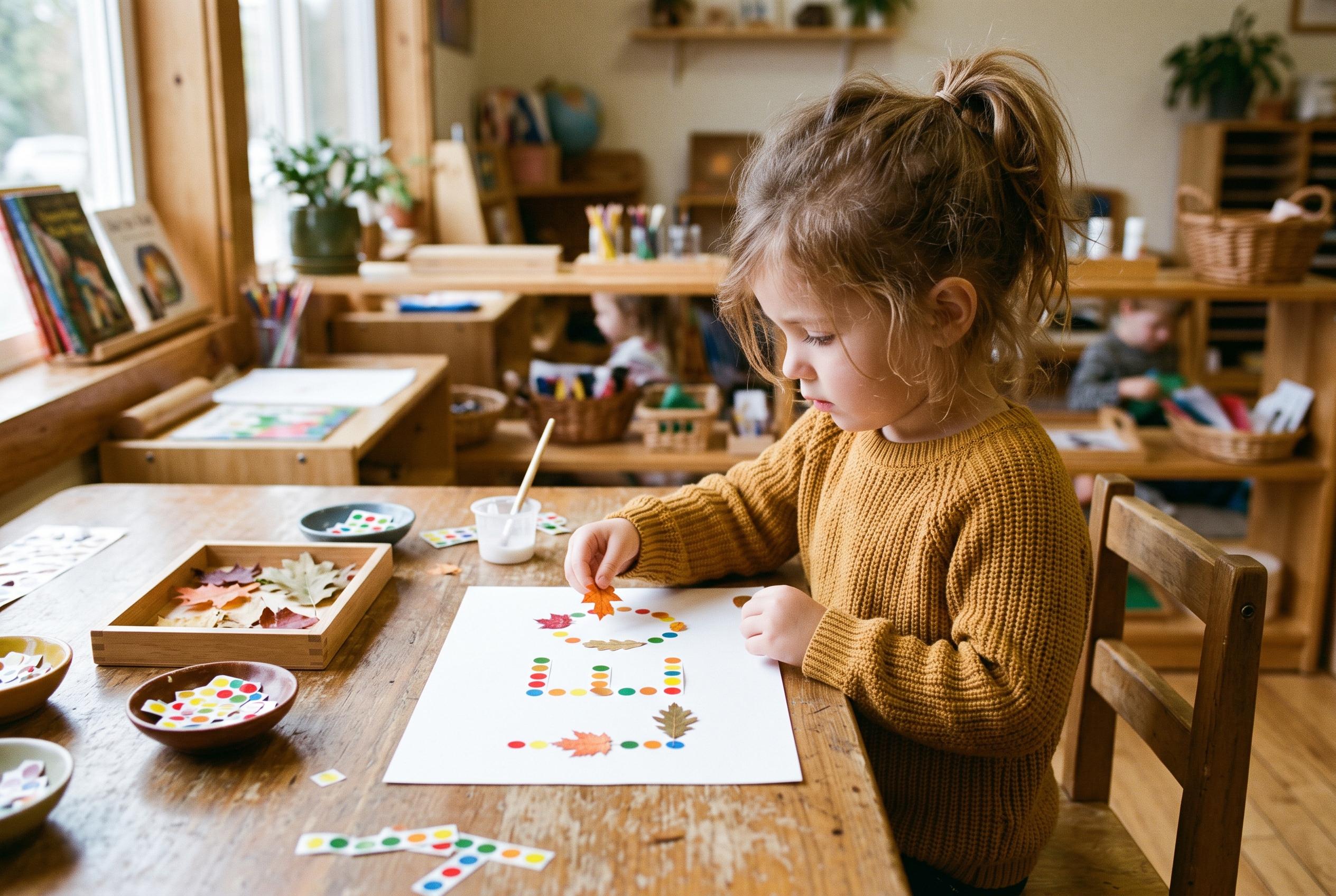

Natural materials and dot stickers can help young children recognise the letters in their names while building fine motor skills through playful, low-pressure activities.
Helping a young child recognise their own name can be one of the most rewarding early literacy moments, and it does not require worksheets or elaborate materials. A few leaves, twigs, petals or dot stickers are enough to turn letter practice into a hands-on activity that feels like play. Montessori-inspired name work can also support fine motor control, hand-eye coordination and concentration, especially when children are invited to move at their own pace and explore the letters in a familiar word: their own name. According to early-childhood resources on name activities, that personal connection often makes learning feel more meaningful and memorable.
One simple option is to write a child’s name in large letters on cardboard or heavy cardstock, then invite them to trace the shapes with loose natural materials gathered outdoors. Small leaves, flower petals, pebbles and twigs give children a sensory way to notice the lines and curves that make up each letter. The activity works especially well when adults start with just one letter, then gradually build up to the full name if the child remains interested. That kind of gradual, child-led approach is consistent with other hands-on name activities described by preschool educators, who often recommend low-pressure practice rather than rigid drills.
A second option uses round dot stickers and a marker. Writing the name in bold letters on paper or card gives children a clear outline to follow, while peeling and placing stickers adds an extra layer of fine motor practice. Adults can add small arrows to show how each letter is formed, but the goal is not to expect perfect handwriting. It is to help children notice letter shapes, track them visually and practise controlled finger movements. Preschool resources that focus on name spelling and letter formation often use similar materials, including clothespins, magnetic letters and sticker-based activities, because they are easy to set up and adaptable to different stages of development.
These activities also lend themselves to broader learning. Nature tracing can be adapted for numbers, shapes or simple patterns, while stickers can be used for colour sorting, alternating sequences or matching. That flexibility matters because children do not all arrive at the same skills at the same time. Some are ready to recognise letters before they can hold a pencil with confidence; others prefer building, sorting or sensory exploration first. Early-childhood guidance from the National Association for the Education of Young Children has long emphasised the value of meaningful, everyday writing experiences and developmentally appropriate support.
Safety and simplicity remain important. Loose parts should be large enough to avoid choking risks, especially for children who still mouth objects, and natural materials should be checked for sharp edges, thorns or insects. Stickers should also be age-appropriate and used under supervision. The point is not to finish every letter in one sitting, but to offer a short, enjoyable experience that can be repeated another day. Preschool educators who share name-based activities often stress that repetition, not perfection, is what helps children begin to recognise written words with confidence.
For parents and caregivers, the most useful mindset is to keep the activity small, calm and responsive. Start with the letter a child already knows, or with the first letter of their name, and build from there. Talk about the shapes as you work, point to letters in daily life and let the child choose colours or materials when possible. That combination of familiarity, repetition and open-ended play is what makes name recognition feel less like a lesson and more like an invitation to learn.
Disclaimer: This content is for informational purposes only and is not intended to be a substitute for professional medical judgment, advice, diagnosis, or treatment.



