


Turkey’s Ministry of National Education has launched its first comprehensive play strategy, emphasising the importance of play in education, physical activity, and cultural heritage, with plans to protect recess, expand traditional games, and integrate play into lifelong learning.
Turkey’s Ministry of National Education has drawn up its first policy framework devoted to play, setting out a nationwide effort to protect children’s right to play and to place games more firmly within education and social life. According to Anadolu Agency, the new “Turkey Play Policy Document and Action Plan” treats play not as a leisure extra but as a basic part of childhood, culture and learning.
The ministry’s approach follows a broader pattern of policy planning in education. The ministry recently put into force an Artificial Intelligence in Education Policy Document and Action Plan for 2025-2029, which it said was designed to bring new technology into classrooms in an ethical and inclusive way. In the play strategy, by contrast, the emphasis shifts back to physical activity, cultural continuity and the social value of games. Officials have framed the new document around the “Play at the Heart of Education” theme, which was highlighted in guidance sent to provinces for the new academic year.
The play plan sets out six goals, 29 policy items and 90 action steps. It covers children from pre-school through secondary school, but also extends to adults and older age groups under a “lifelong play” approach. The ministry says the aim is to secure time and space for play, preserve traditional games, improve awareness among families, teachers and local authorities, and strengthen oversight and data collection. It also wants physical play to take precedence, while digital gaming is to be handled in a balanced way that supports development and online safety.
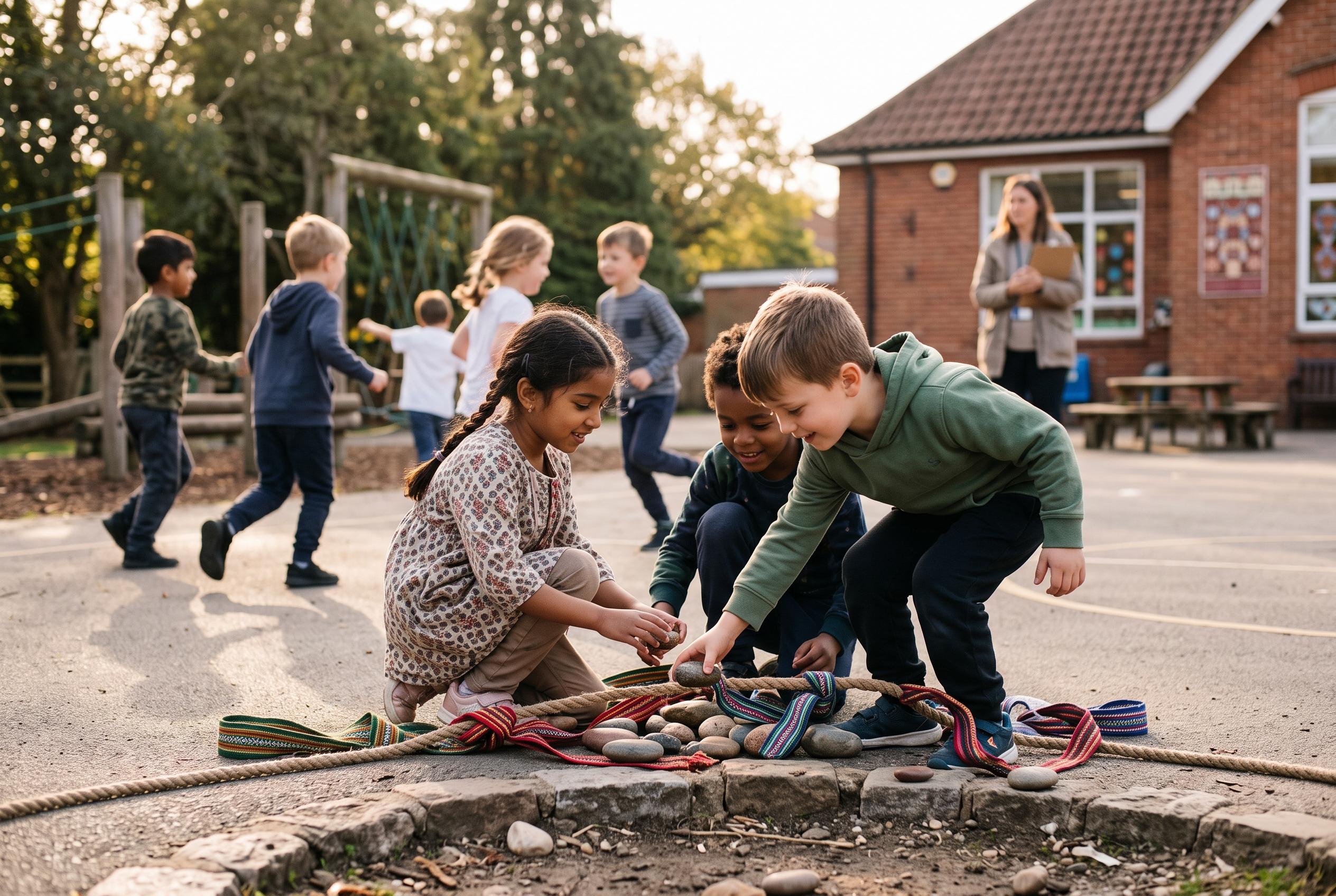
One of the clearest priorities is to protect recess and unstructured play time. The ministry says breaks during the school day should not be shortened and should be regarded as learning time that supports a child’s overall development. Schoolyards and play areas are to be redesigned to reduce safety risks and allow for a wider variety of games, with natural elements where possible. The plan also calls for a guide on effective recess design, pilot projects to make school grounds greener and more sustainable, and a new tool to assess whether play spaces are adequate, accessible and high quality. Standards are also to be drawn up for children with disabilities and those with limited access to education, so that they can play alongside their peers.
The document places strong weight on cultural transmission. A national game inventory is to be created, with local education directorates collecting material from the field and publishing it through an open digital platform. Games that may qualify for UNESCO’s intangible cultural heritage list will be identified, while traditional game festivals are expected to become more regular across the country. The ministry also plans to link games with values education, expand teacher training in play pedagogy, support play-based psychological assistance in crises and disasters, and encourage locally produced digital games rooted in Turkish culture. Families and municipalities are to be drawn into the effort through school-based activities, parent education and plans for child-friendly neighbourhood play streets. The ministry says an National Play Coordination Board will be created to oversee the work and publish annual assessments.
Disclaimer: This content is for informational purposes only and is not intended to be a substitute for professional medical judgment, advice, diagnosis, or treatment.



