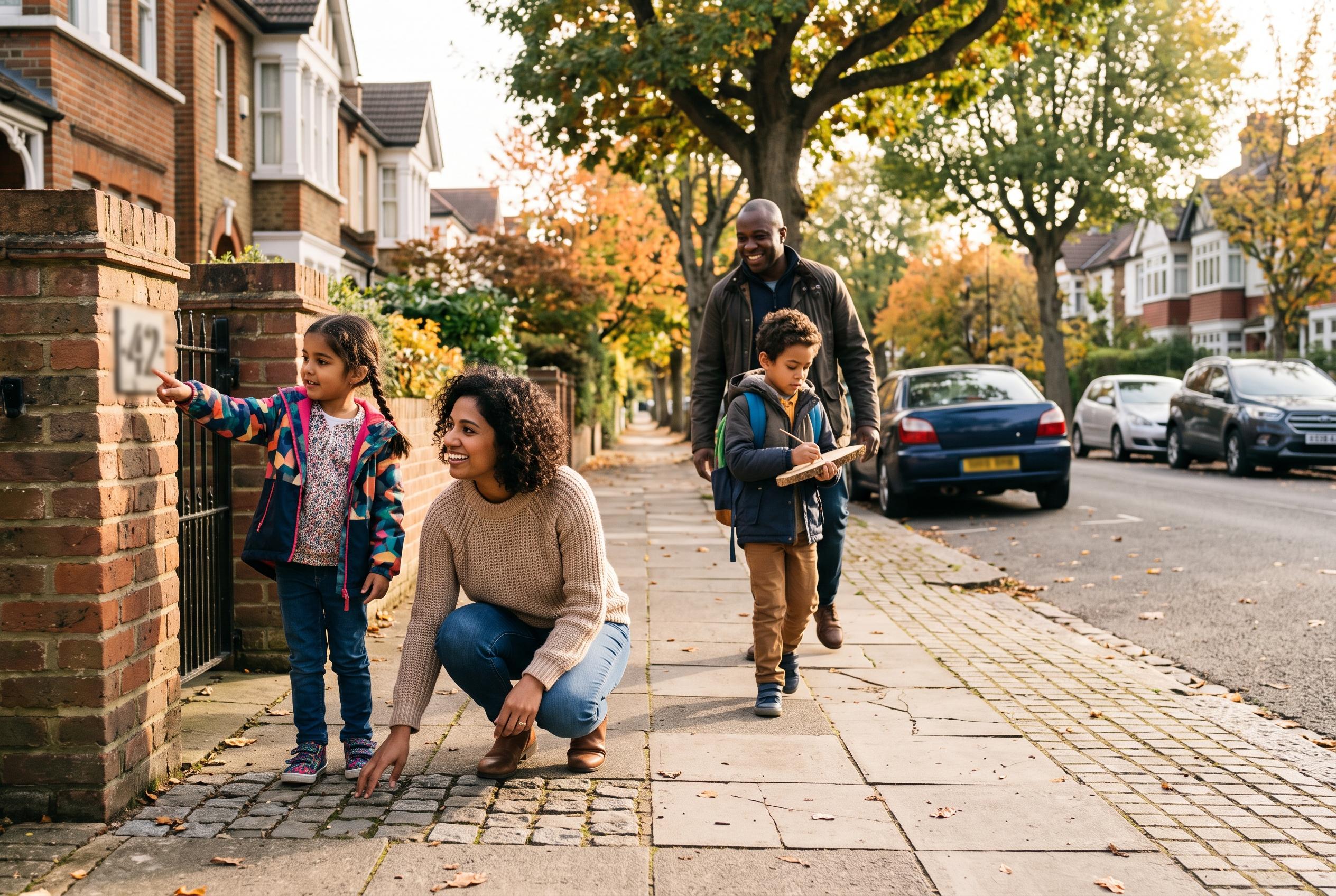

Children can turn everyday neighbourhood walks into engaging maths lessons by counting and recognising numbers in their environment, fostering practical understanding and confidence without the need for traditional worksheets.
A simple walk round the neighbourhood can become an early maths lesson in disguise. For young children, counting buses, mailboxes, cars and steps turns numbers into something they can see, touch and move through, helping them grasp ideas such as one-to-one correspondence, pattern recognition and estimation without the pressure of worksheets or flashcards.
One of the most effective starting points is the basic count-along. According to the Erikson Early Math Collaborative, one-to-one correspondence is the habit of matching each number word to one object, and it is central to accurate counting. That is why activities such as pointing to each mailbox, tracking a chosen car colour or counting house numbers can be so useful: they connect spoken numbers with real objects in a child’s environment.
Gryphon House recommends using movement to deepen the lesson. Children can count big steps, small steps, hops or turns while walking, then compare an estimate with the actual number of steps needed to reach a tree, lamp post or crossing. That kind of play helps children learn that numbers are not just words in sequence; they also describe distance, size and change. Similar ideas appear in nature-based activities that ask children to gather leaves, stones or pinecones into small sets, reinforcing early grouping and number recognition.
The walk can also support more advanced early-maths skills. Counting animals, birds or passing cars helps children practise keeping a running total, while spotting digits on street signs and front doors links spoken numbers to written symbols. Some parents and educators also use safe pauses at crossings to count slowly to 10 or 20, or even to count backwards on an open stretch of pavement, which can strengthen number order and prepare children for later subtraction concepts.
Experts in early learning generally agree that these outdoor activities matter because they move children beyond rote recitation. A child may be able to chant numbers in order without understanding what they mean, but real-world counting builds quantity sense, spatial awareness and confidence. For most preschoolers, the key is to keep it brief and playful: a few minutes of counting during an ordinary walk is often enough to make maths feel natural, practical and fun.
Disclaimer: This content is for informational purposes only and is not intended to be a substitute for professional medical judgment, advice, diagnosis, or treatment.