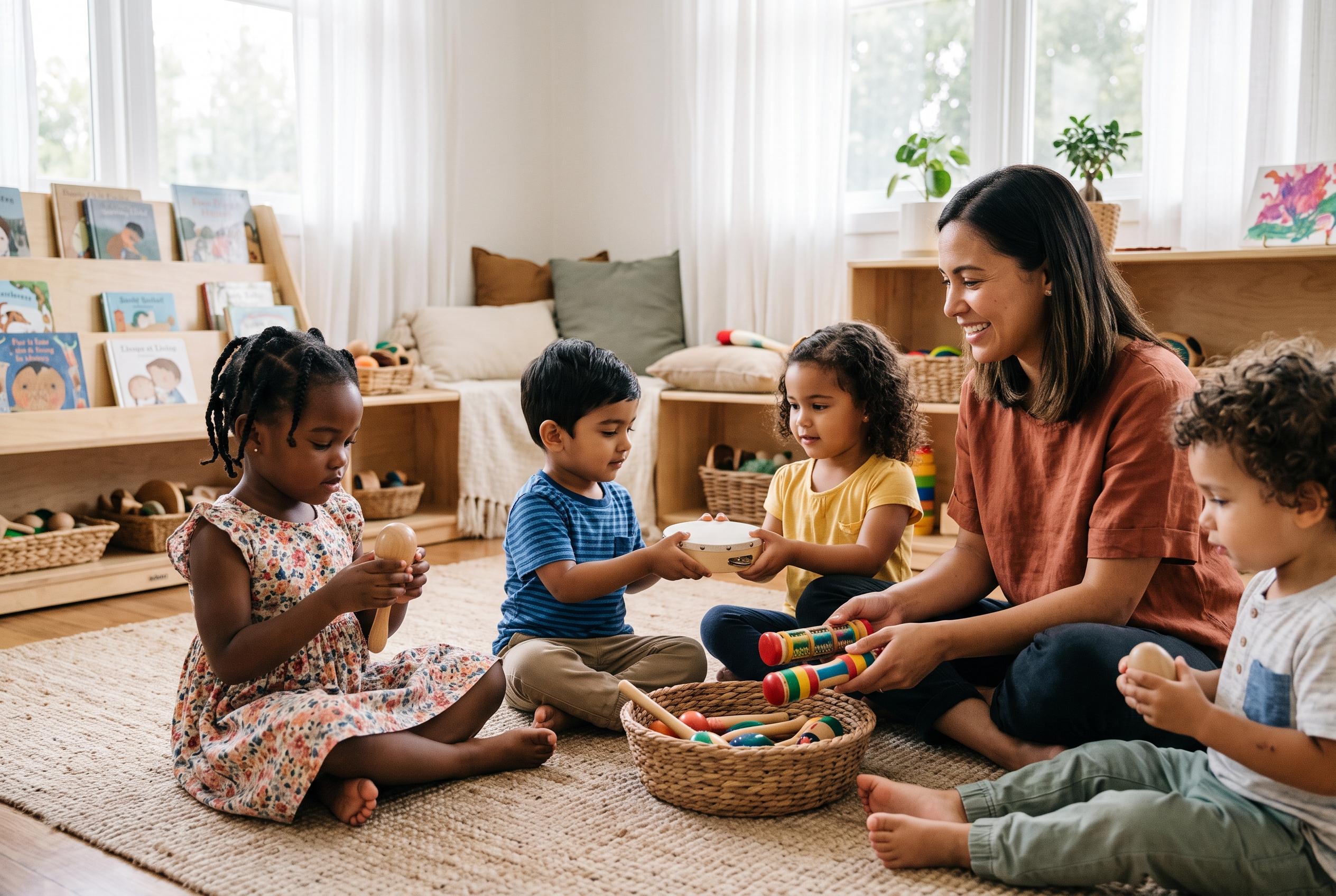

Emerging research highlights how deliberate and respectful music activities in nurseries can bolster emotional security, language, and creativity, while emphasising the importance of consent and individual choice for children’s well-being.
Music sessions in nurseries are often treated as a cheerful routine, but a growing body of early years thinking suggests they can do far more than fill time. Recent research by Kelly Webster and Andrew Holmes argues that structured musical activity can support well-being, emotional security, language, creativity and cognitive growth. The same work also points to a quieter question that is often overlooked in practice: whether children are actually willing participants. According to the study, the benefits of music are strongest when it is used deliberately rather than as background entertainment.
That matters because early years music often relies on invitation, imitation and group participation, all of which can blur the line between enjoyment and pressure. Consent becomes especially important when a child is asked to join in, take a turn or accept touch during a song. As early years guidance from Acorn Early Years Foundation explains, consent in this setting is not only about permission in a formal sense; it is also about trust, self-awareness and respect for others. When children are given space to choose, practitioners can turn passive observation into meaningful learning.
The impact can be more complex than it first appears. A child’s response to singing, movement or gentle touch may be shaped by earlier experiences, family routines or memories that adults do not know about. The same song or movement that delights one child may unsettle another. In practical terms, that means watching for body language, offering alternatives and stopping when a child signals discomfort. Small acts of choice can help children feel seen as individuals rather than treated as a group with identical needs.
That approach also fits with wider arguments for high-quality music provision in the early years. Music Mark says music in the birth-to-five years requires its own kind of teaching and sensitivity, while Sutton Music Trust notes that good music experiences can support children from a range of backgrounds, including those with special educational needs and disabilities. The Los Angeles Times has also reported on research linking singing and music with stronger early literacy, including vocabulary and reading gains. Taken together, the evidence suggests music is most powerful when it is both purposeful and respectful.
For practitioners, the lesson is straightforward. Ask before touching. Offer choices in instruments, movement and participation. Build in pauses for children who want to watch before joining. And remember that consent is not a one-off lesson, but part of the culture children absorb every day. In that sense, music can do more than support early development: it can help lay the groundwork for trust, autonomy and healthy relationships.
Disclaimer: This content is for informational purposes only and is not intended to be a substitute for professional medical judgment, advice, diagnosis, or treatment.