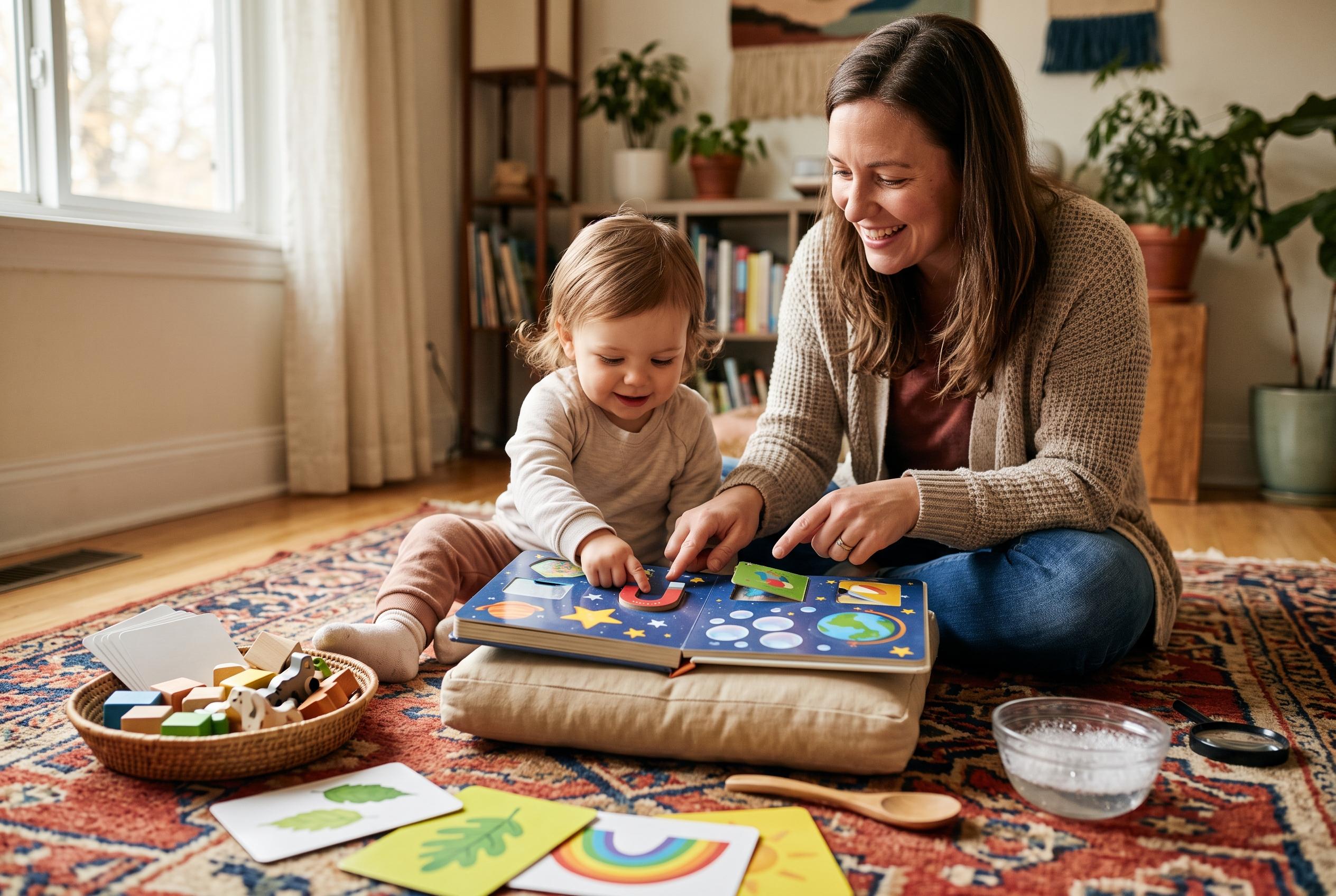

As publishers flood the market with science-focused board books for infants, experts warn that placing complex concepts early may hinder, rather than help, toddlers’ natural curiosity and learning through interactive, joy-based reading.
A growing number of board books promise to introduce babies to coding, quarks and other ideas that sit rather far from nursery life. The appeal is obvious enough: parents are urged to start early, and publishers have responded with titles that frame science as something a child can absorb before learning to tie shoes or speak in full sentences. Yet the trend has prompted a sharp question from early-childhood specialists: what, exactly, is a baby supposed to get from this?
Peg Oliveira, who directs the Gesell Programme in Early Childhood at the Yale Child Study Centre, dismisses the genre as educational packaging with little developmental sense. In her view, a board book is supposed to build preliteracy skills by making reading feel pleasurable, familiar and interactive. Stuffing it with electromagnetics or quantum physics risks teaching the opposite lesson: that books are difficult, dull and not meant for enjoyment. Oliveira argues that young children need curiosity, creativity, persistence and basic problem-solving far more than technical vocabulary they cannot yet use.
That warning fits a broader understanding of early reading as a back-and-forth exchange between adult and child. Oliveira describes it as a kind of serve-and-return interaction, in which the adult offers language and the child responds, keeping the moment alive. The best books for this age, she says, are those with rhythm, repetition and words that are enjoyable to say aloud, supported by bright images of things children can recognise. By that measure, classics such as “Goodnight Moon”, “Jamberry” and Sandra Boynton’s books succeed because they invite participation rather than lecture. A line like “Everything in the world is made of atoms and molecules” may be accurate, but accuracy alone does not make a good book for a toddler.
Parents and carers who have tried the newer science titles tend to report mixed results. Nora Reilly, a librarian in Connecticut, bought several Spiro books for her grandson and said he enjoyed them around nine months old, especially the baby faces in the illustrations. But once he was past his first birthday, the books no longer held his interest. That is part of the problem: just as children begin to connect spoken words with familiar objects, dense scientific language can become a barrier rather than a bridge. Kate Sheblak, a parent in Wisconsin, said her twenty-month-old daughter enjoyed the simple pictures in the “Baby Loves Science” series, though even Sheblak and her husband, both technically trained, found some of the analogies strained. Still, she said she had absorbed the old parental rule that a baby can never have too many books read to them.
Disclaimer: This content is for informational purposes only and is not intended to be a substitute for professional medical judgment, advice, diagnosis, or treatment.