

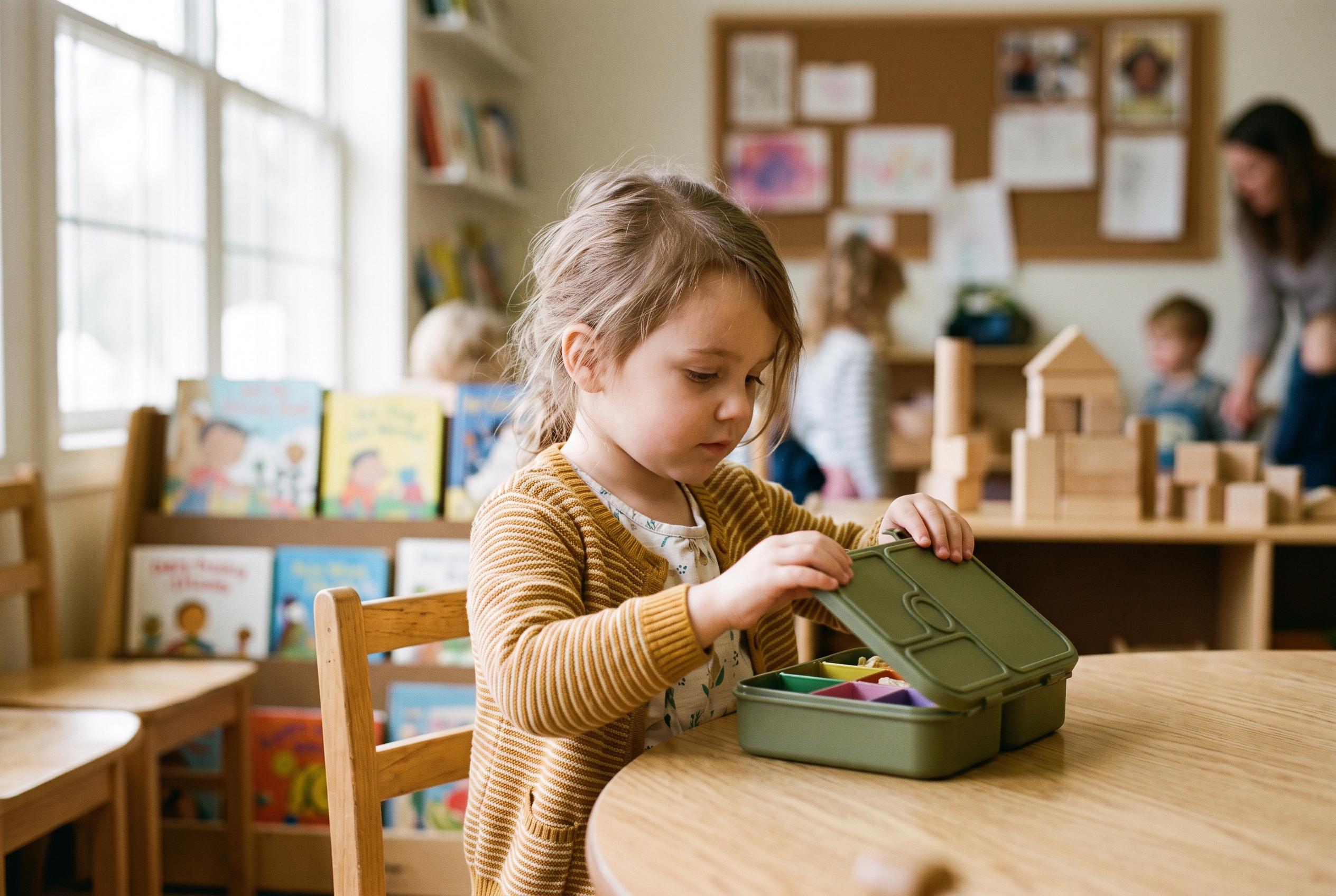

From opening lunchboxes to managing big feelings, practical routines and playful practice can help preschoolers settle into school without the pressure of being perfect.
Parents often worry about whether a preschooler is “school ready”, but the better question is whether a child has had enough practice with the everyday skills that make the first term less overwhelming. Teachers will help children learn at school, yet children who can already manage basic routines tend to settle more easily. Occupational therapists say those early skills are not about perfection; they are about giving children a starting point they can build on.
The first area is self-care. A child who can open a lunchbox, manage a drink bottle, pull on a jumper and deal with buttons or zips is more likely to cope with busy classroom routines without constant adult help. These tasks draw on hand strength, finger control and coordination. Fine motor activities such as playing with play dough, squeezing sponges, peeling stickers and using tweezers can all help, as can simple home practice with lunch containers, zips and shoes.
Toileting is another common pressure point. Children need to handle the full routine on their own, from clothing changes to wiping, flushing and handwashing. Practising the steps in order can make the process more automatic, and many families find it useful to simplify the task with easy waistbands and a visual checklist on the bathroom wall. This kind of repetition also supports independence in the same way that everyday motor practice can build confidence with dressing and eating, a link that both school-readiness guides and recent research continue to emphasise.
Fine motor development matters well beyond self-care. Children are expected to grip a pencil, use scissors, copy shapes and eventually write their name. Occupational therapists note that a practical pencil grip depends on shoulder, arm, hand and finger strength, as well as control and hand preference. A perfect tripod grip is not the goal from day one, but children do need a grip that lets them write without strain. Research published in Behaviour suggests fine motor skills are closely tied to broader school readiness, including executive function, which covers planning, attention and self-control.
Writing and cutting can be built at home through play. Children can trace their name, practise it in sand or shaving cream, or look for the letters in signs and books. Scissors work improves when children begin with snipping paper strips or play dough before moving on to lines and shapes. Drawing basic forms is important too, because shapes are the building blocks of letters and numbers. Vertical and horizontal lines, circles, crosses, squares, diagonals and triangles all help prepare children for the demands of early writing.
School readiness is not only physical. Children also need the attention, memory and self-regulation needed to follow more than one instruction, wait their turn and keep their place in a group. They need to recognise feelings in themselves and others, manage separation from a parent and cope when things do not go their way. Experts in child development stress that these abilities grow through co-regulation, with a calm adult helping a child name feelings, recover from disappointment and keep trying. That is one reason simple routines, turn-taking games and short practice separations can be so useful in the months before school starts.
Social confidence matters just as much. Kindergarten asks children to share space, join in play, ask for help and resolve small conflicts. Families can rehearse those moments with role-play, puppet games and small play dates that give children a chance to practise phrases such as “Can I play too?” or “My turn, please”. Visiting the school, talking through the morning routine and practising short goodbyes can also ease the transition. Studies and practical preschool guidance alike point to the same conclusion: children who can manage emotions, solve small problems and recover from mistakes usually adapt more smoothly.
Not every box needs to be ticked before the first day. A few gaps are normal, and many children continue to develop these abilities well after school begins. What matters most is the bigger picture: whether a child can cope with routines, relate to others and keep going when tasks are hard. If those areas feel shaky, parents can use play and everyday tasks to build skills gradually. And if concerns remain, occupational therapy support can help families decide whether a child is ready now or would benefit from more time and practice before making the move to school.
Disclaimer: This content is for informational purposes only and is not intended to be a substitute for professional medical judgment, advice, diagnosis, or treatment.



