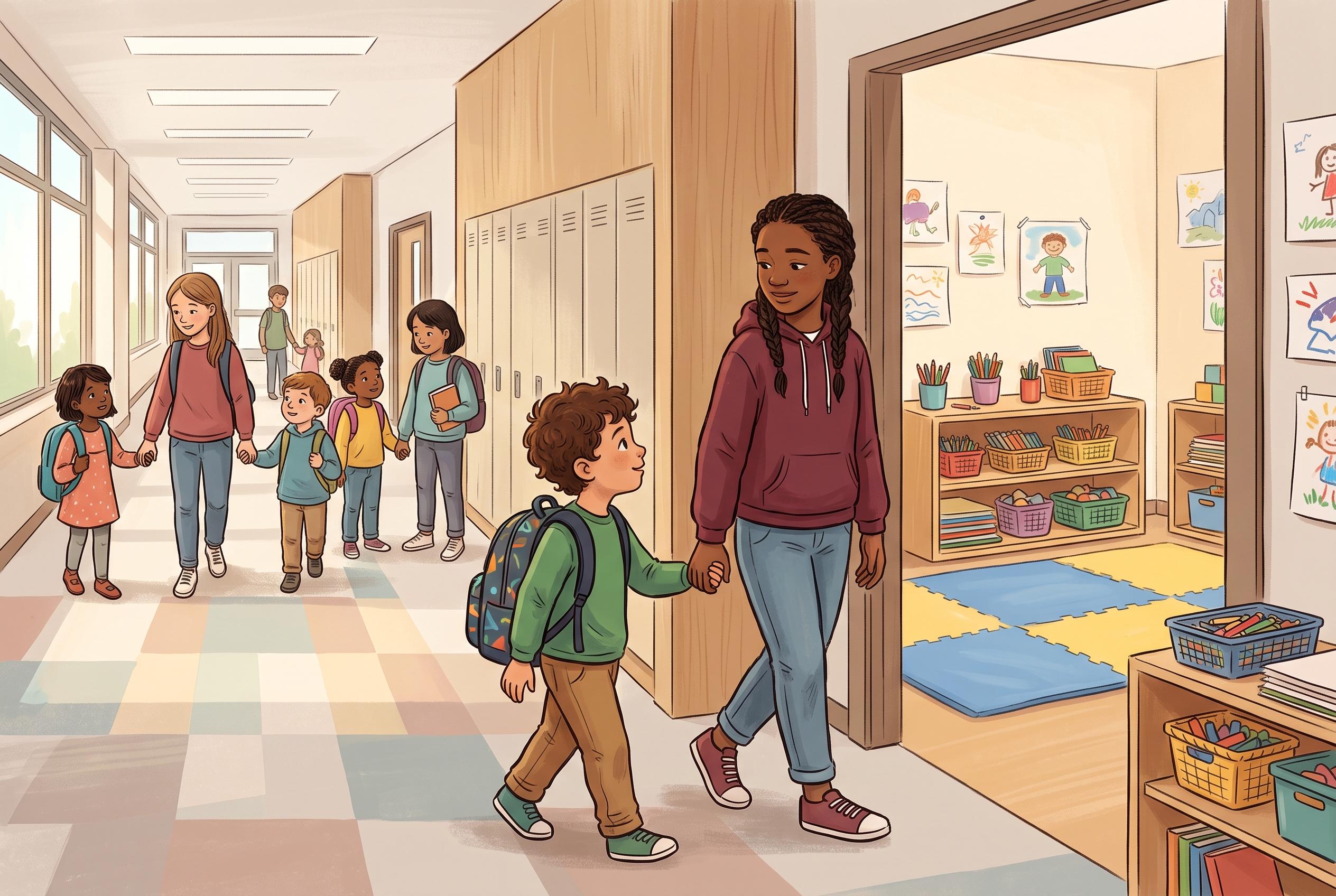

Experts emphasise emotional support, preparation, and recognising childhood needs as children begin their primary education, advocating for a holistic approach that includes play, friendship, movement, and rest alongside academics.
Starting school is one of childhood’s biggest milestones, and specialists say the shift matters just as much for parents as it does for the child. Katja Repolusk, a school psychologist at OŠ Selnica ob Dravi, says the move brings a child into a new social world where learning joins upbringing as an equally important aim. Her message is simple: children need support, encouragement and a calm adult presence, not alarmist talk that childhood has suddenly ended.
Monika Erjavec Bizjak, a master’s graduate in marital and family studies with Zveza Anita Ogulin, says a child’s reaction to first grade depends heavily on emotional, social and cognitive readiness. Experience from nursery school can make the change easier, while children without that background may find separation harder at first. She also notes that parents often pass their own feelings on to children, which is why a confident and positive attitude towards school can help a child feel safer.
For children who feel worried, both experts advise against forcing positivity. Erjavec Bizjak says children should be allowed to feel fear, sadness or uncertainty, even if those feelings show up as headaches, stomach aches or sleep problems. Rather than dismissing those reactions, parents should stay close, talk things through and help the child work through the end of one stage and the start of another. Repolusk adds that a short, predictable goodbye routine can reduce anxiety at drop-off.
The first year of school also shapes a child’s relationship with learning. According to Repolusk, a sense of safety and belonging is central, and that depends not only on rules but on the classroom climate created by the teacher. She says parents should ask about friendships, playground moments and feelings during the day, not just what the child learnt. That broader conversation helps children build resilience and gives adults a better picture of how they are coping.
Preparation begins long before the first bell. The Education Ministry and the Slovenian National Education Institute say the transition from nursery to school works best when families, nursery staff and schools cooperate. Their guidance stresses that children should not only be taught practical routines, but also be helped to feel secure in a new environment. Erjavec Bizjak and Repolusk both recommend reading stories about school, visiting school grounds, buying supplies together and gradually building habits such as early bedtimes, regular meals and time each day for quiet work.
Both specialists also warn that children need far more than academic preparation. Independence matters, whether that means dressing themselves, packing a bag or helping at home. So does movement, reading together and enough sleep. They are especially concerned about heavy screen use, which they say can weaken attention, sleep, language development and social skills. Children who are already sensitive, anxious, from difficult home circumstances or learning in a new language may find the transition harder, and adults should watch for signs of distress and seek help from teachers or the school counselling service if problems persist.
Their broader point is that school should not strip a child of childhood. A first-grade pupil is still a child who needs play, affection, friendship, movement and rest. In the experts’ view, the healthiest start comes when school is presented as a real but encouraging step forward: a place for learning, but also for belonging, curiosity and growing up safely.
Disclaimer: This content is for informational purposes only and is not intended to be a substitute for professional medical judgment, advice, diagnosis, or treatment.