

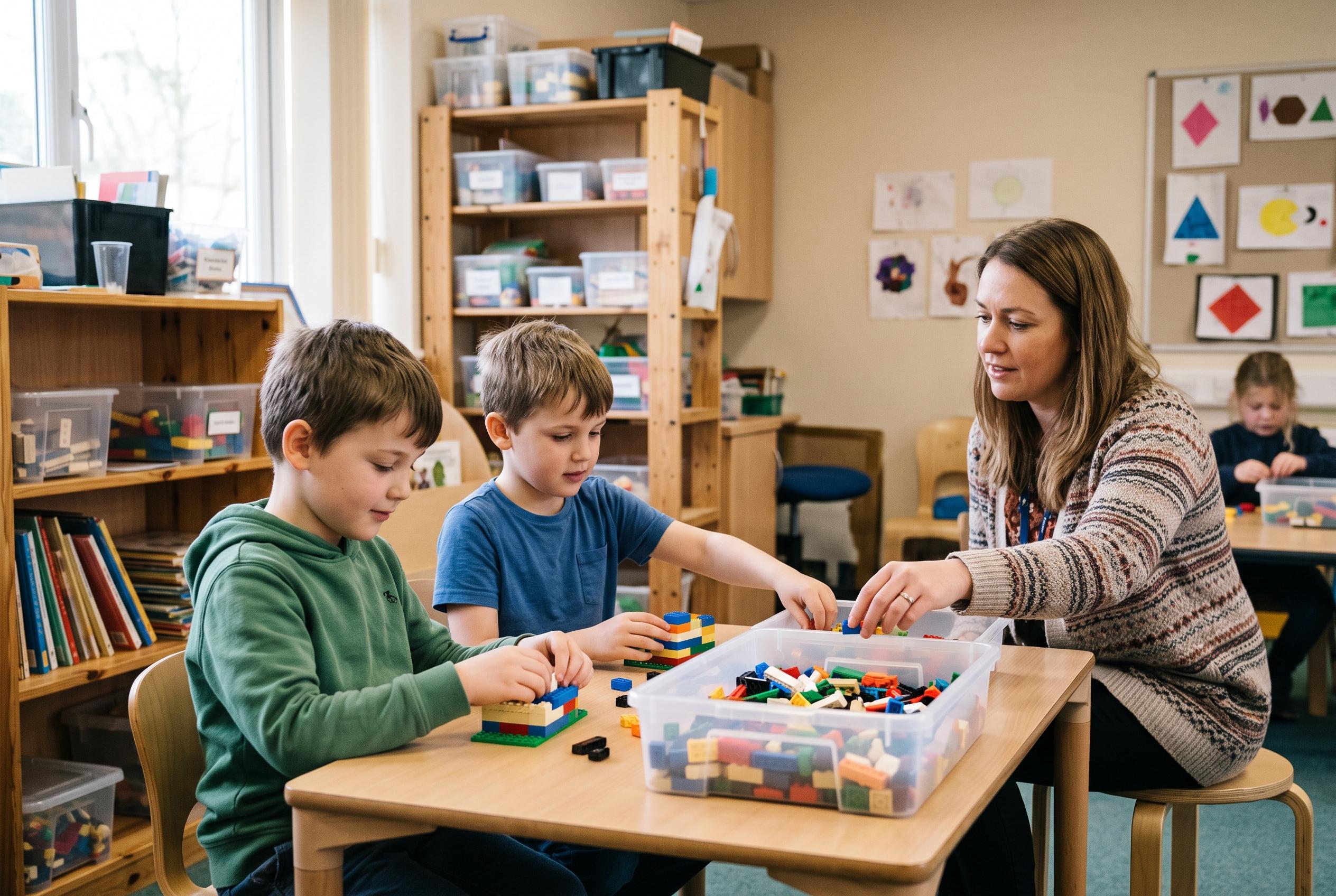

Expert advice emphasises creating low-pressure, predictable opportunities for autistic children to connect with peers, focusing on shared interests and explicit social skills instruction to foster natural friendships in school settings.
Helping an autistic child make friends at school is less about forcing sociability than about creating repeated, low-pressure chances to connect. The most effective approach is usually small and predictable: one familiar activity, one safe peer, and one supportive adult who can make the first moments easier. That matches the practical advice offered by the Marcus Autism Centre and the National Autistic Society, both of which stress shared interests, explicit teaching and school support as the foundations for friendship-building. The goal is not to turn a quiet child into a highly social one, but to give them conditions in which connection can happen naturally.
Parents often start in the wrong place by focusing on popularity or hoping a child will simply “pick up” social rules over time. For many autistic children, the missing piece is not desire but clarity. Guidance from autism specialists consistently points towards teaching friendship skills directly, including how to join play, take turns and recognise when a peer is receptive. That means breaking social interaction into small, learnable parts rather than treating it as a talent children will absorb automatically.
Shared interests are one of the most reliable ways to make that happen. A child who loves trains, drawing, animals, chess or a particular game has an easier route into conversation because the subject itself supplies structure. The Marcus Autism Centre recommends building around interests, while GrowTale notes that clubs, hobbies and other interest-based activities can reduce pressure and give children a reason to keep returning. In school, that might mean a library group, a quiet lunchtime club or a partner activity tied to something the child already enjoys.
It also helps to teach specific entry and exit skills. Autism organisations and school-focused guidance both emphasise that children often need explicit instruction in how to begin a game, how to respond when they are overloaded and how to leave without conflict. Simple scripts, social stories and role-play can make those moves easier to use in real life. For some children, a physical cue, such as standing nearby and placing a card or object down, is more manageable than a verbal greeting. The point is to give the child a usable path in, not to demand fluent small talk.
Schools have a central role to play, especially during unstructured moments such as lunch and recess, when friendships are most likely to form and most likely to break down. The National Autistic Society advises parents and carers to work with schools on social development, and practical support may include quieter seating, predictable routines, planned partners for certain activities and a designated adult who checks in when needed. A child who is already anxious or overwhelmed is unlikely to make friends through sheer exposure; they need a setting that reduces the noise and uncertainty around them.
Parents can also help by preparing other children, as Children’s Hospital Los Angeles suggests in its advice on friendships involving autistic peers. That means explaining that an autistic classmate may need space, time alone or a slower pace, rather than assuming this behaviour is rejection. It is equally important to prepare the autistic child’s classmates for differences in communication style. When both sides have a simple, kind explanation, there is less chance that hesitation or silence will be misread as rudeness.
The process should be paced by the child, not by adult expectations. Autism-specific guidance warns against treating every pause, quiet moment or missed invitation as failure. Some children do best in one-to-one friendships and find groups exhausting; others need longer warm-up periods before they can tolerate social contact comfortably. Respecting that preference is not giving up on friendship. It is recognising that a successful connection may look calmer, shorter and more selective than the one adults expected.
What matters most is consistency. A few minutes with the right peer, repeated in a setting that feels safe, often does more good than ambitious social plans that leave the child drained. Schools can support that by keeping arrangements predictable, parents can reinforce the same skills at home, and adults around the child can notice whether the relationship is growing from mutual interest rather than pressure. For many families, the biggest shift comes when they stop asking, “Why is my child not social enough?” and start asking, “What conditions would make this easier to sustain?”
Disclaimer: This content is for informational purposes only and is not intended to be a substitute for professional medical judgment, advice, diagnosis, or treatment.



