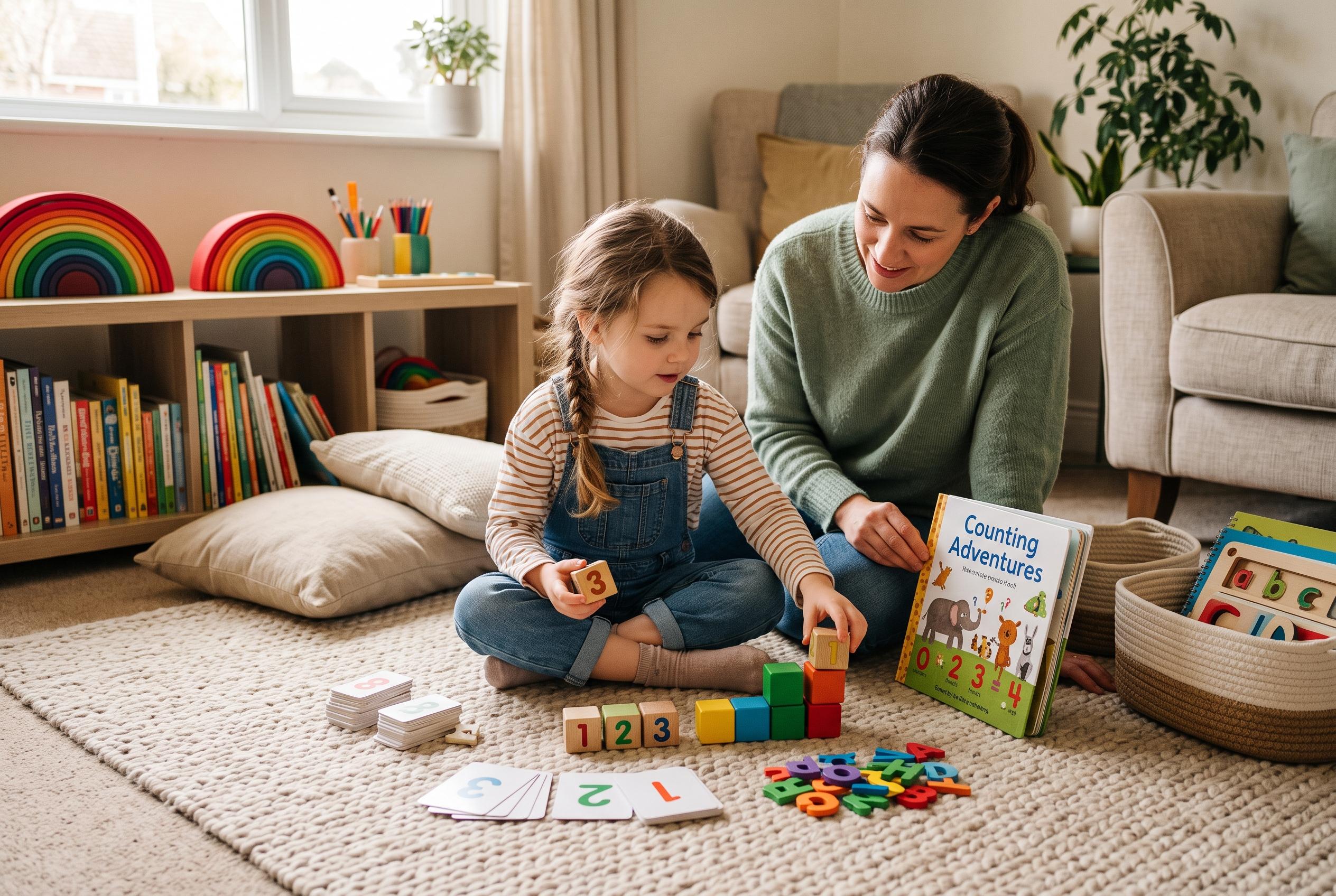

Experts highlight the benefits of a relaxed, play-based, and relationship-focused homeschooling model for young learners, prioritising reading, writing, maths, and natural learning through daily routines and hands-on activities.
Homeschooling kindergarten can feel both liberating and daunting, especially for parents who are trying to balance structure with the realities of a young child’s attention span. Tricia Goyer argues that the early years work best when families resist the urge to recreate a conventional classroom at home and instead keep the focus on simple routines, close relationships and the habits that support a lifelong love of learning. Other homeschooling guides make the same case, recommending short daily sessions, modest subject goals and plenty of hands-on activity rather than a packed academic timetable. According to Homeschool Teacher Guide and related resources, a practical kindergarten day often includes only a small amount of formal instruction, with the rest of the time left for play, reading aloud and ordinary family life.
Goyer’s approach starts with a clear hierarchy of priorities: Bible, phonics, read-alouds, handwriting and basic maths. She says everything else can emerge naturally through daily life, whether that means science in the garden, art at the table or history through stories. That view is broadly echoed in other homeschooling advice, which places reading, writing and numeracy at the centre of the kindergarten year while treating other subjects as informal or integrated learning. The message is consistent: simplicity is not a compromise, but a way of keeping the work age-appropriate and sustainable.
Reading instruction receives particular emphasis. Goyer encourages parents to read aloud every day, but also to teach phonics directly so children learn how letters and sounds work together. That aligns with specialist homeschooling guidance recommending phonics-based instruction as the core of early reading, often in short, repeated lessons. Several guides suggest keeping formal lessons to about 10 to 20 minutes, with reading sessions around 20 to 30 minutes and writing or handwriting kept brief. The goal is not speed, but steady progress that leaves a child confident rather than tired.
Play is treated not as a break from learning, but as learning itself. Building with blocks, role play, outdoor exploration, baking, board games and simple household tasks all help a young child practise language, coordination, counting, turn-taking and problem-solving. Montessori-inspired homeschooling advice makes a similar point, stressing uninterrupted work periods, practical life activities and flexible transitions that respond to a child’s energy rather than forcing the day into rigid segments. For many families, that means a rhythm of short lessons, movement breaks and time outdoors, rather than a school-like schedule.
The broader lesson in Goyer’s account is that kindergarten is less about coverage than foundations. She frames the year as one in which children learn to love books, enjoy their parents’ company and build confidence through small, repeatable habits. That outlook matches other homeschooling planners that advise roughly one to two hours of structured learning a day, spread across four or five days a week, with the rest of the day given over to play, chores, outdoor time and read-alouds. In that sense, kindergarten is not a race to keep up, but a gentle beginning designed to make the rest of the homeschool journey possible.
Disclaimer: This content is for informational purposes only and is not intended to be a substitute for professional medical judgment, advice, diagnosis, or treatment.