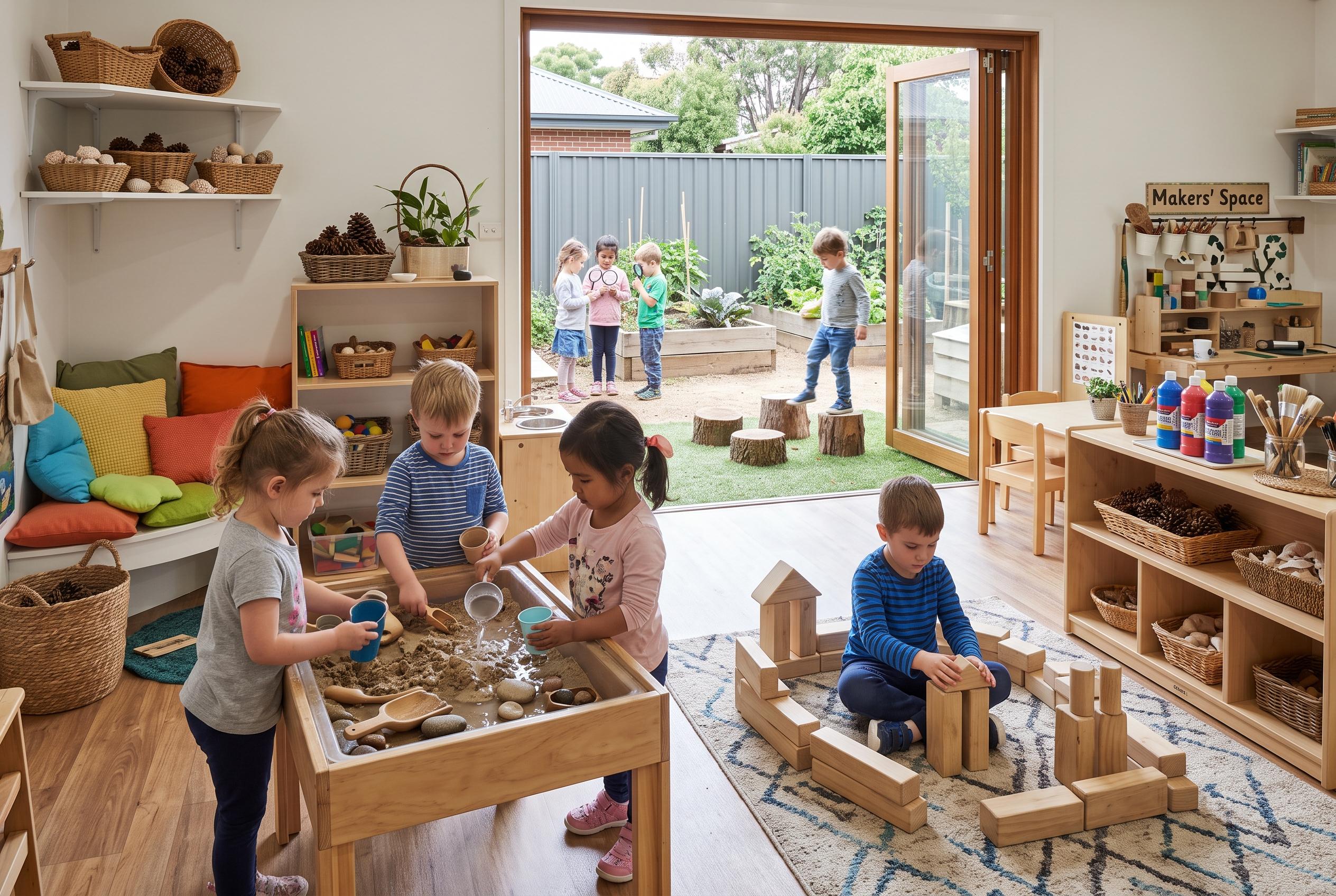

New insights reveal that preschoolers benefit more from tactile, open-ended play and outdoor exploration than traditional worksheets, fostering curiosity, creativity, and foundational skills through simple, flexible activities.
Preschoolers do not need worksheets to start building early skills. According to Little Bins for Little Hands, the strongest learning in the early years often happens through simple play: sorting objects, building with blocks, shaping playdough, exploring sensory materials and talking about what children notice as they go. That approach is echoed by Sunlight Kids, which argues that repeated, hands-on exposure to letters, numbers and language is more useful than drills alone.
One of the clearest ways to make learning stick is to use materials children can touch and manipulate. Kaplan Early Learning says outdoor and open-ended play with loose parts encourages experimentation, symbolic play and curiosity, while Good2Know Network notes that sensory activities support not only fine motor development but also language and self-regulation. In practice, that means a tray of scoops and fillers, a box of blocks or a tub of playdough can become a lesson in far more than one subject.
The article’s activity ideas span science, STEM, art and early maths, with a strong emphasis on simple setups that invite children to test ideas for themselves. Creative Children’s Center highlights preschool science activities such as sink-or-float tests, bridge building and magnet play, all of which let children pour, compare, build and wonder. Little Bins for Little Hands makes the same case, saying the goal is not a perfect finished product but repeated exploration and small adjustments as children learn what works.
Outdoor learning is another thread running through the wider advice. Kindergarten Start says nature scavenger hunts, mud kitchens and chalk measurement games can strengthen counting, observation, language and measurement skills, while Fun with Kiddos argues that the outdoor environment expands play and gives children richer chances to move, talk and investigate. Kaplan adds that the natural world can help spark a lasting sense of wonder.
The practical message for parents and caregivers is straightforward: choose one theme, keep the materials simple and give children time to repeat the activity in their own way. Little Bins for Little Hands recommends organising learning around familiar topics such as animals, weather, shapes or transportation, then mixing in sensory play, early maths, science and art. That kind of flexible planning can make preschool learning feel less like schoolwork and more like discovery.
Disclaimer: This content is for informational purposes only and is not intended to be a substitute for professional medical judgment, advice, diagnosis, or treatment.