

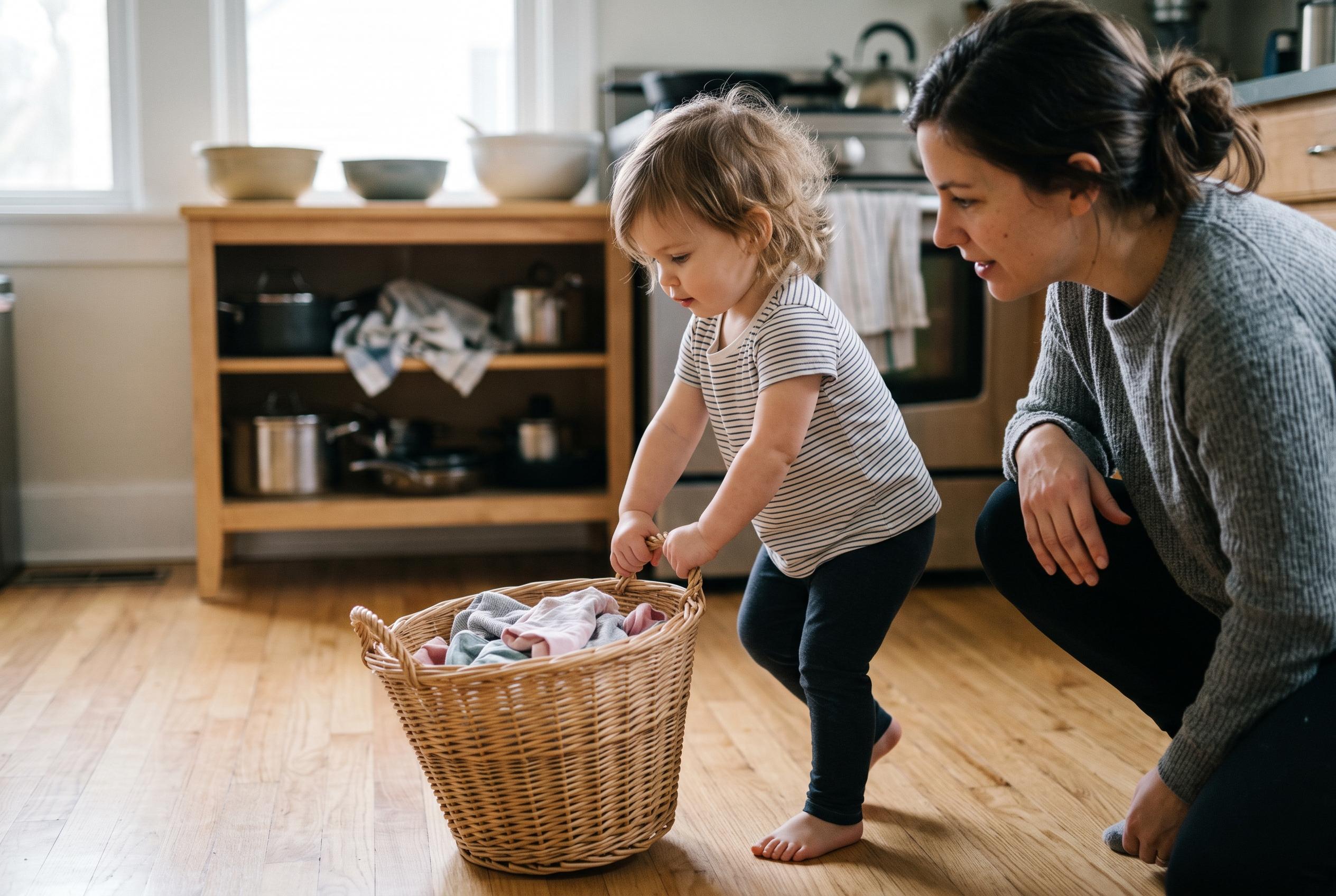

Growing concerns over children’s motor skills highlight how everyday play and household chores can foster coordination, strength, and independence in young children, without the need for structured drills.
Young children often build the foundations of movement through the most ordinary moments at home. Balancing on a line of tape, carrying a pile of books, stacking blocks or climbing on soft furniture can all help develop the coordination, strength and body control that underpin later tasks such as writing, cutting and dressing. Educators have also noted growing concerns about these skills: a 2024 Education Week survey found that 77% of teachers of young children said pupils were having more trouble handling pencils, pens and scissors than they had five years earlier.
Motor development is usually discussed in two broad categories. Fine motor skills involve the small muscles of the hands, fingers and wrists, while gross motor skills rely on the larger muscles used for crawling, running, jumping, climbing and balancing. Healthline says fine motor control is especially important because it supports independence in everyday tasks, while gross motor ability helps children gain stability, confidence and overall physical competence. In practice, both kinds of movement develop best through repetition, play and everyday activity rather than through formal drills.
Simple sorting and building games are an easy place to start. Moving pom-poms with tongs, threading large beads, matching lids to containers and building towers all ask children to grip, release and place objects with care. These activities help hand-eye coordination, which is the ability to guide the hands using visual information. Similar ideas appear in guidance from school and parenting resources, which suggest that stacking, sorting and construction play can strengthen dexterity without feeling like work.
Drawing, colouring and tracing also give children valuable practice. Holding crayons or pencils requires small, controlled movements, and staying inside a line demands coordination between what the eyes see and how the hands respond. Midlakes special programmes recommends hands-on tasks such as shaping Play-Doh into balls, pressing patterns into it and cutting it with child-safe tools, all of which build the grip and finger strength children need later for pencil control.
Household play can do the same job. Pouring water between cups, scooping cereal, transferring rice with a spoon or using a funnel asks children to judge direction and force, often while one hand steadies a container and the other does the work. Ball games add another layer of challenge by training timing and distance. Rolling a ball back and forth, tossing it into a basket or kicking towards a target all require the eyes and body to work together. Related guidance from parenting sites says these kinds of short, repeated activities are often more effective than long or highly structured sessions because children are more likely to keep practising what they enjoy.
Large-body movement matters just as much. Dancing, marching, jumping over a line and freeze dance help children practise balance and rhythm, while crawling through tunnels, climbing over cushions or stepping between low surfaces builds strength across the arms, legs and core. Everyday chores can contribute too. Carrying light laundry, folding small towels, wiping tables and putting toys into bins all involve control, coordination and purposeful movement. For parents, the practical lesson is simple: play does not need to be elaborate to matter. A child moving around the living room, sorting objects at the table or helping with small jobs around the house is also practising the physical skills that support learning and independence.
Disclaimer: This content is for informational purposes only and is not intended to be a substitute for professional medical judgment, advice, diagnosis, or treatment.



