

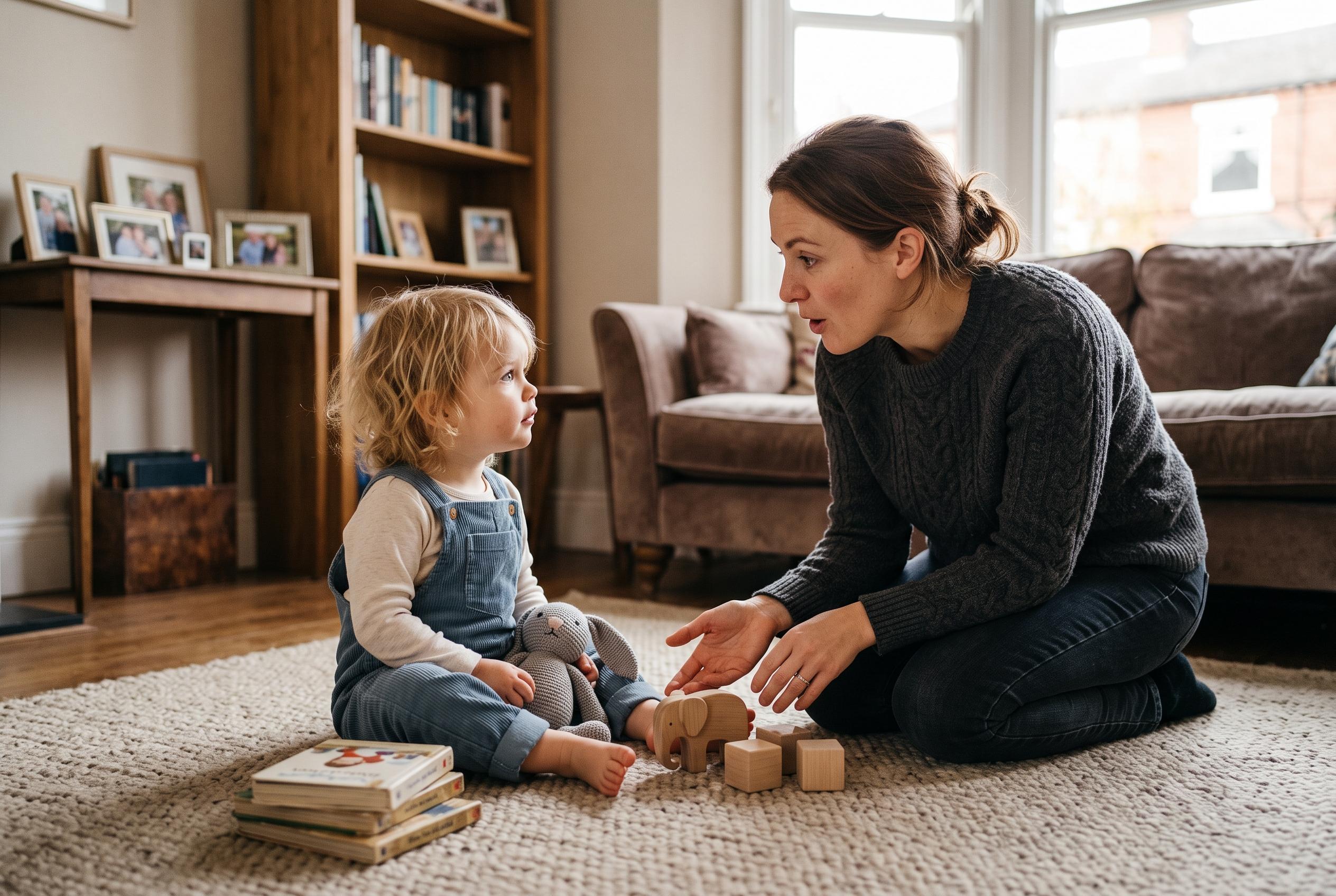

Parents can support their child’s speech growth through everyday conversations, patience, and play, rather than complex therapy drills. Early, responsive interaction is key to helping late talkers catch up and thrive.
Parents worried about a child who is slow to start talking are often told to wait and see. That advice can be costly. Late talking is common, but it is not something to ignore, and the most helpful response is usually not a complicated therapy drill. According to the material provided, the most effective home support is simple: use more everyday language, create moments that invite a response, and leave space for the child to try.
The first step is to understand the difference between a late talker and a broader speech or language delay. A late talker is usually a toddler between about 18 and 30 months who has fewer spoken words than expected, even though social interest, play, motor skills and understanding appear broadly typical. By contrast, a wider delay may involve understanding as well as speaking, and that usually calls for professional assessment rather than home support alone. Specialist resources on speech and language development say children who have very limited words, little or no progress, or a loss of skills should be referred promptly for evaluation.
What tends to help most is not pressure, but responsiveness. Speech and language specialists recommend following the child’s lead, narrating ordinary routines, and using short, clear language in moments the child already finds interesting. That can mean describing the bath, naming items during dressing, or talking about the block tower while it is being built and knocked down again. Several of the supplied resources also emphasise techniques such as self-talk, parallel talk, expansion and modelling, which simply means saying what you and the child are doing, adding a little more to their attempt, and showing the next step without turning conversation into a test.
The other key ingredient is time. Children often need a pause after a question, a gesture or a sound before they answer, and many adults interrupt that chance by speaking again too quickly. A short wait, a look of expectation and a calm response to any attempt to communicate can do more than repeated prompting. Offering real choices can help too, as can creating small communication “temptations”, such as putting a favourite toy just out of reach or giving the child a container that needs help to open.
Play is especially useful because it creates natural turn-taking. Rolling a ball back and forth, handing over one toy at a time or building and toppling a tower all give the child a reason to signal, reach, point or vocalise. The guidance supplied also encourages keeping these moments brief and enjoyable. If an adult turns every interaction into a lesson, the child may withdraw; if the exchange stays playful, the child is more likely to stay engaged. Video and nursery rhymes can provide models, but they work best as a small part of a broader, responsive routine.
Parents are also urged not to mistake silence for safety. Many late talkers do catch up, but the sources note that a meaningful minority later need more support, and some children who appear to have recovered still struggle with grammar, literacy or conversation at school age. That is why early intervention matters even when a child seems socially engaged and otherwise typical. It is also why hearing checks and speech-language assessment are worth asking for sooner rather than later, especially if a child has fewer than about 50 words by age two, is not combining words, or has lost words they once used.
For bilingual families, the message is reassuring: speaking more than one language does not cause a delay. What matters is the child’s total vocabulary across both languages and whether progress is moving forward. The clearest takeaway from the material is that parents do not need perfection, special equipment or long practice sessions. They need consistent, ordinary conversation, a bit of patience, and the confidence to seek help if development is not moving as expected.
Disclaimer: This content is for informational purposes only and is not intended to be a substitute for professional medical judgment, advice, diagnosis, or treatment.



