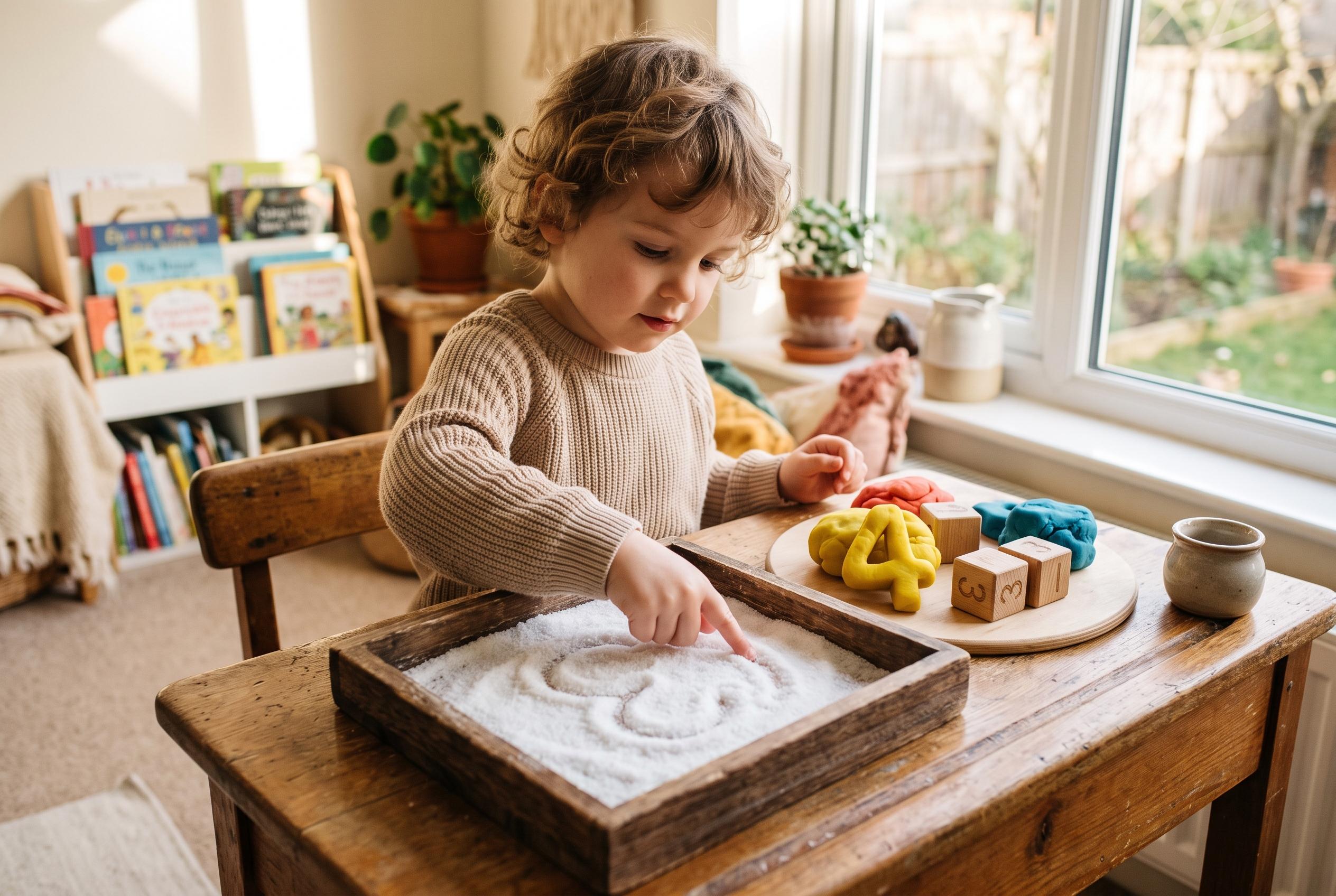

Innovative tactile activities like salt tracing and playdough shaping are transforming early numeracy skills, making number writing more accessible and enjoyable for children who struggle with traditional pencil tasks.
Many children push back when number practice starts with a pencil. The problem is often not reluctance but readiness: small hands tire quickly, grip strength is still developing and the page can feel unforgiving. A more effective approach is to begin with sensory tracing activities that use touch, movement and larger muscles to help children learn number shapes without the strain of traditional handwriting.
Educational resource sites such as Kiddoworksheets and PrintPlayKids both show how repeated tracing can be built into low-pressure practice, with worksheets that combine number formation, counting and simple picture cues. Those printable formats are useful, but for children who find pencil work frustrating, the first step can be far more active. Tracing numbers in salt or sand, shaping them with playdough, or following large tape outlines on the floor lets children feel the form of each digit while strengthening coordination at the same time.
That hands-on stage matters because number writing is not only about memorising a symbol; it is also about learning the movement that creates it. PrintPlayKids notes that guides with starting dots, directional arrows and dotted lines can help children understand where strokes begin and end, while other activity ideas recommend pairing numerals with objects so children connect shape and quantity. Used together, these methods help children build both number sense and motor control before they face a page of plain lines.
Several of the most effective activities also make writing feel more like play. Children can trace raised puffy-paint cards with their fingers, follow a flashlight beam across a wall poster, or wash chalk numbers away with a water bottle outside. These tasks encourage visual tracking, shoulder stability and hand strength without the pressure of a perfect result. According to the teaching ideas collected by Simply Kinder, games and playful routines can make number formation more engaging, especially for early learners who need repeated practice to make the skill stick.
The aim is not to avoid pencil work forever, but to delay it until the child is ready. Once a child recognises the shape of a number and has repeated its motion in different sensory settings, paper tracing becomes easier and less upsetting. For parents and caregivers, that shift can make the difference between daily tears and steady progress.
Disclaimer: This content is for informational purposes only and is not intended to be a substitute for professional medical judgment, advice, diagnosis, or treatment.