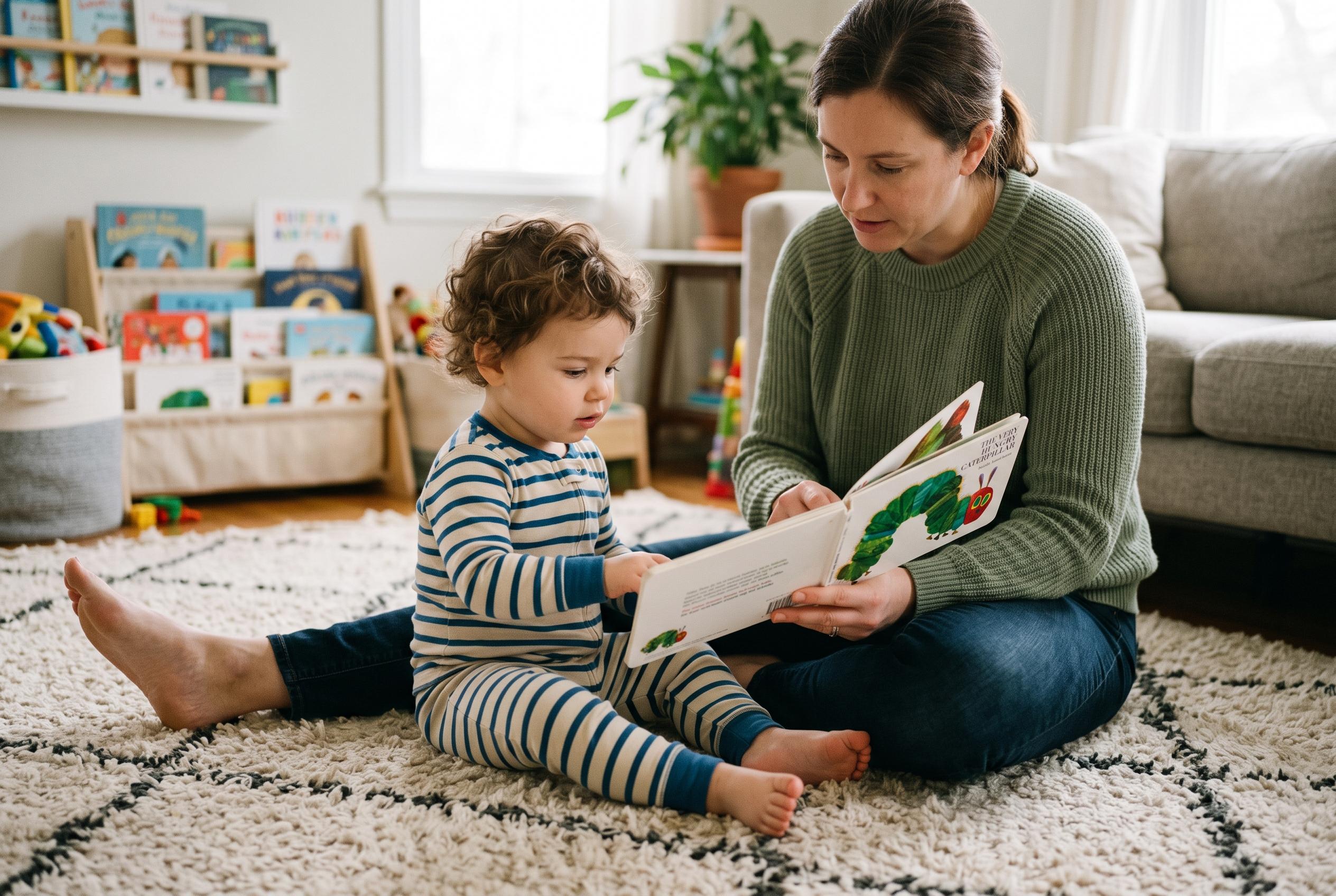

Revisiting the same story night after night in toddler routines enhances language skills, emotional bonds, and early literacy, according to experts and research from health authorities.
Reading the same story night after night may feel repetitive to adults, but for toddlers it is doing far more than filling time before sleep. Shared reading builds language, memory and early social-emotional skills, and the American Academy of Pediatrics says those routines help lay the groundwork for literacy and brain development from the earliest months of life. The simple ritual of turning pages, pointing at pictures and naming familiar objects also gives young children a reassuring sense of connection. According to the National Institute of Child Health and Human Development, interactive reading helps children understand stories while strengthening their attitude towards books.
That sense of repetition matters. Research on toddlers’ reading habits suggests that hearing the same book again and again can improve vocabulary, comprehension and confidence, while also giving children a predictable and comforting experience. The New York State Comptroller’s office has noted that regular reading can deepen a child’s bond with a parent or caregiver, while the Centres for Disease Control and Prevention says shared reading supports early brain development and language growth. For caregivers, the payoff is often emotional as well as educational: a child who asks for “just one more” reading is also asking for closeness, routine and attention.
Classic board books remain popular because they combine simplicity with memorable rhythm, repetition and visual cues. Eric Carle’s “The Very Hungry Caterpillar” introduces counting and the days of the week in a playful way, while “Brown Bear, Brown Bear, What Do You See?” helps toddlers hear patterns in language and learn colours and animals. Margaret Wise Brown’s “Goodnight Moon” is still a favourite for bedtime because of its gentle cadence, and “Where’s Spot?” adds lift-the-flap surprises that invite participation. Robert Munsch’s “Love You Forever” has a different tone, but its message of steady parental love is one many adults remember as vividly as the children listening beside them.
Experts recommend making these moments interactive rather than passive. The NHS advises parents to use expressive voices, point to pictures and keep reading from birth onwards, while the CDC encourages books that match a child’s age and attention span. That approach can be especially effective with toddlers, who learn best through repetition, gesture and conversation. Asking simple questions, naming objects and inviting a child to predict what happens next can turn a familiar book into a rich exchange. In the end, the best bedtime stories are often the ones children want repeated so often that the grown-ups can recite them from memory.
Disclaimer: This content is for informational purposes only and is not intended to be a substitute for professional medical judgment, advice, diagnosis, or treatment.