

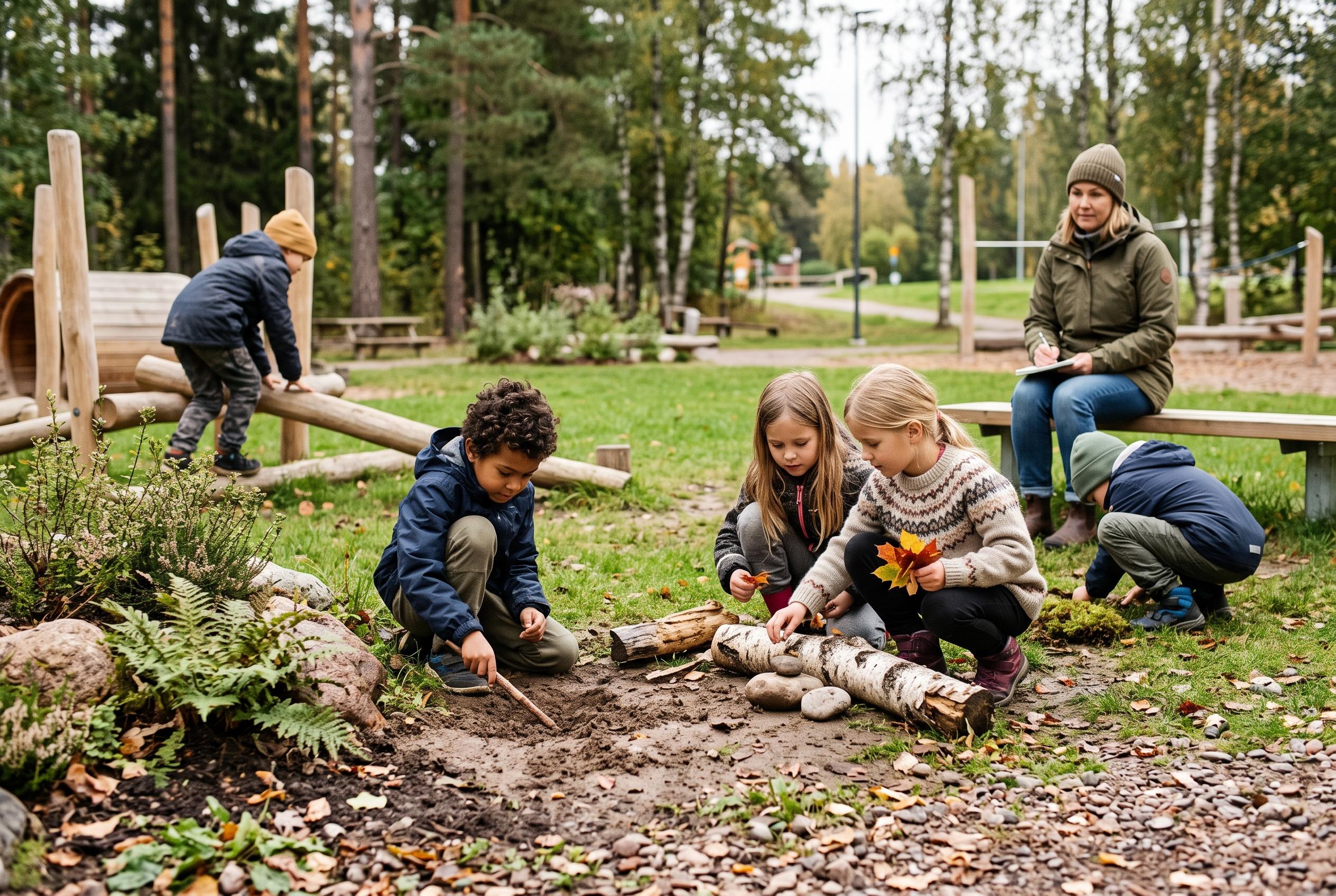

A Finnish study reveals that incorporating natural elements into playgrounds can enhance microbial diversity on children, supporting immune regulation and challenging traditional notions of hygiene and safety.
For decades, a well-designed playground was often taken to mean one with smooth, easy-to-clean surfaces, plenty of plastic or rubber, and as little bare earth as possible. Mud, fallen leaves and other traces of the natural world were treated less as part of childhood than as something to be kept at bay. Yet in trying to build a perfectly sterile setting, adults may have deprived children of an important form of early education: contact with biodiversity.
A study in Finland has offered striking evidence that this instinct may be mistaken. According to researchers cited by the University of Eastern Finland and the World Economic Forum, daycare yards that replaced gravel and asphalt with forest floor, grass, moss, plants, fallen leaves and natural soil produced measurable changes within just 28 days. Children who played daily in these small ecosystems showed increased microbial diversity on the skin and in the gut, alongside signs of better immune regulation.
Part of the significance lies in the rise of regulatory T cells, which act as a brake on the immune response. They help the body defend itself against genuine threats without overreacting to harmless substances or attacking its own tissues. That distinction matters: healthy immunity is not simply a matter of maximum activation, but of balance, restraint and the ability to respond proportionately.
The findings fit what scientists call the biodiversity hypothesis. In simple terms, it suggests that modern life has narrowed our exposure to the wide range of microorganisms that helped shape the human immune system over thousands of years. Urbanisation, sealed surfaces, the loss of green space and excessive disinfection all reduce the microbial variety children encounter in daily life. That, researchers say, may help explain the rise in allergic, inflammatory and autoimmune disorders.
The Finnish work should not be turned into an easy slogan, however. Playing in soil is not a vaccine, and it does not guarantee protection against allergies or autoimmune disease. Such conditions are complex and arise from a mix of genetic susceptibility, diet, infections, environmental exposures and chronic stress. Researchers involved in the broader field say larger and longer studies are still needed to determine whether these early immune changes lead to lasting health benefits later in life.
Even so, the core message is hard to ignore. Human beings are not isolated organisms but ecosystems in themselves. The microbes on the skin and in the gut are not passive bystanders; they interact with the immune system, metabolism and even brain function. In childhood, rich and varied contact with nature may help train the body’s ability to adapt without losing its balance.
That does not mean abandoning hygiene or accepting unsafe conditions. Natural play areas are not the same as exposure to sewage, toxic waste, contaminated water or dangerous rubbish. Handwashing, food safety and infection control remain essential. But the case for constant sterilisation is weaker than many adults assume, and children do not need to be kept from touching soil, plants and leaves in order to stay safe.
The practical lesson is that playgrounds do not need to become forests to be healthier. Even small pockets of living nature can make a difference: native plants, natural soil, logs, shrubs, vegetable patches, leaves and moss. Researchers cited by the Finnish institutions say such features can also provide shade, reduce heat from hard surfaces, absorb rainwater and encourage more imaginative play. The benefits are therefore not only immunological, but also physical, psychological, social and environmental.
There is also an issue of fairness. Not every family has a garden, and not every child can regularly visit woodland. Public schoolyards and daycare centres can offer equal access to nature. Seen that way, bringing biodiversity back into urban play spaces is not a decorative extra, but a potentially meaningful public health measure.
Perhaps the time has come to rethink what clean and safe really mean. A grey, soil-free yard may look tidy, but it can be biologically poor. A child with mud on their hands and leaves on their clothes may, in fact, be learning how to live in the natural world. Children certainly need protection from real dangers. But they also need nature, not only to play in, but to help their bodies learn how to thrive in a complex world.
Disclaimer: This content is for informational purposes only and is not intended to be a substitute for professional medical judgment, advice, diagnosis, or treatment.



