

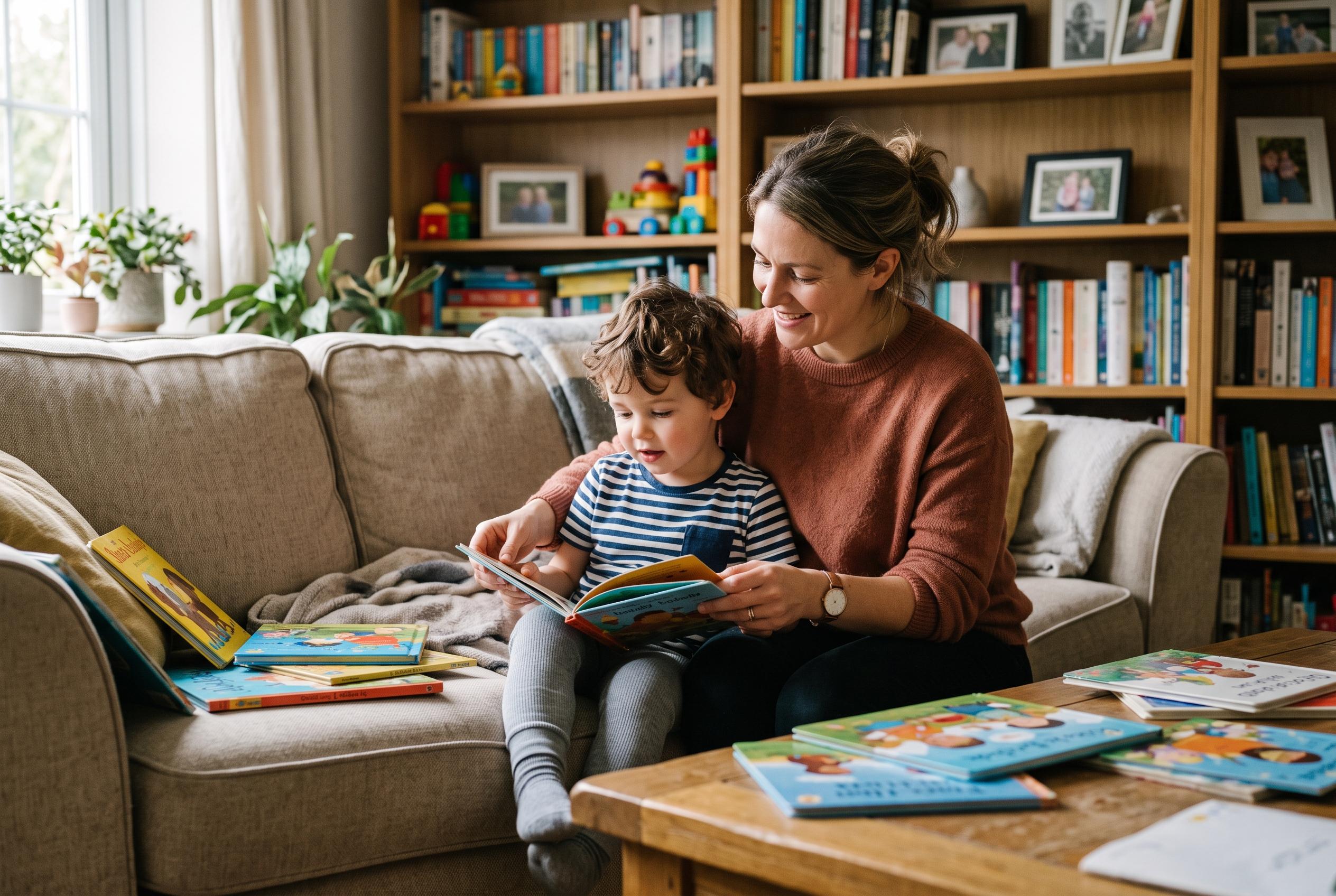

A study of 362 parents suggests that making shared reading a consistent part of family life may encourage children aged one to six to explore books independently.
Reading aloud can do more than fill the minutes before bed. For many families, it is the moment when a child first learns to see books as part of everyday life, not as a special activity reserved for school. A recent study of parents with children aged one to six found a clear link between shared reading at home and a child’s willingness to look at books independently, suggesting that the habit matters as much as the number of stories read.
The research, which surveyed 362 parents, found that reading together was already part of the routine in many homes. Nearly half of those questioned said they read with their children every day, while about three in 10 did so two or three times a week. Evening reading, especially before sleep, was the most common choice. The study also found that children were more likely to handle books on their own when reading was a regular family practice, and that a home library and a parent who reads were both linked with stronger independent engagement.
That finding fits with a wider body of research on early literacy. A long-term Finnish study of 1,436 children and their parents found that stronger word-reading skills in kindergarten were associated with more shared reading at home, while weaker reading skills in Grade 1 tended to prompt more teaching and reading support from parents. Other research has pointed to the role of fathers in particular: a study commissioned by BookTrust and conducted by the National Research and Development Centre for adult literacy and numeracy found that many fathers of five-year-olds read with their children daily or several times a week. Studies in Saudi Arabia and Iraq have similarly shown that parents, family routines, access to books and the wider home environment all shape how children develop early reading habits.
What stands out from the latest study is that consistency appears to matter more than volume. Reading does not have to be lengthy, formal or perfectly quiet to be useful. Researchers noted that short sessions, questions, pauses and movement between pages can all help keep young children engaged. The point is to make reading feel familiar and enjoyable rather than like a test. A small shelf of age-appropriate books within easy reach, combined with a regular time for stories, may be enough to encourage a child to return to books on their own.
Disclaimer: This content is for informational purposes only and is not intended to be a substitute for professional medical judgment, advice, diagnosis, or treatment.



