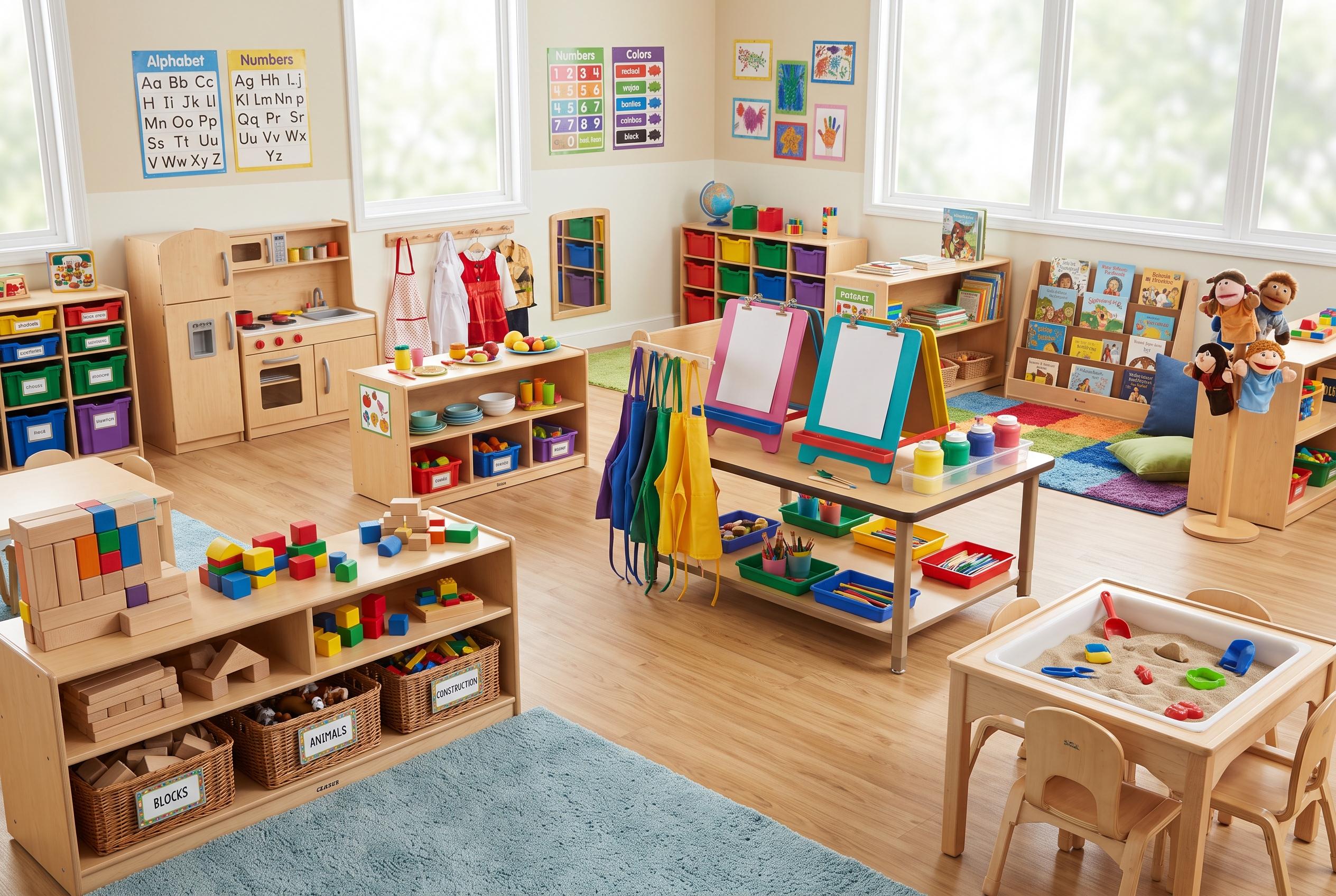

A new analysis reveals that the benefits of preschool attendance depend heavily on programme quality, with well-structured environments offering long-lasting advantages for children’s academic and social development.
Spring Hill Early Learning Daycare and Preschool has issued an analysis arguing that formal preschool is linked with stronger kindergarten readiness, while also cautioning that the quality of care matters more than the label on the programme. The Tennessee provider said the largest gap it reviewed came from Springfield, Missouri, where children who had not attended formal preschool were far more likely to be rated unprepared for kindergarten than those who had.
Across state and local studies, the pattern was broadly consistent: children who attended pre-kindergarten tended to score better on readiness measures than those who did not. The company’s review cited Texas data showing a readiness edge for public pre-K participants, along with findings from Dallas and Missouri that pointed in the same direction. A separate recent study of at-risk four-year-olds found that state-funded pre-kindergarten improved kindergarten readiness, especially in literacy and numeracy.
The picture was less clear when researchers tracked children beyond the first school years. A federal review of state pre-kindergarten programmes found early cognitive and language gains, but some of those advantages narrowed by the time pupils reached the later primary grades. More recent research also suggests that later outcomes can depend on what happens after preschool, with one study finding that elementary school quality helped shape third-grade results.
Other evidence points to long-term benefits, but not always because of the programme label itself. A Michigan evaluation of the Great Start Readiness Programme found higher on-time high-school graduation rates among participants than among non-participants. Meanwhile, a long-running federal child-care study has linked higher-quality early care with better later academic outcomes, including stronger grades and more selective college admission.
That distinction matters for families weighing preschool against daycare. The research reviewed by Spring Hill suggests that a strong setting is more important than whether a provider calls itself preschool or daycare. Studies in child development have also found that higher-quality preschool environments are associated with better school readiness, particularly for children from lower-income backgrounds, reinforcing the view that interactions, curriculum and consistency may matter as much as the setting itself.
The overall takeaway is more nuanced than a simple preschool-versus-daycare comparison. Formal preschool is repeatedly associated with stronger kindergarten readiness, but the evidence also shows that gains can fade, persist or even widen depending on programme quality and later schooling. For parents and caregivers, the most useful question may be less about the label and more about how well a programme supports early learning, language development and social growth.
Disclaimer: This content is for informational purposes only and is not intended to be a substitute for professional medical judgment, advice, diagnosis, or treatment.