

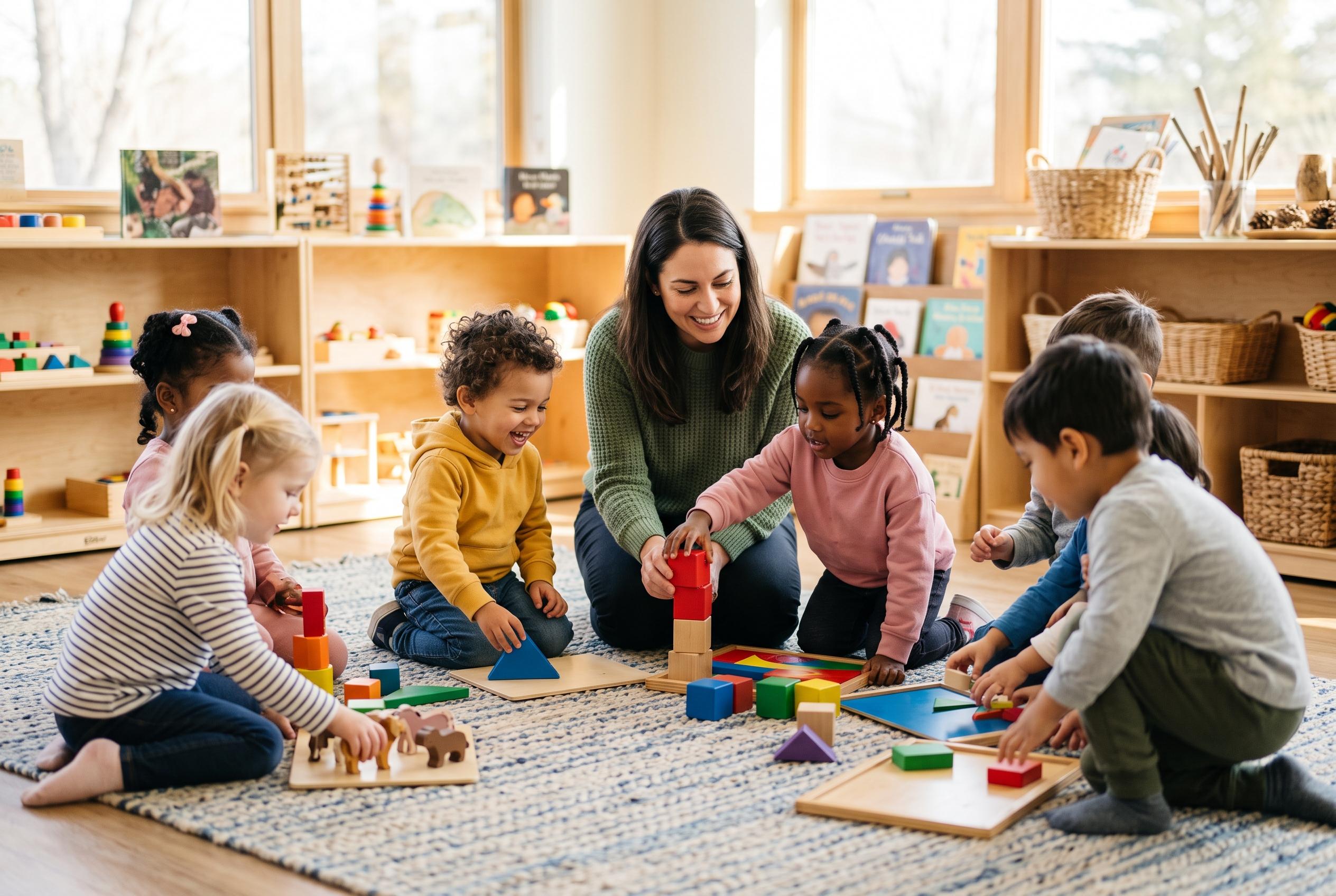

Helen Battelley advocates for integrating movement into daily early childhood learning, emphasising that physical activity is essential for cognitive, social, and emotional growth, not a distraction.
Helen Battelley argues that movement is not a break from learning in early years education but the mechanism that makes learning possible. Drawing on more than three decades working with young children, the childcare trainer says she increasingly sees pupils who struggle to sit still, follow instructions, coordinate their bodies or concentrate for long periods. Her concern is not simply about fitness, but about whether children are being asked to learn before the physical and social building blocks are in place.
The broader evidence supports that view. The Department for Education says physical development in the early years is central to children’s overall growth, including strength, coordination and motor skills, and recommends activity in a range of indoor and outdoor environments. The Education Endowment Foundation has also said physical activity can support cognitive development when it is built into everyday practice, rather than treated as an optional extra. Research published on PubMed Central similarly links movement with language, social development, emotional maturity and cognition.
Battelley’s central point is that the body prepares the brain. Before a child can listen, write or sustain attention, she says they need postural control, balance, strong shoulders and hands, and enough experience of climbing, crawling, carrying, digging and manipulating objects. She argues that when children are learning a new physical skill, their working memory is heavily occupied, which is why long verbal instructions can overwhelm them. Repetition, she says, makes movements automatic and frees up mental space for language, reasoning and problem-solving.
That is why Battelley sees the best settings as those where movement is part of the day, not squeezed into a separate slot. She describes children acting out stories, exploring maths through jumping and building, using songs with actions, and moving naturally through transitions and outdoor play. For parents, her advice is simple: skip the worksheets and weave movement into ordinary family life through walking, dancing, gardening, ball games, cooking and household tasks. Her message is that a moving child is a learning child.
Disclaimer: This content is for informational purposes only and is not intended to be a substitute for professional medical judgment, advice, diagnosis, or treatment.



