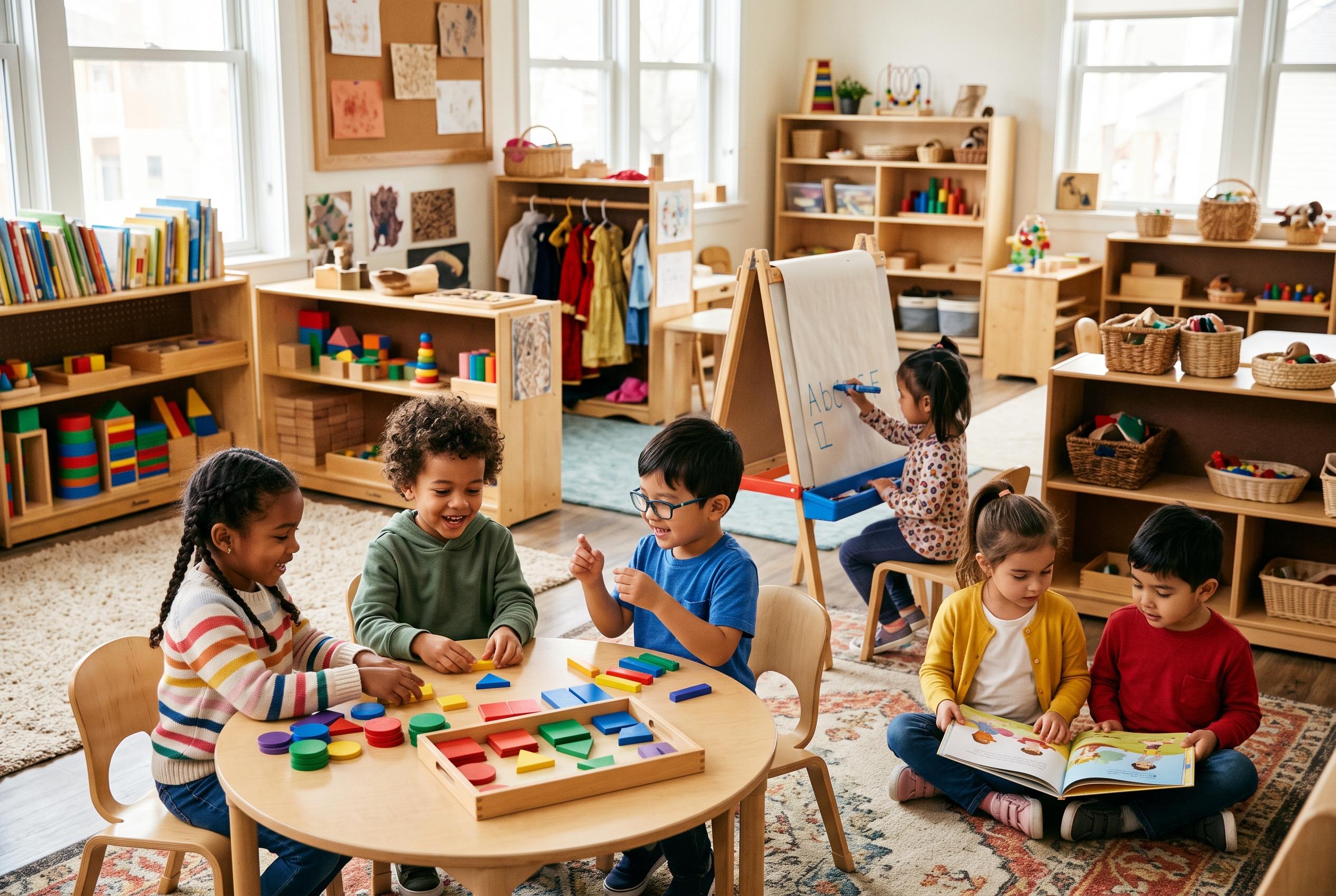

A comprehensive analysis reveals that children who attend public pre-kindergarten outperform their peers in reading, maths, and overall grades by third grade, highlighting the long-term benefits of early education especially in lower-quality school environments.
A new analysis suggests that children who attend public pre-kindergarten may carry an academic advantage into third grade, with the strongest gains appearing in reading, mathematics and overall grades. Researchers at Florida International University and George Mason University examined roughly 30,000 students in Miami-Dade County, most from low-income households, and compared third-grade outcomes across different early care settings. According to reporting on the study by EdSource and EdWeek, children who had attended public pre-K at age four outperformed peers who had been in child care centres or family child care homes.
The findings add to a growing body of research on whether early education benefits last beyond the first years of school. A separate study indexed in PubMed and published in AERA Open found that children who attended public preschool showed stronger numeracy skills in third grade than those who did not attend preschool at all. Other related research, including work from Tulsa, Oklahoma, also found better third-grade numeracy among children who had been in public preschool programmes.
The Miami-Dade study also points to the importance of the school a child later attends. In the paper published in Early Childhood Research Quarterly, the benefits of public pre-kindergarten were more pronounced when children entered lower-quality elementary schools, suggesting that high-quality early learning may help cushion the effects of a weaker school environment. That detail matters for families and policymakers alike, because it indicates that the payoff from preschool may depend not only on what happens at age four, but also on the quality of the classroom a child enters later.
Adam Winsler, a George Mason University professor and co-author of the study, told EdWeek that the pattern was clear: children who attended public school pre-K did best in third grade, followed by those in centre-based care, with family child care behind them. Related research on publicly funded preschool for low-income Latino children similarly found higher reading and maths scores, along with stronger end-of-year grades, compared with subsidised centre-based care. Taken together, the studies suggest that public preschool can produce durable academic gains, particularly for children who begin school with fewer advantages.
Disclaimer: This content is for informational purposes only and is not intended to be a substitute for professional medical judgment, advice, diagnosis, or treatment.