
As pre-K expands inside elementary schools, leadership programmes in Washington and Chicago are helping principals rethink classrooms, play and the needs of their youngest pupils.
Elementary school principals are often expected to lead classrooms they have never been trained to understand. That gap is becoming more visible as more schools add pre-K and other early grades programmes under the same roof, placing leaders in charge of very young children even when their own careers began in middle school or high school. In one Washington district, Ferndale superintendent Kristi Dominguez saw that tension first-hand and pushed her principals into intensive professional learning focused on child development and early education, according to The 74.
Joel Francik, principal of Central Elementary School in Ferndale, fit the pattern. When he took the job in 2019, his background was in middle school, first as a teacher and then as an assistant principal. He said he wanted to work with younger pupils because he believed he could have a greater impact earlier in their schooling, but he did not yet understand how children in the early grades learn best. Dominguez, whose own background is in early childhood education, quickly noticed classroom practices that she felt did not match the needs of four- and five-year-olds, including rows of desks and worksheets in kindergarten. She responded by putting all six of the district’s elementary principals through the P-3 Leadership Programme, a nearly year-long course centred on the needs of children from pre-K through third grade.
The National P-3 Centre, which runs the programme, says its aim is to strengthen the education pipeline from birth through third grade by helping school leaders understand child development, improve practice and support better policy implementation. The centre’s online leadership programme is designed for working professionals and is intended to be practical rather than abstract. Kristie Kauerz, the centre’s founding executive director, said many preparation programmes for school leaders do not address child development in enough depth, leaving principals inclined to treat kindergarten the same way they would fourth grade.
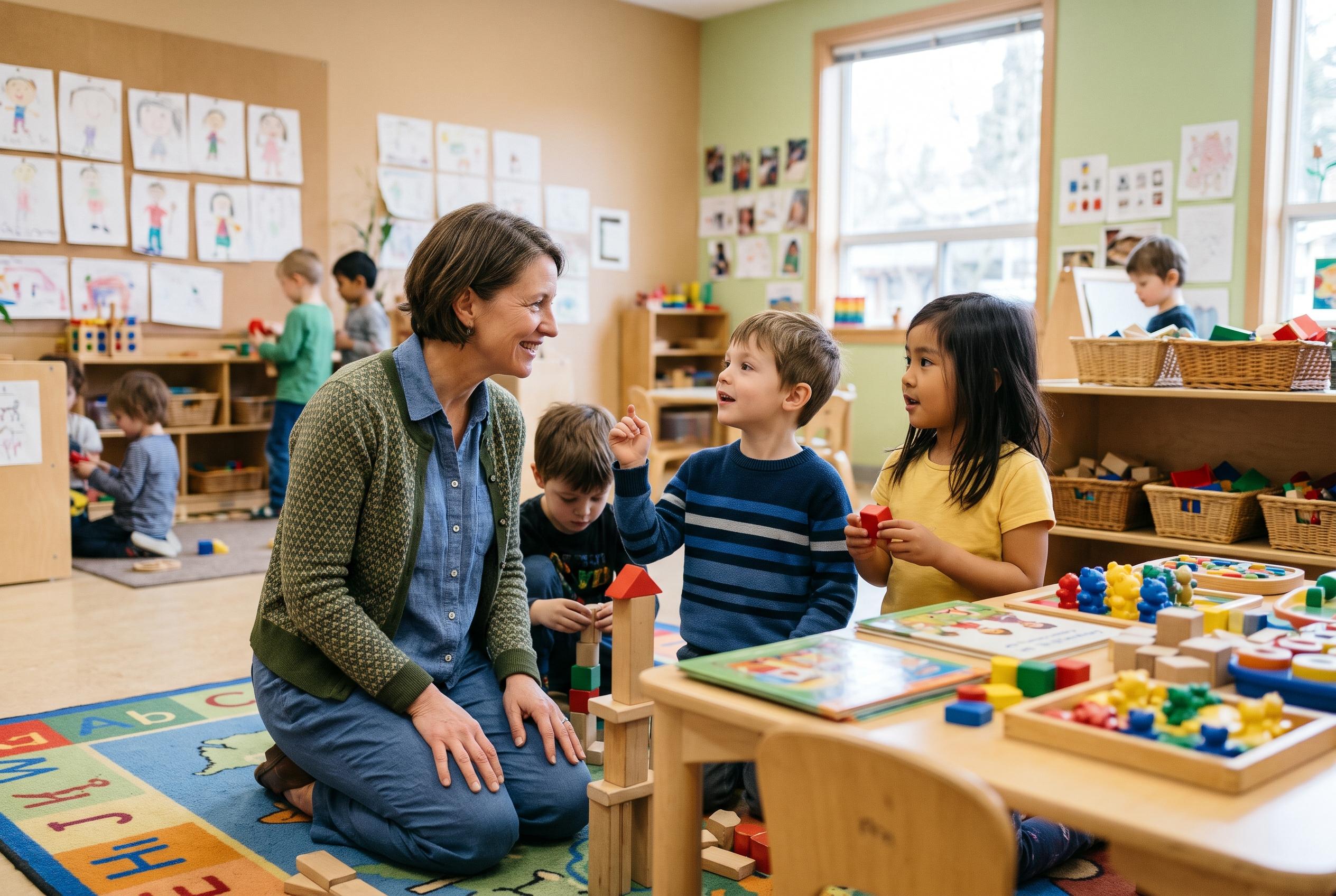
For Francik, the most significant shift was embracing play-based learning. After months of training, he came to see play not as a break from learning but as the work young children do. He began reorganising classrooms so pupils sit together at tables rather than in rows, with more movement and choice built into the day. In his school’s pre-K through second-grade classes, children now have an hour each day to explore their own interests before regrouping to share what they have discovered. Next year, the model is due to extend to third grade, reversing the usual pattern of older-grade expectations being pushed down on to younger children.
A similar shift is under way in Chicago, where Joyce Pae, principal of Chicago Academy Elementary, joined VOCEL’s Building Early Learning Leaders programme after finding herself with three pre-K classrooms and little guidance on how to connect them to the rest of the building. VOCEL says the programme, which began as a response to the city’s universal pre-K expansion, gives school leaders coaching, group learning and practical resources to help them improve early learning practices. Jesse Ilhardt, VOCEL’s executive director, said many principals were candid that they did not feel prepared for early childhood education and tended to leave pre-K classrooms isolated. Pae said the coaching helped her recognise that activities that may look like simple play are often packed with social, emotional, mathematical and literacy development.
One example changed how Pae thought about teaching itself. When she raised concerns that preschool teachers were using interactive whiteboards for read-alouds, a coach helped her see what children lose when story time is mediated through a screen instead of a book: page-turning, book handling and the basic understanding that text moves from left to right. That kind of insight, Pae said, has altered how she views not only early-grade classrooms but the adults working in them. She now makes room for play and social interaction in staff development, convinced that what benefits the youngest children can also improve the school culture more broadly.
The broader point, advocates say, is not that principals do not care. Dominguez said every principal wants to do right by children. The problem is that many school leaders are pressed by facilities issues, staffing, compliance and a growing list of duties, while early childhood remains easy to overlook, especially when pre-K is housed in a separate programme or funded differently from the rest of the school. Kauerz said the leadership programmes are meant to give administrators a non-judgmental space to learn. VOCEL’s Ilhardt said there is still a long way to go, even though the work has already reached dozens of Chicago schools. The challenge, she said, is making sure schools are designed not just for older pupils, but for the children who are entering them first.
Disclaimer: This content is for informational purposes only and is not intended to be a substitute for professional medical judgment, advice, diagnosis, or treatment.