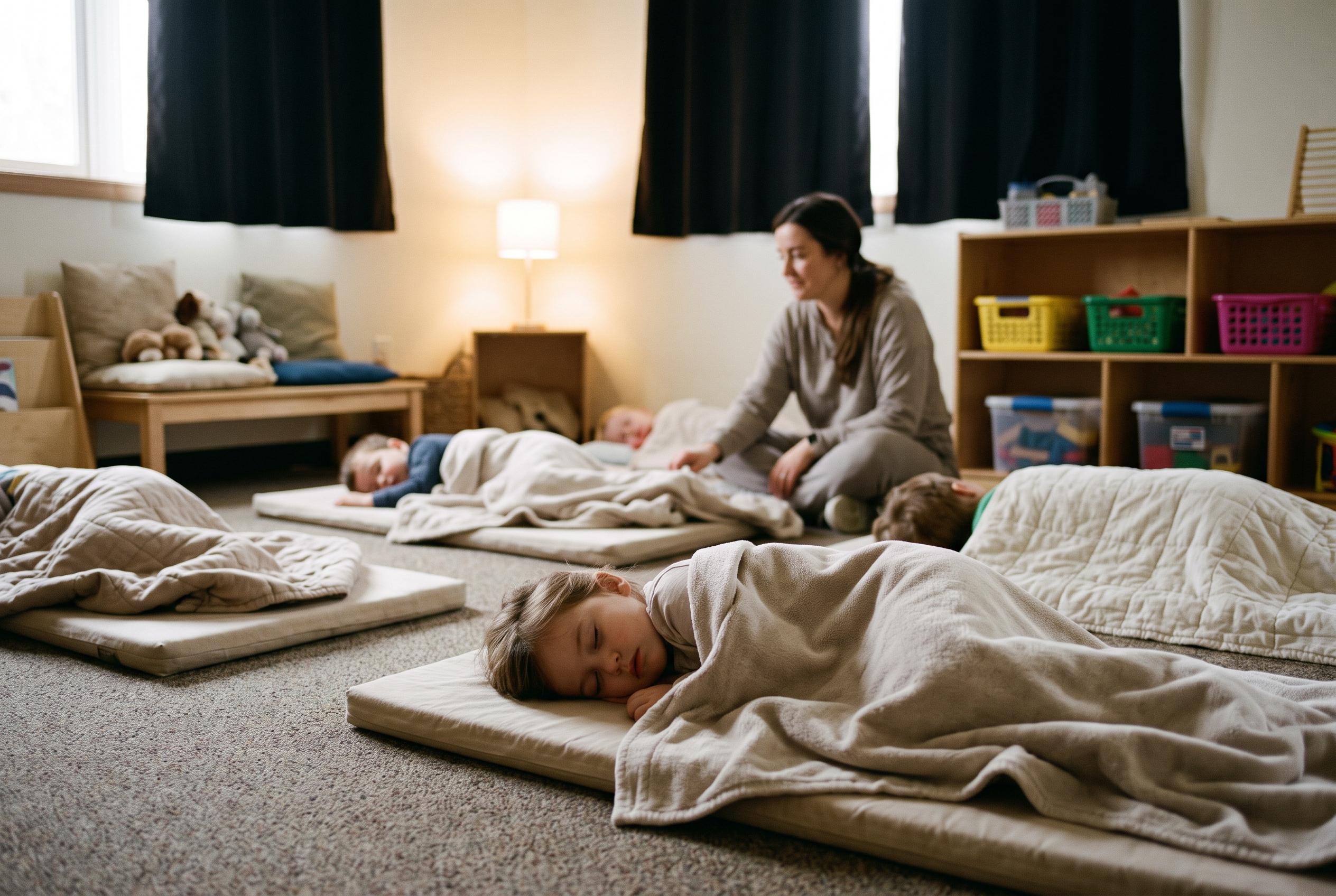

A University of Massachusetts Amherst study shows that napping after learning tasks helps preschool children retain more information, highlighting the importance of sleep in early childhood education.
Afternoon naps may give preschoolers a measurable edge in learning, according to a University of Massachusetts Amherst study that found children who slept after a memory task retained about 10% more the following day than classmates who stayed awake. The research, led by Rebecca Spencer and published in the Proceedings of the National Academy of Sciences, suggests that for young children, sleep soon after learning helps move new information into longer-term memory.
In the experiment, 40 preschoolers were taught the locations of pictures in a simple computer-based memory game. Afterward, some were put down for a nap in a darkened room, while others stayed awake with quiet activities. The children who slept did better when tested later that day and again the next morning, and the advantage held even after the non-napping group had a full night’s sleep.
The study also found a biological clue: children who napped showed more sleep spindle activity on EEG recordings. Sleep spindles are brief bursts of brain activity that appear during non-REM sleep and are associated with memory consolidation. In other words, the children who slept not only remembered more, but their brains also showed a pattern linked to storing what they had just learned.
That benefit appeared strongest in children who were still regular nappers. The National Institutes of Health, which funded the study, said the effect was greatest for preschoolers who commonly slept during the day, suggesting that habitual napping may support learning most clearly before the nap itself begins to fade with age.
The findings have practical weight for early-childhood classrooms, where nap time is often squeezed by longer academic schedules. Spencer has argued in university materials that rest periods in preschool have been limited without strong evidence, even though the brain at this age is still developing rapidly and may rely on sleep to stabilise new learning. The research does not imply that every child needs the same amount of daytime sleep, but it does indicate that for many preschoolers, nap time is not a break from learning. It is part of it.
Disclaimer: This content is for informational purposes only and is not intended to be a substitute for professional medical judgment, advice, diagnosis, or treatment.