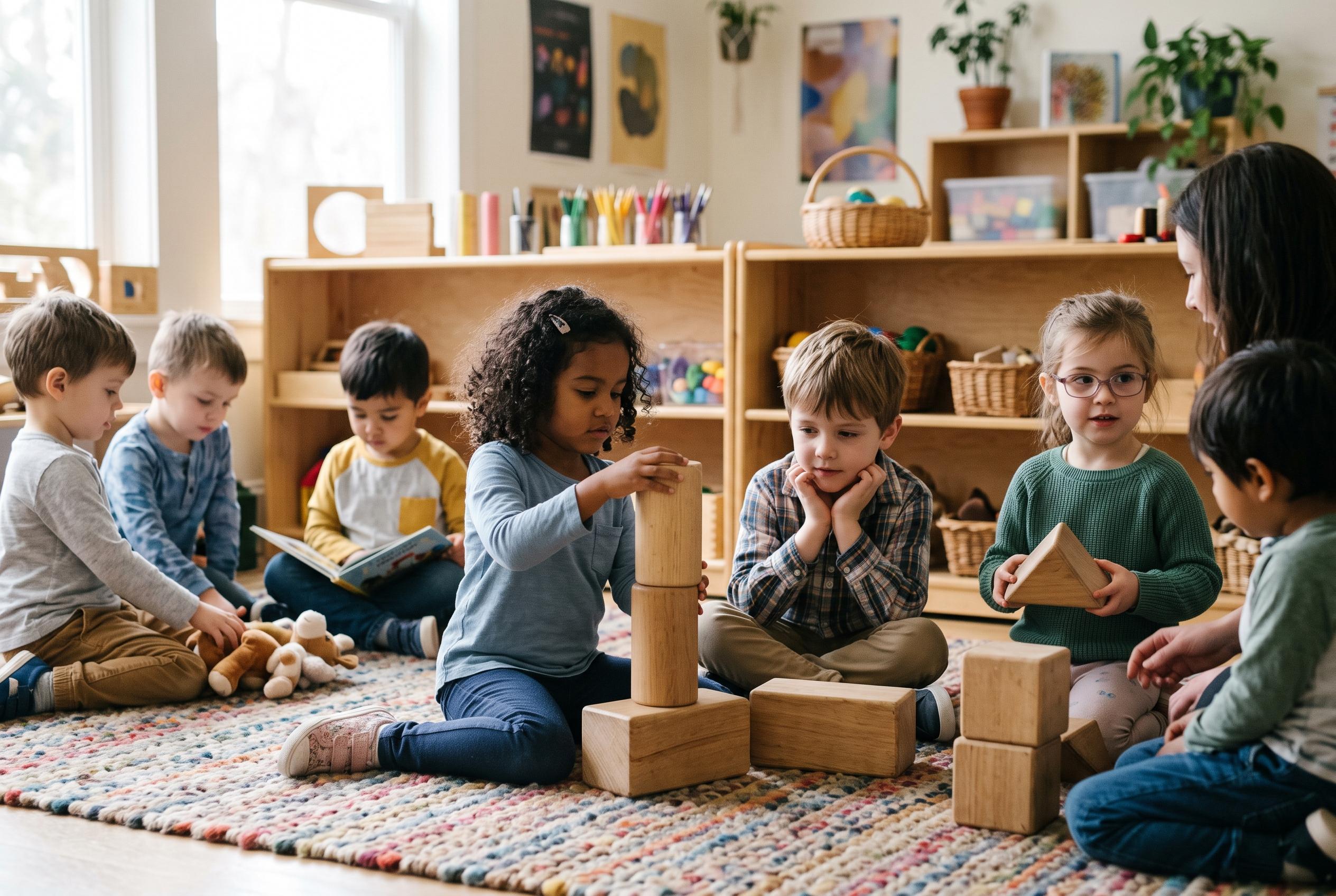

As states increase pre-K funding, concerns emerge over young children’s readiness for routines designed for older pupils, prompting calls for more playful, age-appropriate approaches to transition times.
As states pour more money into public pre-kindergarten, a quiet but consequential issue is coming into sharper focus: many 4-year-olds are being asked to operate on school terms built for older children. That can mean standing in corridors, waiting their turn and moving in single file between activities, even though early childhood specialists say those routines often clash with how young children develop.
Rae Pica, an early childhood consultant, said the problem is not simply inconvenience but readiness. Four- and 5-year-olds, she argued, are still learning the physical, social and emotional skills needed to hold still, remain quiet and wait in line. The concern is especially acute as more pre-K classrooms move into elementary schools, where the buildings, schedules and facilities are typically designed for older pupils rather than preschoolers.
The issue is not new. Dale C. Farran, an emerita professor at Vanderbilt University, helped analyse Tennessee’s federally funded prekindergarten programme for disadvantaged children and found that children who started with signs of school readiness later lost ground by sixth grade. In the classrooms she observed, transition time consumed roughly a quarter of the day, or about two hours, and teachers relied heavily on corrective commands during those periods. Farran said the amount of transition time and negative behaviour management was striking.
Still, experts say that when line-waiting is unavoidable, it need not be joyless or punitive. Pica suggests turning the routine into something more playful and age-appropriate, such as marching like mountain climbers, tiptoeing in follow-the-leader or moving like an astronaut, a whisper or a stalking cat. Her point is that preschoolers learn best when the activity feels engaging rather than disciplinary. Even in expanding systems meant to broaden access, the challenge is to make sure the youngest children are not forced to behave like miniature versions of older pupils before they are ready.
Disclaimer: This content is for informational purposes only and is not intended to be a substitute for professional medical judgment, advice, diagnosis, or treatment.