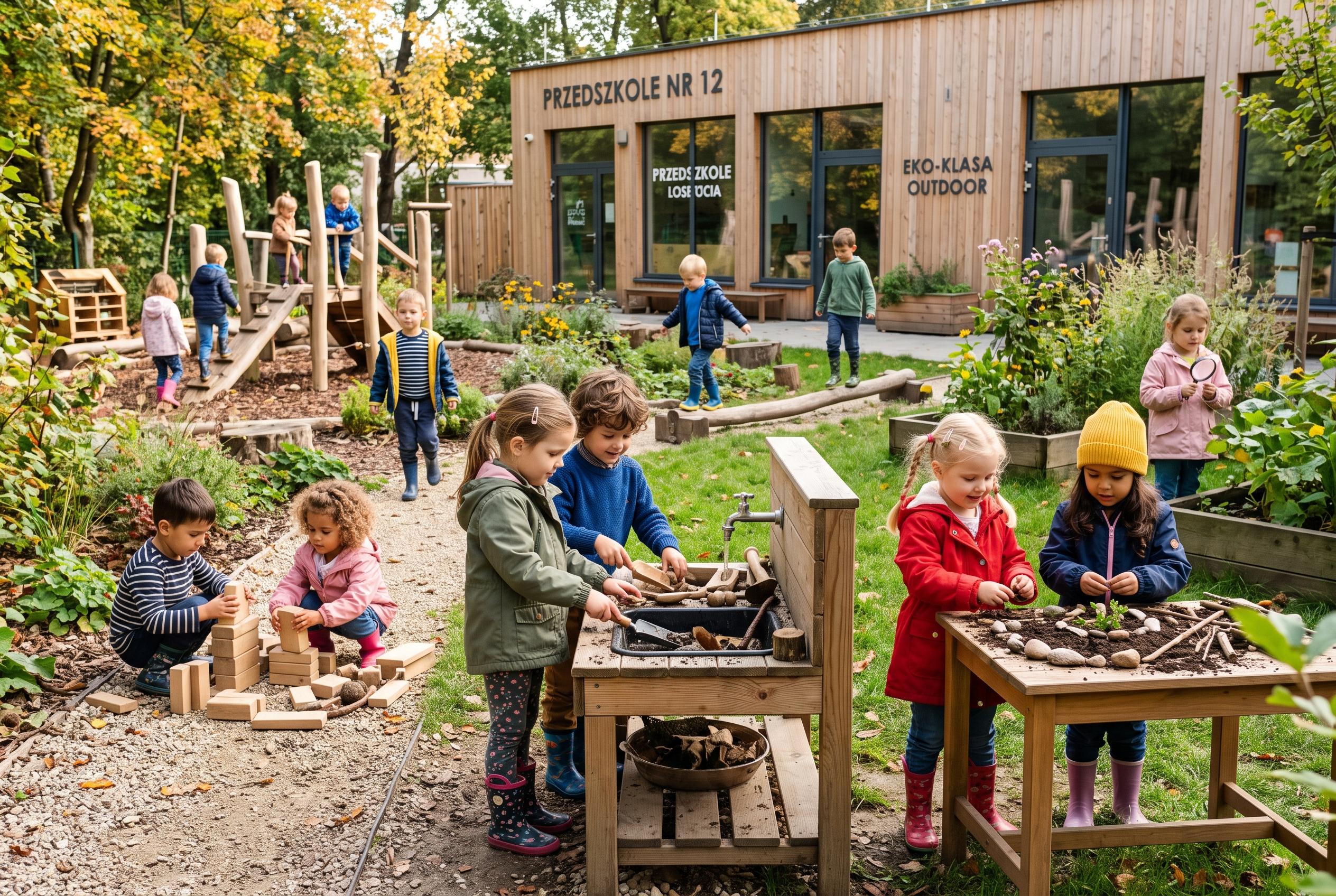

Poland prepares for a significant reform in preschool education, focusing on children’s agency, outdoor activities, and practical learning, with implementation set for September 2026 amid a broader modernisation effort.
Starting work in a preschool, changing institutions or returning after a long break can feel daunting, but the essentials are clearer than they first appear. The role demands pedagogical knowledge, good organisation and flexibility, yet it does not require knowing everything on day one. What matters most is knowing where to look for answers, what to ask school leadership and how to create conditions in which children feel safe, settled and able to learn through play and activity.
For teachers in Poland, the biggest change on the horizon is the new core curriculum for preschool education, which the Ministry of Education says was signed in March and published shortly afterwards, with implementation set for 1 September 2026. The government’s Reform26 initiative presents the change as part of a broader modernisation of the system, with new curriculum arrangements also affecting primary education from the same date. In practice, that means the 2026/27 school year will bring a different framework for planning, documentation and daily work.
The new curriculum shifts the emphasis towards children’s agency, free play, practical experience, daily movement and time outdoors. It also places greater weight on inclusive education, digital hygiene and partnership with families. According to the ministry, printed materials, including worksheets, are still permitted, but only as a supplement to hands-on work, conversation, experimentation and play.
That distinction matters because the legal status of the curriculum depends on timing. As of August 10, 2026, the 2017 curriculum remains in force until the end of August, while the new regulation will only take effect on September 1. The change is therefore not merely a draft or proposal; it is already signed and published, but it is not yet the operative rule.
In daily practice, the new framework is organised around four foundational competences: language, mathematics, digital skills and movement. It also highlights broader cognitive, social and personal competences, including problem-solving, critical and creative thinking, cooperation, care for others and the ability to direct one’s own actions. The curriculum treats agency as central, meaning that children should be able to make choices, start activities, complete them and take responsibility appropriate to their age.
Planning should no longer be driven by a checklist mentality. The curriculum describes nine areas of achievement at the end of preschool education: social, personal, language, mathematical, natural, technical, digital, artistic and movement-based. A single well-designed activity can touch several of them at once, which is one reason the new approach favours integrated work rather than isolated tasks.
It also suggests five stable activity zones in the preschool environment: reading, construction, artistic activity, rest and scientific and natural exploration. The point is not to force every setting into identical furniture layouts, but to ensure that children can actually use the space for those purposes. The curriculum’s language is advisory rather than prescriptive, which gives schools room to adapt to their own conditions.
Another clear message is that play and outdoor time are not optional extras. Free play is described as a daily and essential condition of curriculum delivery, while outdoor activity should happen every day. Children should also spend more than an hour outside at least once a week, except on days with official alerts or very poor weather. The whole day counts as educational time, including meals, walks, self-care routines and tidying the room.
Technology is treated cautiously. Children should not, as a rule, use screens individually and independently in preschool, apart from reasonable adjustments for children with special educational needs. Teachers may use screens for educational purposes only to the extent that is necessary and with proper digital hygiene. The aim is to prepare children for the digital world without turning the preschool room into an extension of a device.
For teachers who are just beginning, qualifications and paperwork can be a source of anxiety, but they are manageable if approached methodically. The current rules on teacher qualifications, according to government guidance, depend in part on when and under what regulations a person completed their training. For those educated under the newer framework, the main route is a master’s-level programme in preschool and early years education with pedagogical preparation. Employers may ask for diplomas, supplements, medical certificates, criminal record checks and other documents needed for verification.
Workplace culture also matters. Public and non-public preschools both follow the curriculum, but they differ in funding, employment rules and organisation. Public institutions are usually more formal and regulated, while non-public settings may offer more flexibility but can also involve broader duties. Either way, teachers should ask about group size, staffing, mentoring, communication with parents, documentation and how much time is expected outside core teaching hours.
The curriculum’s practical turn is especially visible in its approach to worksheets. They have not been banned, but they are meant to be secondary. A worksheet may make sense as a brief follow-up to an experience, a choice activity or a way to support a child who enjoys that form of work. It becomes less useful when it replaces real-world exploration, movement, construction or social interaction.
Documentation remains another crucial part of the job. In public preschools, the daily register records required information about children and parents, themes, attendance and drop-off and collection times. Observation notes and assessments should help teachers understand development and plan support, not label children or fill files for their own sake. The same principle applies to safety procedures, including handover rules, excursions, allergies, emergencies and child protection standards.
For anyone entering the profession now, the most useful mindset is practical rather than perfect. Read the school statute, the curriculum, the daily timetable and the safeguarding procedures. Learn the team structure. Observe the children. Then adjust. The work is demanding, noisy and emotionally intense, but it is also built around something simple: making sure children are safe, seen and able to grow at their own pace.
Disclaimer: This content is for informational purposes only and is not intended to be a substitute for professional medical judgment, advice, diagnosis, or treatment.