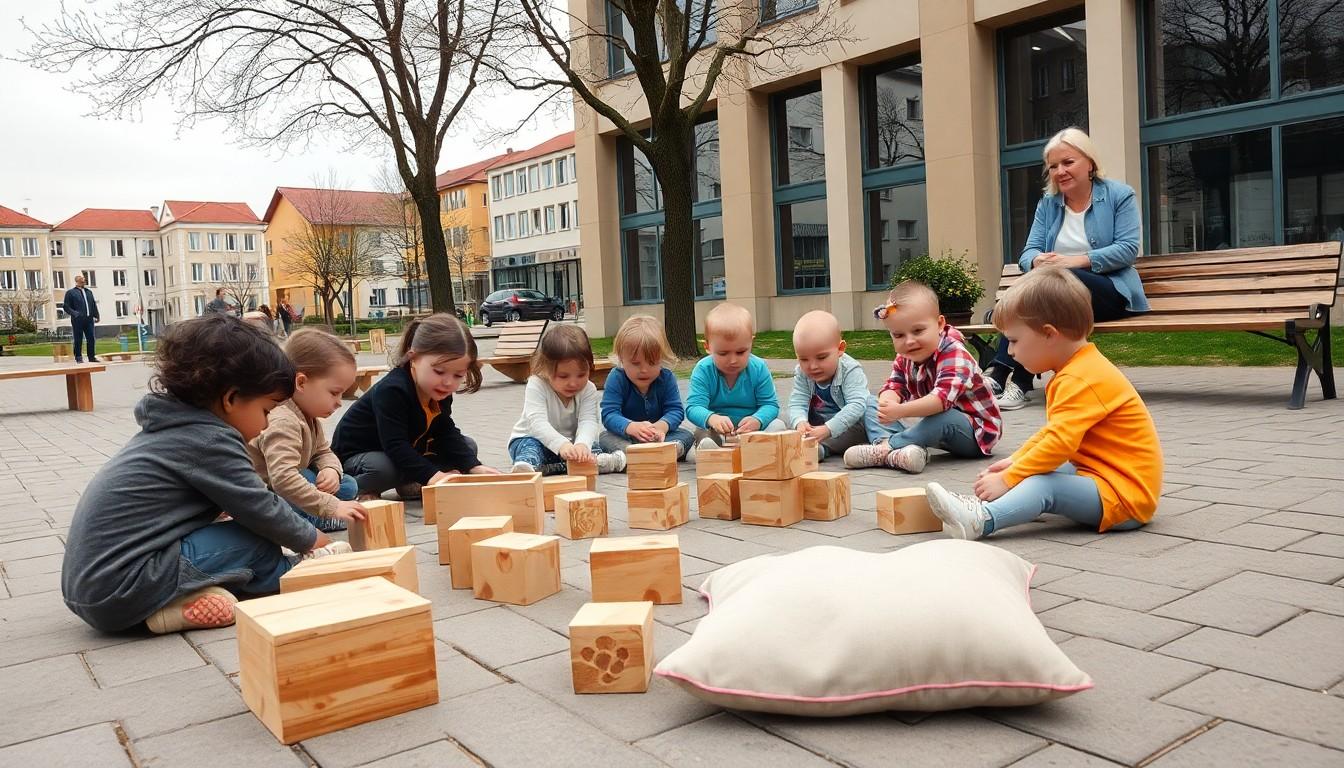

Poland prepares to implement a revised pre-school curriculum in 2026 that emphasises holistic development and individual readiness over early academic testing, fostering a child-centred approach to early education.
Questions about whether nursery is simply “school before school” are likely to intensify as Poland prepares for the new pre-school curriculum due to take effect on 1 September 2026. The education ministry signed the regulations on 12 March 2026, and official government material says the reform is intended to strengthen holistic development rather than push younger children into the formal demands of Year 1. That distinction matters, because nursery is meant to prepare children for learning, not to replicate the primary classroom.
At the heart of the change is a broader view of school readiness. According to the ministry, readiness is not limited to letters and numbers but includes independence, communication, emotional understanding, cooperation, motor skills, concentration and a willingness to learn. The point is not to test every child against a single benchmark, but to recognise that development advances at different speeds and in different areas.
That is why the answer to one of the most common parental concerns is straightforward: a child does not need to read fluently before starting school. The new framework prepares children for reading and writing through listening, comprehension, phonological awareness, familiarity with printed letters and hand-preparation activities. However, the first year of primary school remains the place for systematic teaching in literacy and numeracy, with teachers expected to adapt to mixed starting points.
The curriculum also organises child development into nine interconnected areas: social, personal, language, mathematical, natural, technical, digital, artistic and physical. These are not separate subjects to be ticked off in isolation. A well-designed activity can build several of them at once: building with blocks may involve counting, planning, negotiation, language, fine motor control and problem-solving all in one sequence.
That logic also explains why play remains central. Free play is not time taken away from learning; it is one of the main ways young children learn at all. Through play, they experiment with rules, practise waiting, manage conflict, test ideas, use imagination and take responsibility for choices. Worksheets may supplement these experiences, but they cannot replace movement, conversation, hands-on activity and direct contact with the world.
The new curriculum also gives more weight to educational experiences that should become part of nursery life. According to the published guidance, children should, at least once each year, encounter activities such as engaging with art, observing nature, growing plants, preparing for an outing together, taking part in a health-promoting event and presenting the results of shared work. Over the entire nursery period, they should also experience longer projects such as making their own toys, creating a model of a space, acting for others and planning and carrying out shopping together. These are intended to be nursery experiences, not tasks handed to parents to complete at home.
Observation, under the new approach, is meant to support children rather than rank them. Teachers watch children during play, conversation, movement, meals and daily routines so they can identify strengths, needs and the conditions in which each child develops best. That information is then used to adjust teaching, plan support, work with specialists and prepare school-readiness assessments for children who are about to enter primary school.
The reform also addresses mixed-age groups, which often provoke anxiety among parents. A shared group does not mean a single level of expectation. Children can take part in the same activity while the task, level of help and method of completion are adjusted to their abilities. Younger children learn by watching older ones; older children consolidate skills by explaining, helping and leading. The ministry’s emphasis on flexibility and individualisation is meant to make that work in practice.
What nursery should not do is shift its responsibilities on to families. The model described by the education ministry places professional responsibility with the institution: organising the process, observing development and choosing appropriate support. The home’s role is different. It is to create everyday opportunities for talk, reading, movement, rest, independence and shared activity, not to run a second school after hours.
For many nursery leaders, the challenge over the coming months will be less about the wording of the regulation than about explanation. Parents will need to hear, clearly and repeatedly, that good preparation for school does not mean rushing every child through letters, writing and sums. It means building the conditions in which children are ready to learn, at their own pace, when they reach the classroom door in September 2026.
Disclaimer: This content is for informational purposes only and is not intended to be a substitute for professional medical judgment, advice, diagnosis, or treatment.