

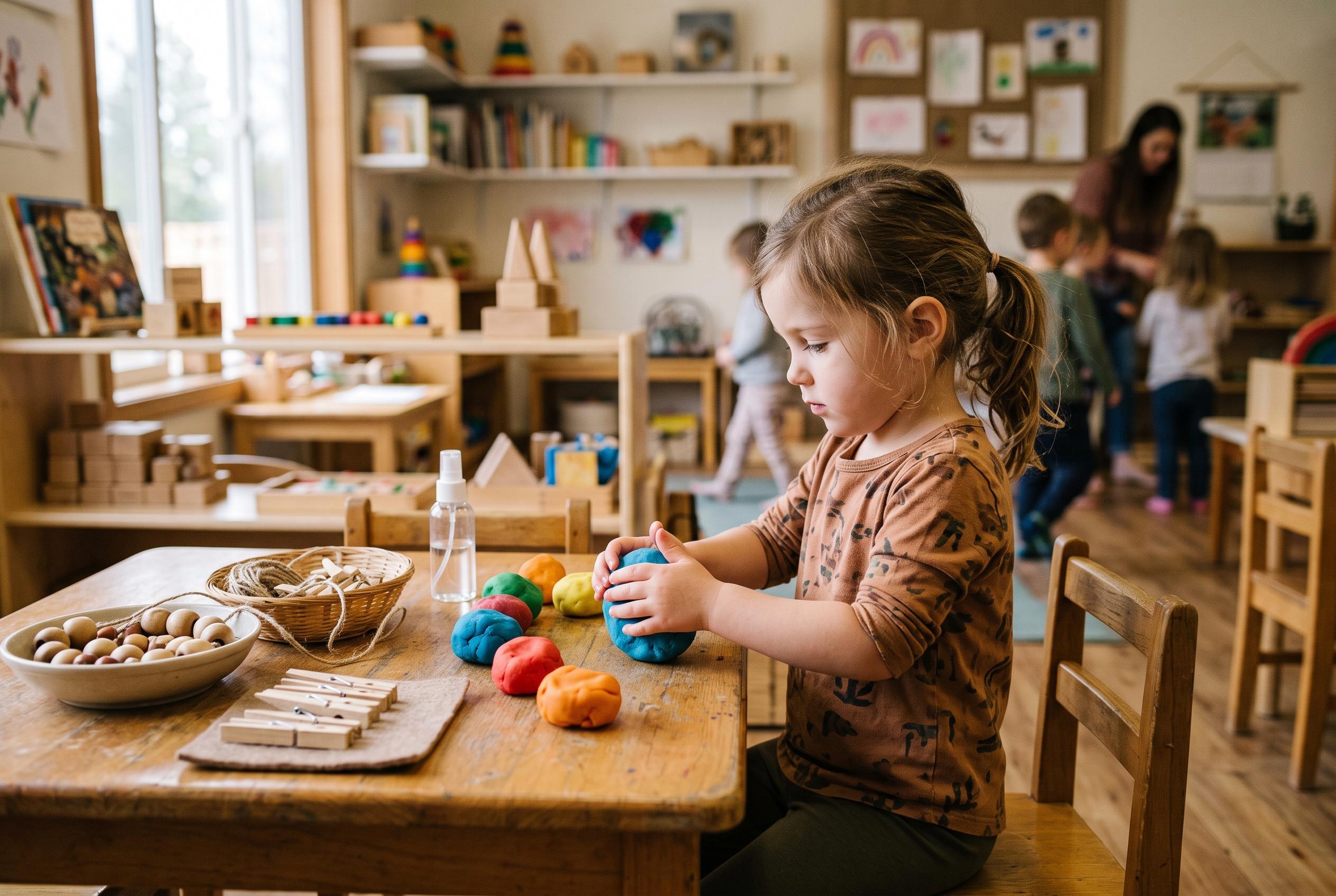

Simple activities such as play dough, spray bottles, clothespins and threading games can help preschool children build the grip and pinch strength needed for writing, cutting and self-care.
Many preschool and kindergarten teachers are seeing the same problem: children are arriving with less hand strength and poorer control than they need for everyday classroom tasks. According to the Growing Hands-On Kids post, some children are already relying on adaptive loop scissors because opening and closing standard scissors is still a struggle, while others need help with the pressure required to hold pencils, crayons and glue tools. The practical answer, the article argues, is to build strength through play rather than drills, using short activities that fit naturally into classroom routines and home life. This matters because hand strength supports not only writing and cutting, but also dressing, carrying materials and other self-care skills.
The article separates hand strength into two areas. Grip strength refers to holding and controlling objects with the whole hand, such as carrying supplies, stabilising paper or managing scissors. Pinch strength uses the thumb and forefinger for more precise movements, including pencil control, fastening clothing and cutting. Occupational therapy guidance from other preschool-focused resources makes the same basic point: hand strength is not one single skill, but a set of related movements that help children manage fine motor tasks with greater ease and less fatigue. That broader view is useful for parents and educators because it shows why a child may cope well with one task, such as stacking blocks, yet still struggle with another, such as using a crayon or clipping a clothespin.
For grip strength, the article recommends activities that ask children to push, squeeze, pull and stabilise. These include kneading play dough, spraying water onto boards or tables, climbing at the playground, squeezing glue bottles, using tongs to move pom-poms, punching holes, crumpling paper into a tight ball, snapping interlocking blocks together, squeezing wet sponges and playing with stress balls. Similar suggestions appear in other preschool fine motor guides, which also highlight play dough, sponge squeezing, spray bottles and tweezers as low-prep ways to strengthen the hands while keeping children engaged. The common thread is simple: if the activity feels like play, children are more likely to repeat it often enough to make a difference.
Pinch-strength activities focus on the smaller muscles and more controlled finger movements children need for pre-writing and tool use. The post suggests clothespin games, pipette or water-dropper work, peeling stickers, tearing paper for crafts, pressing beads or toothpicks into play dough, sorting nuts and bolts, Q-tip painting, threading beads, making thumbprints or fingerprints, using beads on pipe cleaners and writing with broken crayons or short pencils. A clothespin-focused article from an occupational therapy site notes that such games also support bilateral coordination, meaning the ability to use both hands together, which is essential for many classroom tasks. For parents and teachers, that makes these activities especially useful: they strengthen the hand while also training coordination, attention and control.
What gives this advice its strength is how usable it is. None of the activities requires special equipment, and most can be added to centres, home learning routines or simple clean-up jobs. The underlying message is that children build the hand control they need by doing meaningful things with their hands over and over again. For families and early years settings, that can mean turning everyday play into practical preparation for writing, cutting, dressing and other skills children use all day long.
Disclaimer: This content is for informational purposes only and is not intended to be a substitute for professional medical judgment, advice, diagnosis, or treatment.



