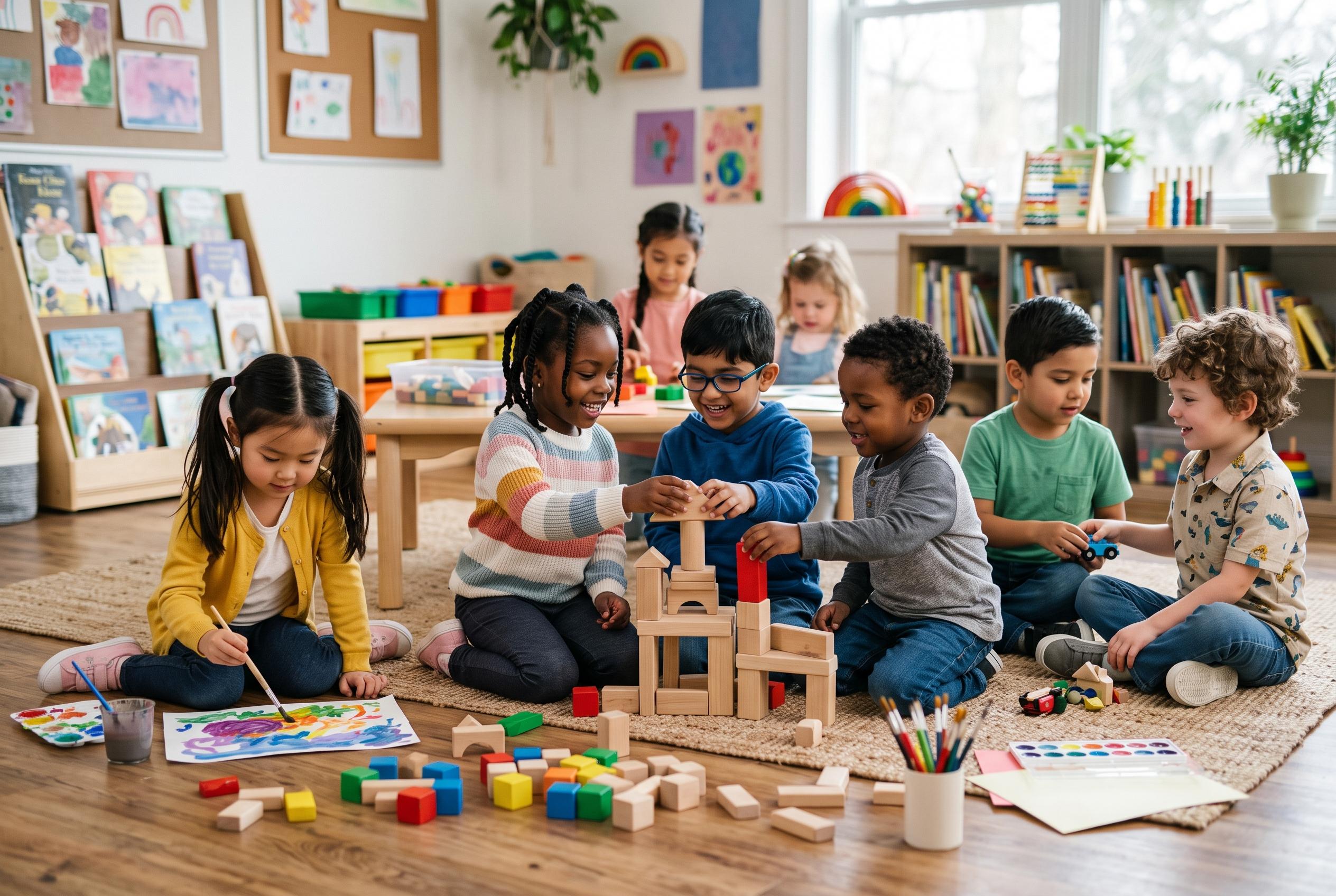

Emerging research underscores the importance of play in kindergarten settings for building social abilities, curiosity, and early literacy, challenging traditional academic approaches.
Kindergarten is often less about formal lessons than about learning how to be part of a group. In many classrooms, children move through activity stations, story time, art, movement, library visits and outdoor play, building early literacy and numeracy in ways that are woven into games rather than taught through worksheets. The broader aim is to help young children settle into school routines, practise listening, take turns and learn how to work alongside others.
That approach is consistent with guidance and research on early childhood education. A paper shared by South Australia’s education department says children learn best when play is part of the classroom because it supports curiosity and helps them make sense of the world. Texas education officials also point to play-based learning as a way to develop language, thinking and social skills, while a review published in Wiley looked at 168 studies and found play has a central role in learning for four- and five-year-olds.
Social development is a major part of that picture. Research published by the Turkish Education and Science Association found that both storytelling-based and play-based social skills training improved kindergarten children’s social abilities. An article from the Child Encyclopedia also says play helps children learn cooperation, appropriate behaviour and self-regulation, all of which matter for friendships and classroom life.
For families educating at home, the message is similar: early schooling does not need to look like formal academic drilling. Outings, reading aloud, building with blocks, baking and play dates can all support learning without pushing children too quickly into structured work. The central idea is that children should associate learning with enjoyment first, especially before the more academic demands of primary school begin.
Disclaimer: This content is for informational purposes only and is not intended to be a substitute for professional medical judgment, advice, diagnosis, or treatment.