

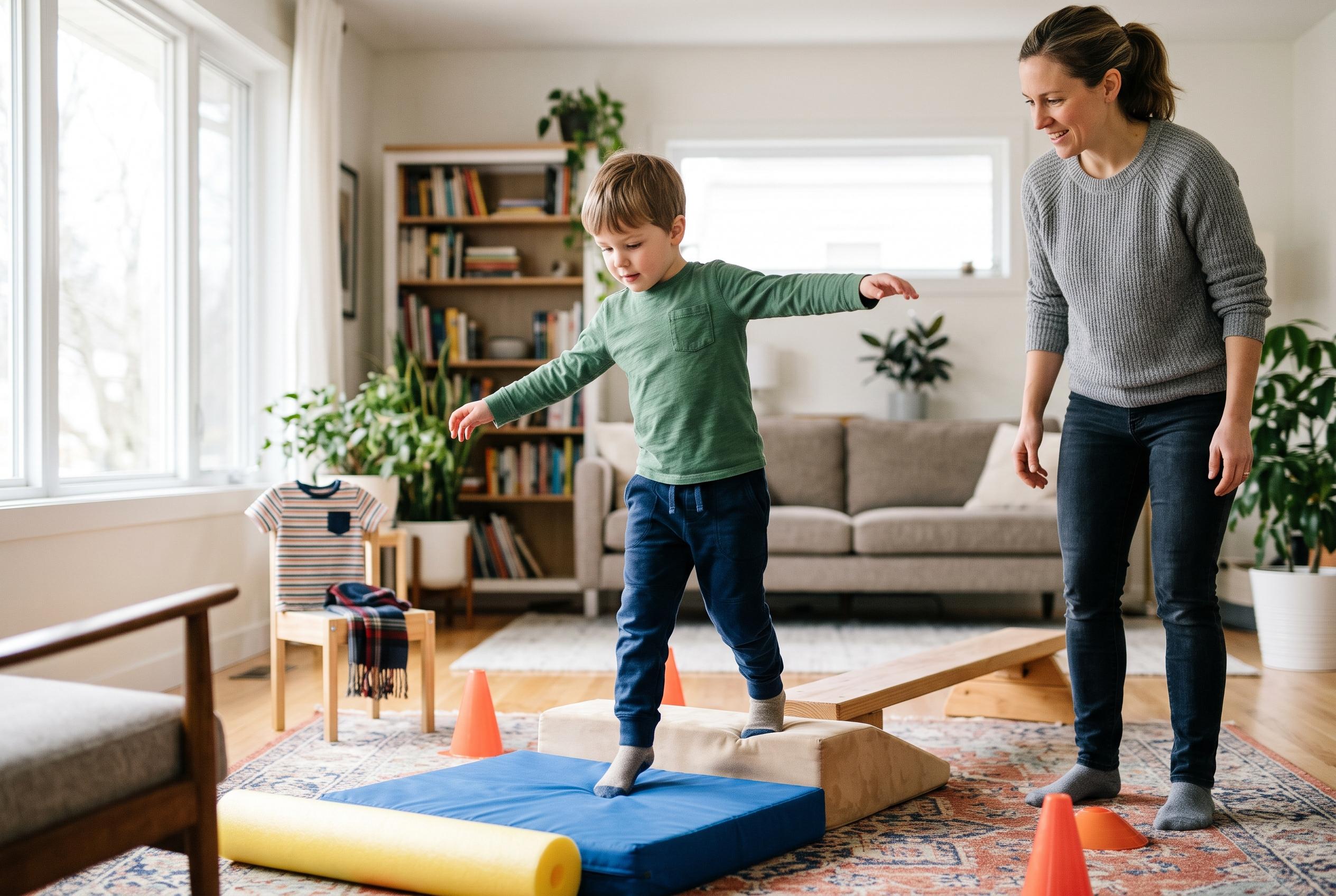

Simple play activities, from obstacle courses to dressing games, can significantly improve children’s motor planning skills, helping them become more confident and less clumsy in daily tasks.
Motor planning is the ability to work out a movement, organise the steps and then carry it out. Occupational therapists often call it praxis, and it affects ordinary childhood tasks such as climbing, dressing, throwing, writing and navigating play equipment. When the skill is underdeveloped, children may seem clumsy, hesitate with new tasks, struggle to copy movements or need far more practice than their peers to make a skill feel automatic.
That is why play-based practice tends to work best. Rather than drilling a child with instructions, therapists usually break an unfamiliar task into smaller parts, show the movement visually and let the child practise in a natural setting. Everyday environments, from a hallway to a garden, give children clearer cues than verbal directions alone and make the challenge feel more manageable.
Simple home activities can strengthen the same planning systems. An obstacle course made from cushions, chairs, cones or tape asks a child to sequence movements before they begin. Bubble-popping routes, stop-and-go games, animal walks and balloon keep-ups all ask for timing, body awareness and inhibition, which is the ability to freeze or switch direction on command. These kinds of games also help children practise adjusting their movements when the plan changes, something occupational therapists say is central to motor learning.
Fine motor tasks can do the same job on a smaller scale. Pouring water between containers, threading pasta, clipping pegs, cutting along a line and building towers all ask a child to judge force, use both hands together and coordinate what the eyes see with what the hands do. A child who pours too quickly, presses too hard or loses track of the order is not failing the task; they are rehearsing the control needed to complete it more smoothly next time.
Some of the best activities are also the most ordinary. Dressing a teddy, sorting pieces of a puzzle, following a treasure map, or copying a short animal sequence all build planning, memory and sequencing without feeling like therapy. Even a short route around the living room can help if the child has to remember where to go next, recover from a mistake and finish the task in the right order. The value lies in repetition, not in how elaborate the challenge looks.
Parents often get the best results by keeping sessions brief and predictable. A few minutes at a time is usually enough, with one gross motor activity and one fine motor activity in a session. It also helps to say the steps aloud, ask the child to repeat them, and reduce the number of stages if frustration starts to rise. The goal is successful practice, not endurance. A task that ends well teaches more than one that collapses into tears halfway through.
Clumsiness on its own is not a diagnosis, but persistent difficulties across home, school and play deserve attention. Signs that motor planning may be an issue include frequent bumps and trips, trouble learning new physical skills, difficulty with buttons, zips, scissors or handwriting, and problems copying movements. If those challenges are broad and persistent, parents should speak to their child’s doctor and ask about a referral to a paediatric occupational therapist.
Disclaimer: This content is for informational purposes only and is not intended to be a substitute for professional medical judgment, advice, diagnosis, or treatment.



