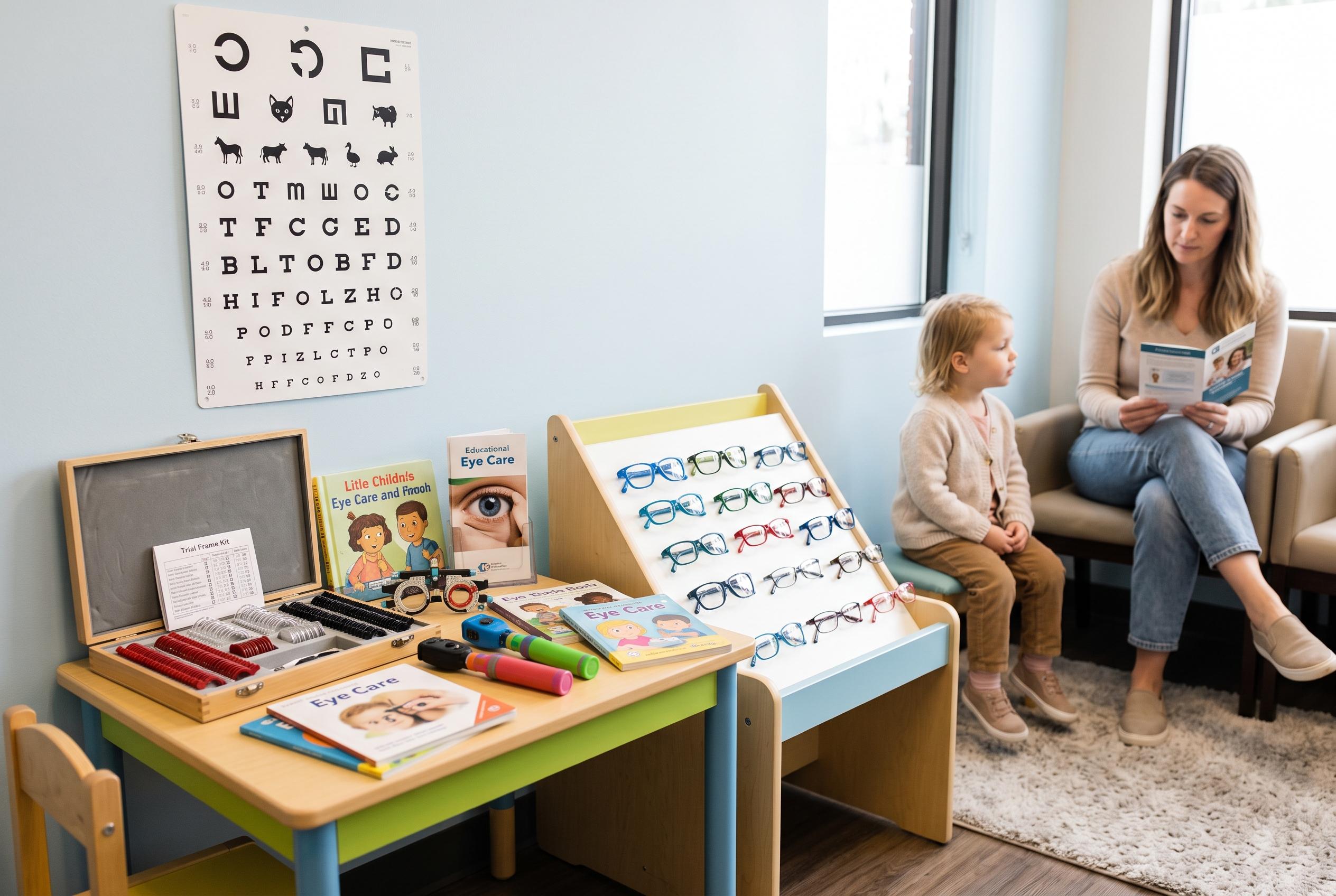

Experts warn that children may experience unnoticed vision issues for years, emphasising the importance of early eye examinations to support learning and prevent long-term damage.
Some children live with blurred or uneven vision for so long that they assume it is normal, which is why parents should not wait for complaints before arranging an eye check. Tomisin Ayodele, a dispensing optician at Eyekon Innovation Optics Lab, said children can be born with vision problems or develop them as they grow, and the causes are not always the same. She said some need help with short-sightedness, long-sightedness or astigmatism, while others may have one eye that sees much better than the other.
Ayodele said glasses are not a sign that a child has a serious eye disease. In many cases, they simply correct the way light is focused so the child can see clearly. She also noted that family history can play a role, but it is not decisive: a child may need glasses even if no one else in the family does, or have good vision despite a parent wearing spectacles.
Parents are often the first to spot warning signs. Ayodele said they should look out for squinting, sitting too close to the television, holding books or phones near the face, frequent eye rubbing and headaches. Trouble copying work from the board, unusual reading mistakes and avoiding school or play activities can also point to a vision problem. Johns Hopkins Medicine gives a similar list, adding head-tilting, covering one eye and difficulty concentrating on schoolwork.
That matters because children often do not say there is a problem. According to the Centers for Disease Control and Prevention, regular eye exams can pick up vision issues early enough to support learning and prevent longer-term difficulties. The CDC says common childhood problems include refractive errors, such as short-sightedness, long-sightedness and astigmatism, as well as amblyopia, or lazy eye, and strabismus, sometimes called crossed eyes. Cleveland Clinic says some eye problems begin in infancy, which is why early checks, including in the first years of life, can make treatment easier.
Ayodele also pushed back on the idea that screens alone cause children to need glasses. She said phones and televisions do not suddenly create a prescription, but long periods of close-up work, especially with little outdoor time, may contribute to short-sightedness or make it worse. Temporary effects such as tired eyes, dryness and headaches can also follow prolonged screen use. The practical advice, she said, is not to ban devices outright, but to build in breaks, keep screens at a sensible distance and make sure children spend time outdoors. MedlinePlus likewise says regular vision screening is important through childhood because untreated problems can affect learning and, in some cases, lead to lasting vision loss.
Disclaimer: This content is for informational purposes only and is not intended to be a substitute for professional medical judgment, advice, diagnosis, or treatment.