
Familiar routines, social skills and gradual exposure are key strategies recommended by experts to ease children’s transition into preschool, shifting focus from academic achievement to confidence and social readiness.
The run-up to pre-K can unsettle both children and parents, but educators say the best preparation is often less about flashcards and more about familiarity, routine and confidence. According to guidance from Little Scholars, a New York pre-K programme, children are more likely to settle when families understand how the classroom works, how teachers support children and how play sits at the heart of the day. That approach aligns with advice from UNICEF, PBS KIDS for Parents and GreatSchools, all of which stress that young children benefit from learning the rhythms of school before they ever walk through the door.
The biggest misconception, educators say, is that readiness means academic achievement. Children do not need to arrive knowing every letter, counting far beyond their years or writing neatly on command. In well-designed early learning settings, stories, pretend play, movement, art, conversation and outdoor exploration are not extras; they are the main way children build early literacy, numeracy and problem-solving skills. PBS KIDS for Parents and the American Academy of Pediatrics both note that school readiness is shaped just as much by social, emotional and behavioural development as by academic knowledge.
What matters more in the beginning is whether a child can get help, manage everyday routines and take part in a group. The most useful preparation starts at home with simple language such as “I need help”, “Can I have a turn?” and “I need to use the bathroom”. Little Scholars also recommends building independence through small tasks like putting away belongings, washing hands and opening part of a lunchbox. The same advice appears in guidance from the French American School of Puget Sound and GreatSchools, both of which emphasise that children grow more confident when they are given manageable responsibilities before school begins.
Listening and moving between activities are also major parts of the early classroom experience. A preschool teacher’s request often means stopping an engaging activity, listening carefully and shifting to something new. That can be hard for a young child, which is why experts recommend practising short instructions at home and using tools such as cleanup songs, visual cues and “first, then” language. GreatSchools says these habits help children understand expectations, while PBS KIDS for Parents notes that developmentally appropriate classrooms build skills gradually through repetition and relationships.
Social preparation does not mean a child has to become outgoing overnight. Some children join in quickly; others prefer to watch first. UNICEF recommends playdates, visits to the school and pretend play at home to make the setting feel less unfamiliar, while GreatSchools suggests more chances for social activity before the first day. Those low-pressure experiences can help children practise simple peer phrases such as asking to join a game or saying they were using a toy, without turning socialising into a test.
A gradual countdown can make the transition easier. Bright Headstart recommends building habits over time rather than cramming in new expectations at the last minute, and Little Scholars offers a similar six-week approach. That can include adding small chores, introducing books about starting school, adjusting sleep times, and practising the morning routine well before the first day. In the final days, it helps to explain the school-day sequence in simple steps so the child knows who will greet them, what will happen first and when a parent will return.
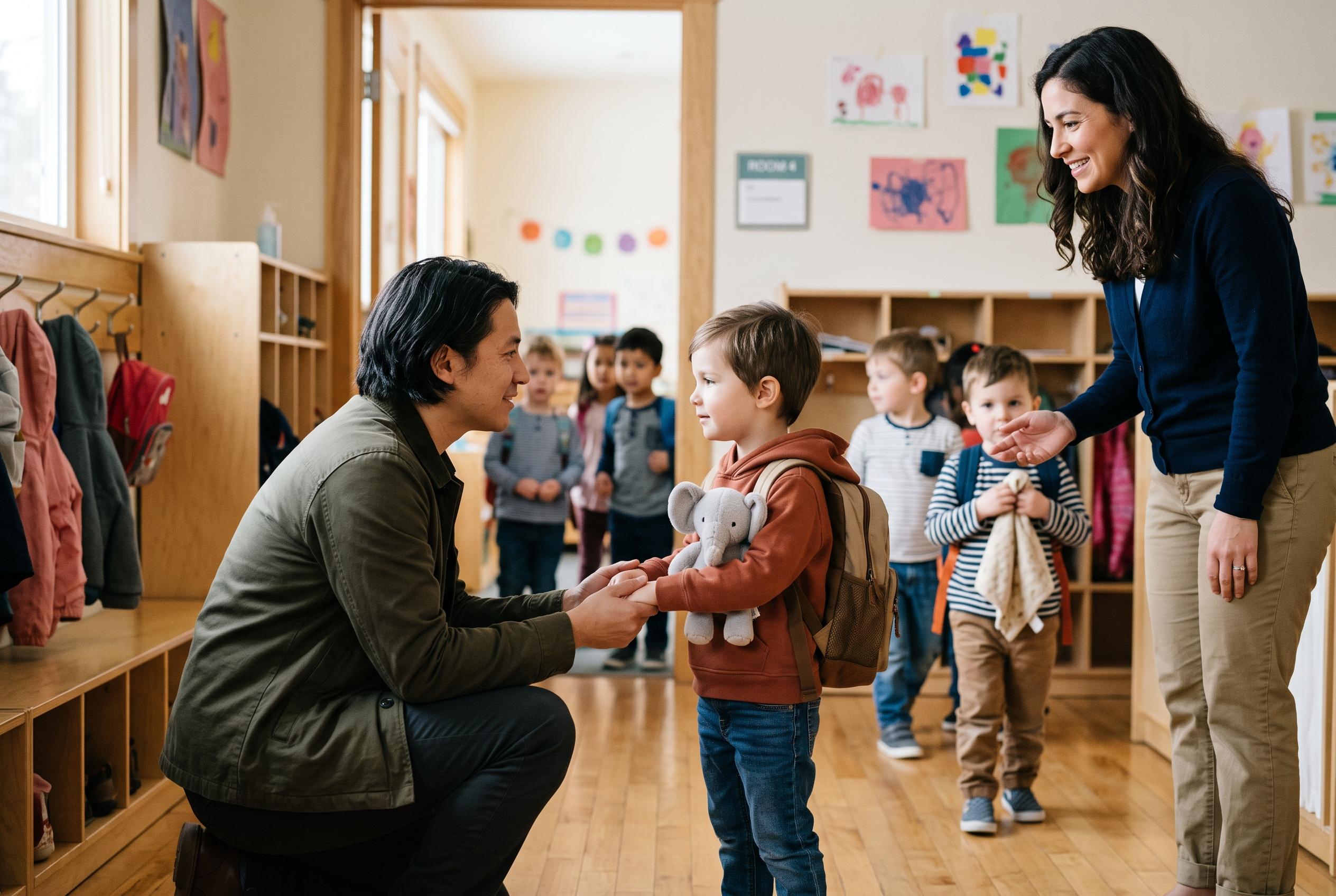
Separation can still be difficult, even for children who are used to babysitters or relatives. UNICEF and GreatSchools both recommend a short, predictable goodbye ritual, while Little Scholars advises parents not to slip away unnoticed or keep returning to the classroom after leaving. If crying is intense or does not improve over time, the child’s teacher and paediatrician can help determine whether extra support is needed. The most reassuring message, experts say, is that children adjust at different speeds. A calm, steady parent and a classroom that values play, routine and responsive teaching can make all the difference.
Disclaimer: This content is for informational purposes only and is not intended to be a substitute for professional medical judgment, advice, diagnosis, or treatment.